 Burlington
 Fir Island's Climate Is Rougher on Siding Than Most Homeowners Realize
Fir Island sits low, flat, and close to the water where the Skagit River meets Skagit Bay. That geography is great for farmland and quiet living, but it's tough on the outside of a house. Homes here deal with a near-constant mix of salt-laden air blowing in off the bay, long stretches of driving rain that comes in sideways rather than straight down, and a moss season that can run most of the year in the shaded, damp conditions typical of this part of Skagit County. Add in the humidity that sits over the low delta ground longer than it does on higher, better-drained lots, and you have an environment that finds every weakness in a siding system within a few years, not a few decades.
This isn't a generic "Pacific Northwest weather is wet" problem. Salt air behaves differently than plain rainwater — it accelerates corrosion on fasteners and trim, and it leaves a fine residue that holds moisture against a wall surface longer after a storm passes. Combine that with wind-driven rain that gets forced up under laps and around penetrations, and you need a siding system, and an installation, that's built for this specific combination, not just "waterproof" in the abstract.
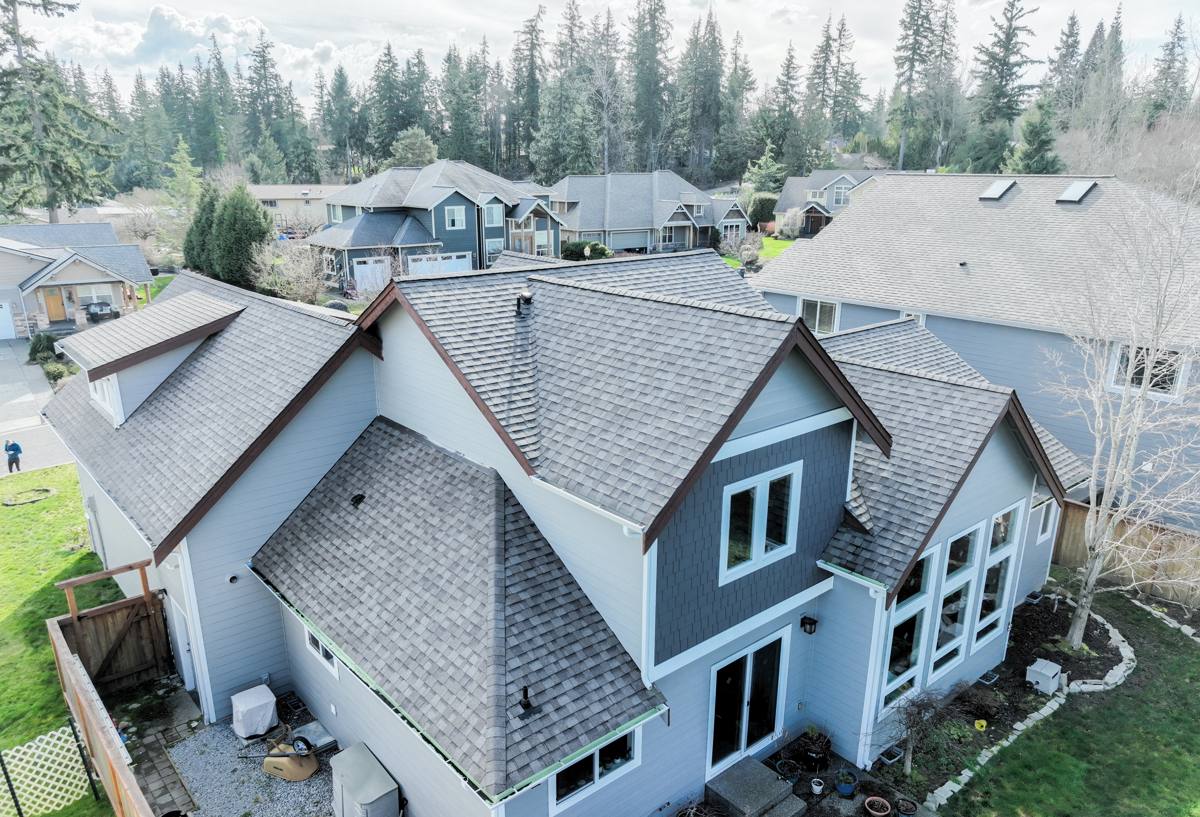
What Fir Island Homes Actually Need From Their Siding
Given the conditions, a siding system serving Fir Island needs to handle four things well:
- Moisture resistance that doesn't rely on paint alone. The material itself needs to tolerate repeated wetting and drying without swelling, delaminating, or rotting.
- Corrosion-resistant fastening. Salt air is hard on standard fasteners and trim hardware over time; the wrong fastener choice shows up as rust streaks and loosening panels years before it should.
- A finish that resists moss and algae staining. Shaded, damp walls on this side of the county grow moss and algae faster than drier inland lots, and a finish that can't shed that growth ages badly and fast.
- Real wind and impact durability. Storms off the bay bring gusts that test lap seams and fastening patterns other regions don't have to worry about as often.
Vinyl siding can crack and warp in wide temperature swings and doesn't hold up structurally to wind-driven debris the way a heavier material does. Wood siding products need consistent repainting and are vulnerable to exactly the rot conditions this climate produces. That combination is why we standardized on one material for every home we side in Burlington and the surrounding communities, including Fir Island.
Why We Only Install James Hardie Fiber Cement
We don't install LP SmartSide, vinyl, Cemplank, Allura, or bare cedar or spruce siding, and that's a deliberate call, not a limitation of what we're capable of installing. James Hardie fiber cement is non-combustible, engineered specifically for moisture cycling, and finished at the factory with ColorPlus technology rather than relying on field-applied paint that has to be maintained and reapplied. Hardie also builds region-specific HZ product lines engineered for the exact humidity and moisture exposure profile of the Pacific Northwest, which matters more on a site like Fir Island than it does on a drier, more sheltered lot.
The factory-cured finish is a real advantage here: it resists fading and holds its color and sheen through repeated wet-dry cycles far better than a field-applied coat, and Hardie backs it with a transferable warranty that stays with the house if you sell. We're not saying other products can't be installed correctly by someone — we're saying we've chosen not to be the ones installing them, because we don't want to be responsible for a siding system that we know is a harder match for this environment.
HZ5 Engineering for This Region
James Hardie's HZ5 product line is engineered for climates with more moisture exposure and freeze-thaw cycling than the warmer, drier zones the standard HZ10 line targets. Western Washington, including Skagit County and Fir Island, falls into that HZ5 category. The board formulation and moisture-management engineering behind HZ5 is specifically why it's the right match for a property this close to open water.
What a Correct Installation Looks Like Out Here
Fiber cement siding is only as good as the installation behind it, and in a salt-air, high-moisture environment the details matter more than usual. A correct job on Fir Island includes:
- A properly detailed weather-resistive barrier and rainscreen gap behind the siding, so any moisture that gets past the cladding can drain and dry rather than sitting against sheathing.
- Stainless or coated, corrosion-rated fasteners appropriate for coastal-influenced air, not standard interior-grade fasteners that will rust and streak.
- Correct flashing at every window, door, and roof-to-wall transition — this is where wind-driven rain finds its way in if it's skipped or rushed.
- Manufacturer-specified fastener spacing and clearance gaps at the bottom of the siding and around penetrations, so panels aren't sitting in standing water or trapping moisture against trim.
- Hardie-approved caulking and joint treatment at butt joints and corners, which protects the factory finish rather than undermining it.
Skip any one of these and you can still have "James Hardie siding" on the wall that fails early — because the material was never the weak link, the installation was. This is also why we don't treat fiber cement as a fast, one-crew-does-it-all product; it takes the right sequence and the right details every time.
Our Process on a Fir Island Job
| Step | What Happens |
|---|---|
| Site walk & assessment | We look at wall exposure, sun/shade patterns tied to moss growth, existing moisture damage, and how close the home sits to open water or wind corridors. |
| Tear-off & sheathing check | Old siding comes off and we inspect sheathing for rot or existing moisture intrusion before anything new goes up — this step gets skipped by crews in a hurry, and it's where hidden problems live. |
| Weather barrier & rainscreen | Housewrap and drainage gap installed correctly for this moisture profile, not just "code minimum." |
| Flashing & trim | Every window, door, and transition detailed before siding panels go on. |
| Hardie panel installation | HZ5-engineered boards installed to manufacturer spec with corrosion-rated fasteners and correct clearances. |
| Final inspection & walkthrough | We check caulk lines, fastener patterns, and clearances before calling the job done. |
Cost Factors for Fir Island Homes
Every home's siding cost depends on a mix of factors, and they matter more or less depending on the specific site. Broadly, homeowners should expect a wide range depending on home size, existing wall condition, and trim complexity — there's no honest flat number without seeing the house.
| Factor | Why It Affects Cost |
|---|---|
| Existing siding removal | Tear-off of old wood, vinyl, or damaged material adds labor before new siding can start. |
| Sheathing repair | Moisture-damaged sheathing found during tear-off needs to be replaced before siding goes on — common on older homes in wetter, low-lying areas. |
| Home size & wall complexity | More corners, gables, and window/door openings mean more flashing and trim detail work. |
| Board profile & finish selection | Lap width, texture, and ColorPlus color selection affect material cost. |
| Access & site conditions | Setbacks, landscaping, and equipment access can add time on some lots. |
Living With Fiber Cement Siding on Fir Island
Fiber cement is a low-maintenance material, but "low-maintenance" doesn't mean "no maintenance," especially in this environment. A short, honest checklist for keeping Hardie siding performing well here:
- Rinse siding periodically, especially on shaded and north-facing walls, to keep moss and algae from establishing and staining the finish.
- Keep gutters clear so overflow isn't running down siding walls and holding moisture against panels.
- Trim back vegetation and landscaping that keeps a wall section shaded and damp — this is the single biggest driver of moss growth on siding in Skagit County.
- Inspect caulking at joints and trim every year or two; recaulking is a small job that protects a much bigger investment.
- Watch for any fastener staining or loosening after major windstorms and have it looked at promptly rather than waiting.
Why a Local Crew Matters for This Job
Fir Island isn't a generic siding job. A crew that already works in Burlington and the surrounding Skagit County communities knows the wind exposure patterns, the moss cycle, and the moisture behavior specific to homes near this stretch of the bay — that's knowledge you don't get from a general contractor who mostly works drier, more sheltered inland lots. It shows up in small decisions: where we add extra flashing attention, which walls we flag for rainscreen detailing, and how we sequence a job around this area's weather windows rather than fighting them.
We stand behind our installation work the same way James Hardie stands behind its material and finish — with a job done to spec, not a job done fast.
If you're weighing siding options for a home on Fir Island or anywhere in the Burlington area, we're glad to take a look and give you a straightforward, no-pressure estimate — just fill out the form below.