 Burlington
 Siding on Guemes Island Has a Different Job to Do
Guemes Island sits out in the water off the Skagit County mainland, and that changes what a homeowner should expect from their siding. A house a few miles inland in Burlington deals with plenty of rain, but a house on Guemes deals with rain plus salt-laden air coming off the water, near-constant wind exposure, and a moss season that runs longer than most people realize in this part of Washington. Siding on the island isn't cosmetic — it's the thing standing between the house and a marine environment that never really lets up.
We work on Guemes Island as part of our regular Skagit County service area, and the siding work we do there is James Hardie fiber cement, full stop. We don't install vinyl, LP SmartSide, Cemplank, Allura, or bare cedar on any home we work on, island or mainland, and the reasons matter more on Guemes than almost anywhere else we go.
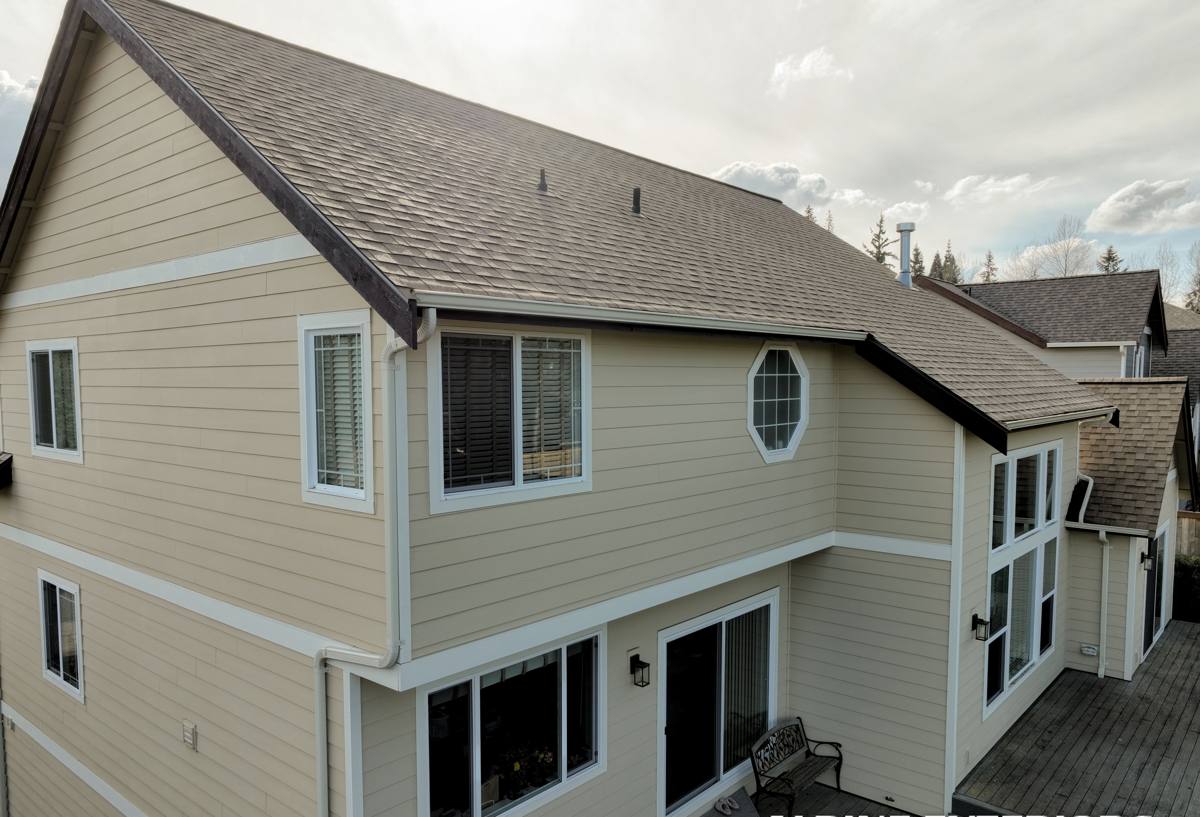
What the Island Climate Actually Does to Siding
Salt Air
Airborne salt is corrosive and it's persistent. It doesn't just affect metal fasteners and flashing — it accelerates the breakdown of paint films, gets into seams and laps, and speeds up wear on any material that isn't dimensionally stable. Siding on Guemes needs a finish that can take repeated salt exposure without chalking, fading, or lifting at the edges.
Driving Rain
Being surrounded by water means wind-driven rain hits the island from multiple directions depending on the storm, not just from one prevailing side like a lot of inland homes experience. That means every elevation of the house — not just the weather side — needs siding, flashing, and joints that shed water correctly. A house with one "good" side and three neglected sides is a house with a moisture problem waiting to happen.
Extended Moss Season
Cool, damp, and shaded conditions are exactly what moss and algae need, and Guemes gets a long stretch of those conditions every year. Moss holds moisture against a surface far longer than open air would, and on a wood-based or wood-look product that constant dampness is where rot gets its foothold. Siding here needs to resist that growth and, just as important, needs a finish that can be cleaned without stripping the color off.
Why We Standardized on James Hardie for Homes Like This
James Hardie siding is fiber cement — sand, cement, and cellulose fiber, engineered and cured into a board that doesn't absorb water the way wood-based products do and doesn't warp, crack, or become brittle the way vinyl can in cold, wind-loaded conditions. It's also non-combustible, which matters to insurers and to homeowners thinking about long-term risk, not just weather.
Two things make it specifically right for an island environment like Guemes:
- ColorPlus Technology finish — a factory-applied, baked-on finish that's far more resistant to fading, chalking, and salt-driven wear than field-applied paint, and it carries its own finish warranty separate from the substrate.
- HZ5 climate engineering — Hardie makes region-specific formulations, and the HZ5 product line is built for the Pacific Northwest's wet, temperate exposure rather than a one-size-fits-all national spec.
We've looked hard at the alternatives and we don't install them, not because they're bad products in every setting, but because they're the wrong fit for what this environment does to a house over years, not months. LP SmartSide is wood-strand based and depends heavily on sealed edges and cuts staying sealed — a tough standard to hold on a house getting rain from every direction. Vinyl expands and contracts more than fiber cement and can become brittle in sustained cold snaps, and it doesn't offer the same fire performance. Bare or primed wood needs a maintenance commitment — recoating, caulking, spot repairs — that most homeowners don't want to sign up for indefinitely, especially with salt air working against the finish the whole time.
What a Correct Installation Actually Involves
Fiber cement siding performs the way it's supposed to only when it's installed to spec. Most of the siding failures we get called out to inspect — on any brand — trace back to installation shortcuts, not the material itself. On a Guemes Island home, we pay particular attention to:
Water Management Behind the Siding
A correctly built wall assembly includes a weather-resistant barrier, properly lapped and taped, with rainscreen or drainage space where the wall design calls for it. On a house taking rain from multiple sides, this drainage layer is what protects the sheathing and framing even if wind-driven water gets past the siding face — which, on the island, it eventually will during the right storm.
Fastening and Clearances
Hardie specifies exact nailing patterns, fastener types, and minimum clearances from grade, roofing, and other transitions. Corrosion-resistant fasteners matter everywhere, but they matter more in salt air — the wrong fastener can start rusting and staining the face of the siding years before the board itself shows any wear.
Joints, Caulking, and Butt Seams
Every horizontal butt joint and vertical seam is a potential water entry point. Correct installation minimizes exposed seams where possible, backs joints properly, and uses the right sealant — not a generic caulk that will fail under UV and salt exposure faster than the siding around it.
Trim and Flashing Integration
Windows, doors, and roof-to-wall transitions need flashing that directs water out and away, integrated with the siding rather than just butted up against it. This is where a lot of the moisture problems we find on older homes actually start — not in the field of the siding, but at these transitions.
How Our Process Works on a Guemes Island Project
- On-site assessment — we look at existing siding condition, water damage or rot at trim and transitions, and the specific exposure of each elevation of your house.
- Scope and product selection — we walk you through the relevant Hardie profiles and HZ5 color options for your home, and give you a clear, honest scope of what needs to happen.
- Ferry and logistics planning — working on the island means material deliveries and crew scheduling have to account for ferry timing. We plan for it up front so it doesn't turn into delays mid-project.
- Tear-off and inspection — once old siding comes off, we inspect sheathing and framing for hidden moisture damage before anything new goes up. This is the point where problems that have been building for years actually get found.
- Water barrier and installation — weather-resistant barrier, drainage strategy, and Hardie siding installed to manufacturer spec, with attention to every seam, fastener, and transition described above.
- Final walkthrough — we go over the finished work with you before we consider the job done.
Why a Crew That Already Works the Island Matters
Guemes Island isn't a drive-up job like most of our Burlington-area work. Getting a crew, materials, and equipment on and off the island requires ferry scheduling, and a contractor who hasn't planned for that will either pad your timeline with unexplained delays or rush the work to make a ferry slot. We've built island logistics into how we bid and schedule these jobs, so the ferry is a planning input, not a surprise.
There's also a knowledge factor. A crew that's worked multiple homes in this specific exposure — full marine air, wind from several directions, heavy moss pressure — knows where those houses actually fail and builds against it, rather than applying a generic mainland approach to an island house that needs more.
Cost Factors to Expect
Every home is different, but the factors that move the price on a Guemes Island Hardie project are fairly consistent:
| Factor | Why It Matters |
|---|---|
| Existing siding removal | Tear-off and disposal of old material, plus any hidden repair work it reveals |
| Sheathing/framing repair | Rot or water damage found once old siding comes off, common on older island homes |
| Siding profile chosen | Lap, shingle, panel, or board-and-batten styles vary in material and labor cost |
| Trim and transition detail | Number of windows, doors, and rooflines to flash and finish correctly |
| Home size and elevation count | All-sides exposure on the island means every wall gets full attention, not just the "weather side" |
| Ferry/logistics scheduling | Built into project timeline and material delivery planning |
A Quick Checklist If You're Evaluating Your Current Siding
- Persistent moss or algae growth that comes back quickly after cleaning
- Soft spots, especially near the bottom courses or around window and door trim
- Visible fastener rust stains bleeding through the siding face
- Paint or finish that's chalking, peeling, or fading unevenly by elevation
- Gaps opening up at seams, corners, or trim boards
- Any interior signs — musty smell, discoloration on interior walls near exterior corners
If you're seeing more than one or two of these, it's worth having someone look at the wall assembly, not just the surface.
Get an Honest Look at Your Home
If you own a home on Guemes Island and you're dealing with siding that's struggling to keep up with the salt air, the wind-driven rain, or the moss, we're happy to come take a look. We'll give you a straight assessment of what's going on and what it would take to fix it right with James Hardie siding — no pressure, no upsell to a product we don't stand behind. Reach out using the form below for a free estimate.