 Burlington
 Metal Roofing Built for Guemes Island's Marine Climate
Guemes Island sits right in the path of Salish Sea weather — salt-laden air off the water, driving rain that comes in sideways during winter storms, and a long, damp shoulder season that keeps moss and algae growing on anything shaded or north-facing for much of the year. A roof out here works harder than a roof ten miles inland in Burlington, and it shows over time in the form of premature fastener corrosion, lifted shingle tabs, and moss mats that trap moisture against the roof deck.
Metal roofing, installed correctly for this specific environment, handles that combination better than most other roofing materials. But "installed correctly for this environment" is the key phrase. A metal roof that would perform fine in a dry inland climate can corrode, streak, or fail at the fasteners within a decade near saltwater if the wrong metal, coating, or hardware gets used. This page covers what Guemes Island homes actually need from a metal roof, what a correct installation looks like, and how we handle the logistics of working on the island.
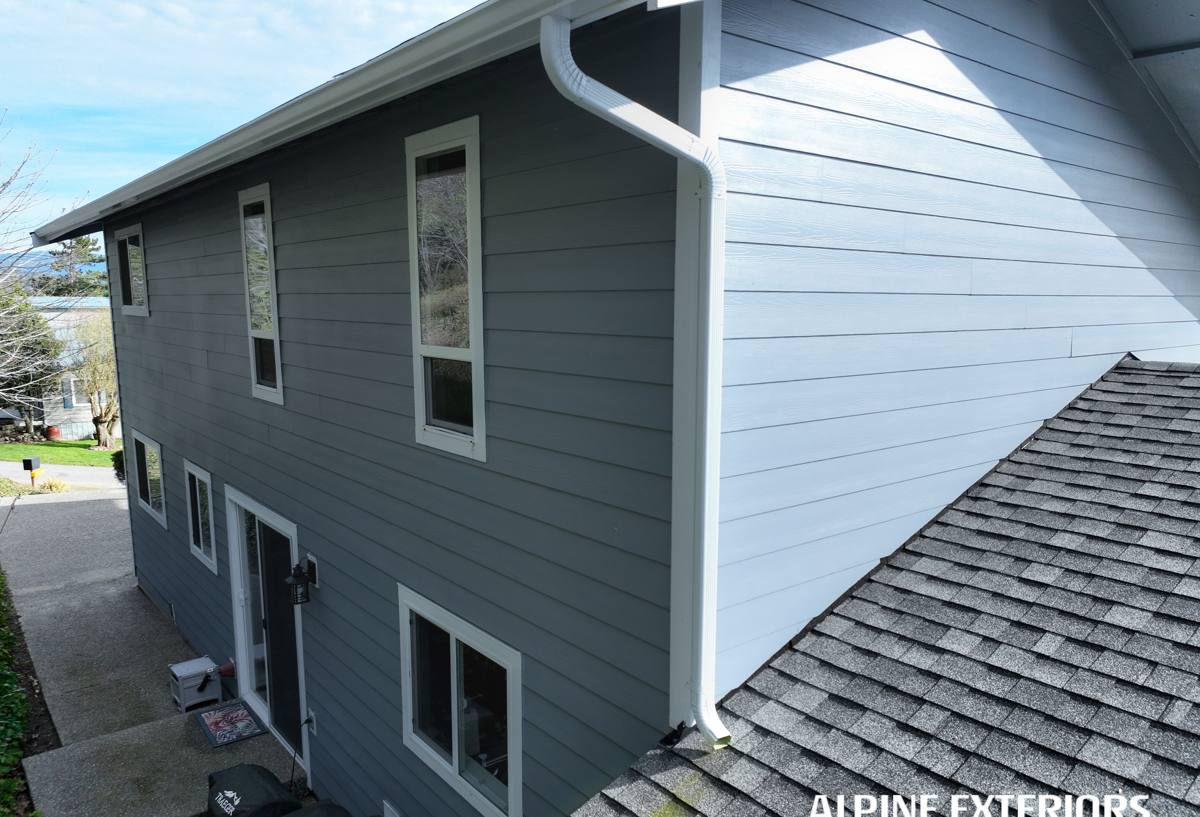
What Salt Air, Rain, and Moss Actually Do to a Roof
Three climate factors drive almost every metal roofing decision on Guemes Island:
Salt Air and Corrosion
Airborne salt is conductive and corrosive. It settles on metal surfaces and accelerates rust and pitting, especially at cut edges, fastener heads, and any spot where the protective coating has been scratched or thinned during installation. Homes closer to the shoreline see this faster than homes set back in the trees, but the whole island gets enough marine air that "inland-grade" materials and hardware are a mistake here.
Driving, Wind-Driven Rain
Storms off the water don't just fall straight down — wind pushes rain sideways and up under laps, flashing, and fascia trim that would shed water fine in a calmer climate. Roof details that rely on gravity alone to keep water out (rather than proper lap direction, sealed seams, and underlayment as a backup layer) tend to leak first at valleys, roof-to-wall transitions, and low-slope sections.
Moss and Algae in the Long Wet Season
Shaded and north-facing roof planes on Guemes Island stay damp for weeks at a stretch. Moss and algae take hold on rougher, more porous surfaces and on any spot where debris collects. On a shingle roof that means granule loss and lifted tabs. On a poorly detailed metal roof it means moss building up in exposed fastener rows or against low-profile trim, holding moisture where it shouldn't sit.
Choosing the Right Metal for a Home Near Saltwater
Not all metal roofing is equal in a marine climate, and this is where a lot of corrosion problems start — usually from a material choice that made sense on price but not on location.
| Material | Salt Air Performance | Typical Trade-Offs |
|---|---|---|
| Aluminum (standing seam) | Excellent — does not rust, naturally corrosion-resistant | Higher material cost; slightly softer, needs careful handling during installation |
| Galvalume/steel with PVDF coating | Good, if coating and cut edges are properly protected | Lower upfront cost; edge and fastener corrosion risk if detailing is sloppy |
| Uncoated or entry-level coated steel | Poor for close-to-water sites | Not something we install this close to saltwater — coating fails too soon here |
| Copper (accents/flashing) | Excellent, develops a stable patina | High cost; usually used for accent work rather than full roofs |
For most Guemes Island homes, we steer customers toward aluminum standing seam or a quality PVDF-coated steel system, matched to how close the home sits to the water and how exposed it is to wind off the Sound. We don't install bare or minimally coated steel panels this close to saltwater — it's not a judgment on the manufacturer, it's simply the wrong product for this specific environment, and we'd rather say so upfront than sell a roof that corroses at the seams in eight years.
Fasteners and Flashing Matter as Much as the Panel
A high-grade panel installed with mismatched or lower-grade fasteners is a common failure point. Stainless steel fasteners, or fasteners rated compatible with the panel metal, are non-negotiable this close to the water — dissimilar metals in contact with each other accelerate corrosion through galvanic reaction. The same goes for flashing: it needs to be the same family of metal as the panel, or properly isolated from it, or you end up with rust streaks running down a roof that otherwise looks brand new.
What a Correct Metal Roof Installation Involves Here
The panel itself is only part of the job. On Guemes Island, the assembly underneath and around the panels is what actually determines whether the roof handles wind-driven rain and years of damp weather without problems.
- Deck inspection and repair — any soft, rotted, or previously water-damaged sheathing gets addressed before a single panel goes down, not covered over.
- Full synthetic underlayment as a continuous water-shedding layer beneath the metal, so the roof has a backup barrier if wind ever drives moisture past a seam.
- Ice-and-water membrane at vulnerable areas — valleys, eaves, roof-to-wall transitions, and around every penetration, since these are the spots wind-driven rain finds first.
- Correct panel and fastener selection matched to proximity to the water, as covered above.
- Properly lapped and sealed seams and trim, installed in the direction that sheds wind-driven rain rather than just standing water.
- Flashing at every penetration — vents, chimneys, skylights — detailed so water is directed out, not just covered.
Skipping any one of these steps to save time is exactly how a metal roof that looks fine for the first few years starts leaking or corroding early. It's also, honestly, the difference between a metal roof lasting the multiple decades it's capable of versus underperforming a well-installed asphalt roof.
Working Around Moss and Shade on Guemes Island Properties
Metal roofing is inherently more moss-resistant than shingles because it doesn't have the porous, granular surface moss and algae need to establish. But shaded roof planes on tree-covered Guemes Island lots still collect organic debris — needles, leaves, pollen — that can hold moisture against trim and low areas if it's never cleared. A correct installation accounts for this with clean, tight seams and trim profiles that don't create debris traps, plus gutter and eave details sized to actually move water off a roof that's collecting runoff from a full canopy of trees rather than open sky.
How We Handle Guemes Island Logistics
Working on an island changes how a roofing project gets scheduled compared to a job in town. We plan material deliveries and crew ferry schedules in advance so a project isn't stalled mid-job waiting on a panel order or a missed sailing. Panels for a standing seam roof are often ordered to the specific run lengths needed for the home, which means measurements and material orders happen before crew and equipment head to the island, not after. We also plan weather windows carefully — driving rain off the Sound isn't something you want to be working a partially-open roof deck through, so tear-off and dry-in happen in tight sequence rather than being spread across multiple exposed days.
Maintaining a Metal Roof in This Climate
One advantage of metal roofing here is how little ongoing maintenance it needs compared to shingles — but "little" isn't "none." A short annual routine keeps a correctly installed metal roof performing for its full lifespan:
- Clear needles, leaves, and debris from valleys and gutters, especially after fall storms
- Check that gutters and downspouts are draining freely and not overflowing behind fascia trim
- Look for any moss or algae starting to build in shaded valleys or against trim, and clear it before it holds moisture
- Have penetration flashing (vents, skylights, chimney) visually checked every year or two, since these are the spots most likely to need resealing over time
- Rinse visible salt residue off the roof surface periodically if the home is close to the shoreline
What Metal Roofing Costs on Guemes Island
Metal roofing costs more upfront than asphalt shingles, and island logistics add a modest premium on top of typical Skagit County pricing due to ferry-dependent material and crew scheduling. What actually moves the price on a given home:
| Cost Factor | Why It Matters Here |
|---|---|
| Panel material (aluminum vs. coated steel) | Aluminum costs more but needs the least long-term corrosion management near saltwater |
| Roof complexity (valleys, dormers, penetrations) | More detail work at flashing points, which matter more in wind-driven rain |
| Proximity to the shoreline | Closer homes generally warrant the higher-grade metal and fastener package |
| Existing deck condition | Any sheathing repair needed before installation adds to the scope |
| Ferry and delivery scheduling | Material and crew logistics are planned into the project timeline and cost |
We'll walk through these factors specifically for your home and roof during a free estimate rather than quoting a generic number that doesn't reflect the island or your property.
Why Local Experience on Guemes Island Matters
A crew that hasn't worked on the island before is learning the ferry schedule, the material logistics, and the marine-air material requirements on your project — that's an expensive way to find out a panel choice or fastener grade was wrong for the site. We already know how to plan a Guemes Island job so materials and crew arrive on schedule, and we already know which metal, coating, and fastener combinations hold up here versus which ones start showing corrosion within a few years. That local knowledge is the difference between a metal roof that performs for its full lifespan in this climate and one that needs early repairs.
If you're considering a metal roof for a Guemes Island home, we're happy to take a look and give you a straightforward, no-pressure estimate — use the form below to get started.