 Burlington
 Guemes Island Homes Face a Different Kind of Weather
Guemes Island sits out in the salt water of Skagit County, and that changes what a siding job actually needs to hold up against. A house a few miles inland in Burlington deals with rain and cold. A house on Guemes deals with rain, cold, near-constant salt air off the water, wind that drives moisture sideways instead of straight down, and a moss and algae season that can run most of the year on shaded north and west walls. Siding that looks fine on a typical Skagit County build can fail faster out here, and it usually fails quietly — behind the surface, where you can't see it until the damage is already done.
This page is about one job in one place: replacing siding on a Guemes Island home, done in a way that actually accounts for the island's conditions instead of treating it like any other Burlington-area project.
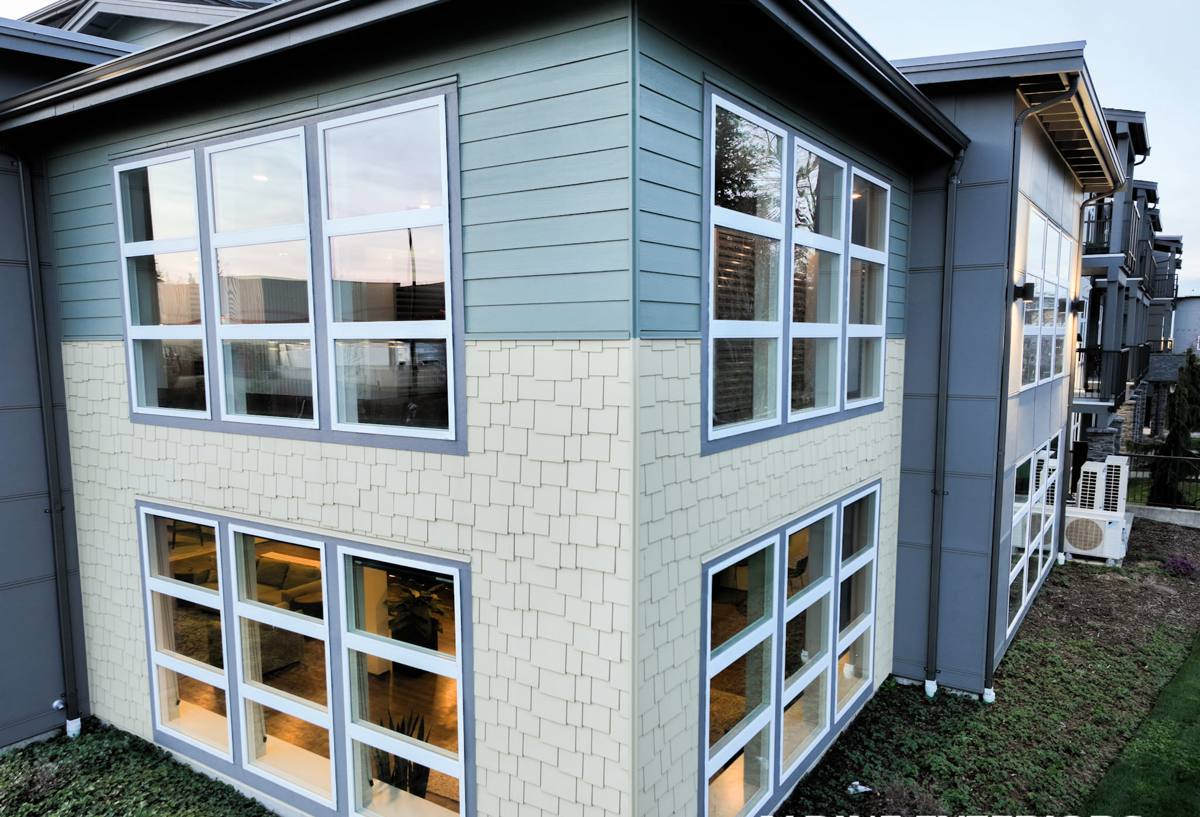
What Salt Air, Rain, and Moss Actually Do to Siding
Salt Air
Airborne salt is corrosive and it doesn't stay near the water — wind carries it across the whole island. Over years, it attacks exposed metal fasteners, flashing, and trim. Siding materials that rely on face-nailing with standard fasteners, or that use metal components not rated for coastal exposure, will show rust streaking, staining, and eventual fastener failure well before a comparable inland home would.
Driving Rain and Wind
Guemes gets more sustained wind off the water than sheltered inland lots, and that wind pushes rain up under laps and into seams that would stay dry in calmer conditions. This is a water-management problem as much as a materials problem — it's about how the siding, flashing, and water-resistive barrier work together to shed water that's being pushed at the wall instead of falling straight down it.
Moss and Algae Season
Shaded, north- and west-facing walls near trees or close to the water stay damp longer here, and that dampness feeds moss and algae growth across a long stretch of the year. Materials that absorb moisture at the surface give moss something to root into. Materials that shed moisture stay cleaner and hold their finish longer.
Signs a Guemes Island Home Needs Siding Replaced, Not Patched
- Soft or spongy spots when you press on the siding, especially near the bottom courses or around window and door trim
- Persistent moss, algae, or dark streaking that comes right back after cleaning
- Visible cupping, warping, or gaps opening up between boards or panels
- Rust streaks below fasteners or metal trim pieces
- Paint that's failing repeatedly in the same spots despite repainting
- Interior signs — musty smell, peeling interior paint, or soft drywall on an exterior wall
- Siding that's more than 20-25 years old, especially wood-based or engineered wood products
One or two of these can sometimes be spot-repaired. Several together, especially with any sign of moisture getting past the surface, usually means the water-resistive barrier underneath has been compromised — and at that point, patching just delays a full replacement while the framing keeps absorbing water.
Why We Only Install James Hardie Fiber Cement
We don't install vinyl, LP SmartSide, Cemplank, Allura, primed spruce, or cedar. That's a deliberate standard, not a lack of options, and on an island property the reasons matter more than they would on a sheltered inland lot.
Vinyl is affordable and low-maintenance in mild conditions, but it's a thin material that expands and contracts with temperature and can crack or warp under sustained wind load and impact — and it relies on lapped, non-sealed joints that aren't built for wind-driven rain. Wood and wood-composite products like primed spruce or LP SmartSide can look excellent and perform well when maintained aggressively, but they're organic materials in a climate that stays damp for much of the year — that combination puts the maintenance burden (recaulking, repainting, edge sealing) squarely on the homeowner, on a schedule that's hard to keep up with from off-island. Fiber cement products from other manufacturers vary in how they're engineered for moisture and coastal exposure, and in the strength of the finish and warranty behind them.
James Hardie is fiber cement — sand, cement, and cellulose fiber — which means it doesn't absorb water the way wood-based products do, and it's non-combustible. Hardie also makes climate-specific HZ product lines engineered for different moisture and temperature profiles, and their ColorPlus finish is baked on at the factory rather than field-applied, which matters in a place where field-applied paint gets tested hard by rain and salt. It carries a strong transferable warranty when installed to spec. We standardized on it because, installed correctly, it's the product that holds up to exactly what Guemes Island throws at a house.
| Factor | James Hardie Fiber Cement | Vinyl / Wood-Based Alternatives |
|---|---|---|
| Moisture absorption | Very low; doesn't swell or rot | Wood-based products absorb and can rot; vinyl doesn't absorb but seals aren't watertight |
| Wind-driven rain performance | Engineered lap and flashing details built for it | Vinyl laps rely on gravity, not seals; wood needs perfect caulking to keep pace |
| Salt air / coastal exposure | Fiber cement itself doesn't corrode | Vinyl can become brittle; wood finishes fail faster near salt air |
| Moss and algae resistance | Dense surface resists rooting; cleans up well | Wood grain gives moss a foothold; vinyl can stain and pit over time |
| Fire resistance | Non-combustible | Vinyl can melt/deform; wood is combustible |
| Finish durability | Factory-baked ColorPlus finish | Field-applied paint on wood fades and chalks faster in coastal sun and salt |
What a Correct Siding Replacement Actually Involves
Replacing siding on an island home isn't just pulling off old boards and nailing up new ones. Done right, it's a sequence, and skipping a step is exactly how a house ends up with the same problems in ten years instead of thirty.
Tear-Off and Inspection
Full removal of the old siding down to the sheathing, with a real inspection of the framing and sheathing underneath. On a coastal property, this is where hidden rot or fastener corrosion from years of salt exposure usually turns up — and it needs to be addressed before anything new goes on, not covered over.
Water-Resistive Barrier and Flashing
A correctly lapped water-resistive barrier, with flashing at every window, door, and penetration, is what actually keeps wind-driven rain out of the wall assembly. This layer does more long-term work than the siding itself — it's also the layer that's invisible once the job is done, which is exactly why it has to be right the first time.
Installation to Manufacturer Spec
James Hardie has specific fastening patterns, clearances, and lap requirements, and those specs exist for a reason — they're what the warranty is actually built on. Correct fastener spacing and type also matter more here than inland, since fastener corrosion is a real coastal failure point when the wrong hardware gets used.
Trim, Caulking, and Finish Details
Corner trim, butt joints, and penetrations get sealed with the right materials in the right places — not everywhere, since fiber cement needs some joints to breathe and move with temperature, and over-caulking can trap moisture instead of keeping it out.
Our Process for a Guemes Island Project
Working on the island adds logistics that don't come up on a mainland Burlington job — material staging, crew and equipment transport, and scheduling around ferry access all have to be planned into the timeline up front rather than discovered mid-project. A crew that's done island work before builds that into the estimate and the schedule from day one, instead of treating it as a surprise that eats into labor time or forces rush decisions on-site.
We walk the property first, assess the specific exposure of each wall — south and west walls facing open water get treated differently than sheltered north walls — and give you a plan and a written estimate before any work starts. There's no pressure and no obligation tied to that visit.
Cost Factors for Guemes Island Siding Replacement
| Factor | Why It Matters Here |
|---|---|
| Home size and wall complexity | More corners, trim, and penetrations mean more flashing and labor time |
| Extent of hidden damage found at tear-off | Rot or corroded framing found under old siding has to be repaired before new siding goes on |
| Current siding material | Removal of certain materials (older wood products especially) takes more labor than others |
| Access and logistics | Island transport and staging factor into scheduling and cost, and are planned into the estimate up front |
| Hardie product line and color selection | Different HZ lines and ColorPlus colors carry different material costs |
We give honest, itemized estimates rather than vague ballpark numbers, so you know what you're paying for and why — especially the parts of the job you won't be able to see once it's finished.
Living With Hardie Siding on Guemes Island
Fiber cement is genuinely low-maintenance compared to wood, but "low-maintenance" doesn't mean "no maintenance" in a salt-air environment. A periodic rinse to clear salt residue and organic buildup, keeping gutters and downspouts clear so water isn't sheeting down walls, and trimming back vegetation that keeps a wall shaded and damp will all extend the life of the finish. None of this is heavy work — it's a fraction of what wood siding demands — but it's worth doing on a schedule given how long this siding is meant to last.
If your Guemes Island home is showing signs of siding trouble, or you're planning ahead for a replacement, we're happy to take a look and give you a straightforward, no-pressure estimate using the form below.