 Burlington
 Why Lyman Roofs Wear Differently Than Roofs Inland
Lyman sits in the Skagit River valley, close enough to the water that salt-laden air off Puget Sound and Bellingham Bay reaches it on a west wind, and close enough to the Cascade foothills that it catches heavy, sustained rain systems most of the year. That combination is harder on a roof than either factor alone. Salt air accelerates corrosion on exposed metal fasteners, flashing, and gutter hardware. Driving rain, especially when it comes in at an angle during a windstorm, finds every weak seam and pushes water sideways under shingles that would shed a straight-down rain just fine. Add a moss season that can run from October through May in a wet year, and you have a roof that's under load nearly year-round, not just during a few winter storms.
None of this means Lyman roofs are doomed to fail early. It means the repair standard has to account for conditions a roofer in a drier climate never has to think about. A patch that would hold for a decade in eastern Washington might only buy two or three years here if it's not done with the right materials and sequencing.
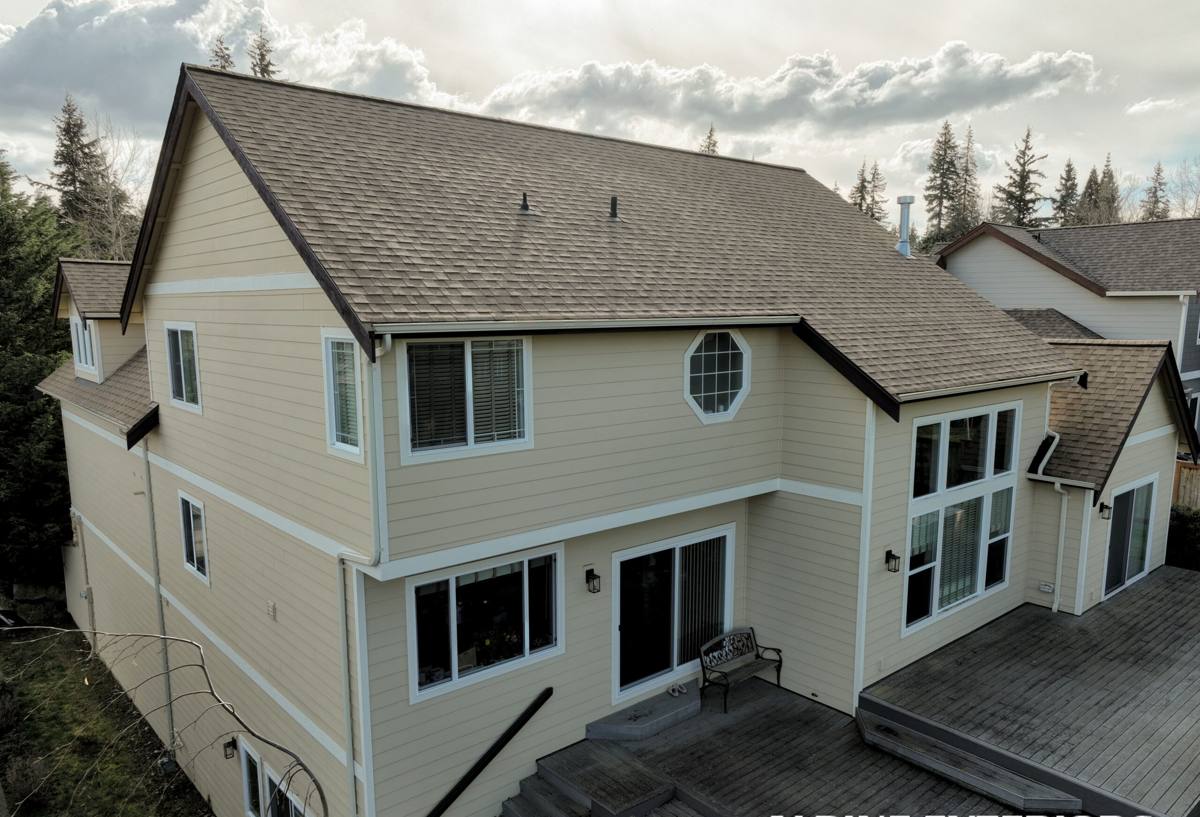
Signs a Lyman Roof Needs Repair, Not Just a Cleaning
Homeowners in this area often assume dark streaking or a little moss is purely cosmetic. Sometimes it is. Other times it's the visible sign of something happening underneath. A quick walk-around, from the ground with binoculars or from a ladder if you're comfortable, can tell you a lot before you ever call anyone.
- Granules collecting in gutters or at downspout outlets, especially after a windy rain
- Moss growing in thick mats along the north-facing slopes or shaded valleys, not just light green film
- Soft or spongy spots when the roof is walked (best left to a professional to check)
- Water stains on interior ceilings, particularly near chimneys, skylights, or where two roof planes meet
- Flashing that's visibly rusted, lifted, or pulling away from a wall or chimney
- Shingle edges curling up or granule loss leaving a shiny, bald patch
- Daylight visible through the roof deck from inside an attic
- Gutters or fascia boards staying damp for days after the rain stops
Any one of these on its own might be minor. Two or three together, especially in a house that's ten years old or more, usually means it's worth a closer look before the next wet season sets in.
What a Correct Repair Actually Involves
It Starts Underneath the Shingles, Not on Top
A repair that only replaces the visible shingle and ignores the underlayment and flashing underneath is a repair that fails again within a season or two around here. Because Lyman gets driving rain that can push water uphill under a shingle edge, the underlayment and the way flashing is layered matters as much as the shingle itself. Correct sequencing means water always has a path downhill, layer over layer, from ridge to gutter, with no reverse laps that let wind-driven rain sneak backward.
Matching Materials, Not Just Colors
Shingles fade and granules wear unevenly with age, so a patch using brand-new material next to a 12-year-old roof will look mismatched even if the color is technically the same line. A good repair either sources shingles as close to the existing batch as possible, blends the patch into a less visible slope, or is upfront with the homeowner that a visible seam is the honest trade-off of a spot repair versus a full section replacement.
Flashing Gets the Same Attention as the Field
Chimney flashing, valley flashing, and step flashing along walls are where most leaks in this region actually originate, not the open field of shingles. Salt air speeds up corrosion on older galvanized flashing, so a repair here often includes replacing flashing sections even when the shingles around them are still serviceable.
Moss and Algae: Managing a Season That Doesn't Really End
In Skagit County, moss isn't a once-a-year nuisance — it's closer to a standing condition that peaks in the wetter months and never fully dries out on shaded, north-facing slopes. Moss holds moisture directly against the shingle surface, which speeds up granule loss and, over years, can lift shingle edges enough for wind-driven rain to get underneath. Physical removal matters more than chemical treatment alone: moss should be gently brushed or rinsed downhill (never pressure-washed, which strips granules and shortens shingle life on its own), and zinc or copper control strips near the ridge can suppress regrowth for years by releasing a light metal wash every time it rains. A roof that's shaded by tall firs or sits on a north slope will need this attention more often than a south-facing roof in the open, and that's worth factoring into a maintenance plan rather than treating every roof the same.
Common Roofing Materials in Lyman and Repair Considerations
Most homes in this part of Skagit County are topped with asphalt composition shingles, with a fair number of metal roofs and older cedar shake roofs still in service. Each responds differently to salt air, moss, and driving rain, and that changes how a repair should be approached.
| Material | Main Local Stressor | Repair Consideration |
|---|---|---|
| Asphalt composition shingle | Moss lifting edges, granule wash-off in driving rain | Underlayment and flashing condition matter as much as the shingle itself; color matching gets harder with age |
| Standing seam / metal panel | Salt-air corrosion at fasteners and cut edges | Repairs focus on sealant life at penetrations and fastener condition, not the panel field |
| Cedar shake | Moisture retention, moss, and rot in shaded areas | Individual shake replacement is possible but sistering and spot-treating moisture damage often matters more than the shake itself |
| Flashing (any roof type) | Rust and seam failure from salt-laden moisture | Often the actual leak source even when the roof surface looks fine |
Our Repair Process, Start to Finish
1. On-Site Assessment
We walk the roof (or inspect closely from a ladder when conditions call for it) and check the attic from inside when accessible, since interior staining often tells us more about water path than the exterior does. We look at flashing, valleys, penetrations, and moss coverage together, not the shingles alone.
2. Honest Scope
We tell you plainly whether this is a targeted repair, a larger section replacement, or something that's genuinely still fine and just needs a cleaning. We're not incentivized to talk every job into a bigger scope than it needs.
3. The Repair Itself
Work follows the sequencing described above: flashing and underlayment first, shingle or panel work second, moss control treatment last so it isn't disturbed by foot traffic during the repair.
4. Cleanup and Walkthrough
Gutters get cleared of any debris generated by the work, and we walk you through what was done and what to keep an eye on going forward.
Repair vs. Replacement: How We Make the Call
Homeowners often want a straight answer on whether to repair or replace, and the honest answer depends on a handful of factors more than any single one.
| Factor | Leans Toward Repair | Leans Toward Replacement |
|---|---|---|
| Roof age | Under 15 years for asphalt | Approaching or past manufacturer's expected service life |
| Extent of damage | Isolated to one slope or penetration | Spread across multiple slopes or recurring in the same spot |
| Underlayment condition | Still intact where accessible | Visibly failing or original underlayment from an older build |
| Moss/moisture history | Recently treated, manageable | Long-term neglect with visible deck or sheathing damage |
| Material availability | Close match still available | Discontinued line, patch would be visibly mismatched |
We'll lay these out for your specific roof rather than defaulting to whichever answer is more profitable for us. A well-timed repair can reasonably extend a roof's life; a repair on a roof that's already past its practical service life just delays an inevitable bigger job while risking interior water damage in the meantime.
Why Local Experience in Lyman Matters
A crew that regularly works this stretch of Skagit County already knows which slopes tend to hold moss longest, how far salt air reaches inland on a west wind, and which flashing details tend to fail first on the housing stock common to this area. That's not something you can fully substitute with a general roofing checklist. It also means we're not guessing at appropriate material choices for the exposure your particular roof gets — a south-facing open roof and a shaded north slope twenty feet away can genuinely need different maintenance schedules, even on the same house.
Working locally also means we're reachable if something needs a follow-up look after a bad storm, rather than being a crew that did one job and moved on to a different region entirely.
Get a Straight Answer on Your Roof
If you're seeing moss buildup, a stain on a ceiling, or just want a professional set of eyes on a roof before the next wet season rolls in, we're happy to take a look. Reach out for a free, no-pressure estimate using the form below — we'll give you an honest read on what your roof actually needs, not the most expensive answer.