 Burlington
 Window Installation Built for Lyman's Climate
Lyman sits in the upper Skagit Valley, where wooded lots, river-bottom humidity, and long stretches of gray, wet weather put a different kind of stress on a home's windows than you'd see in a drier part of the state. Homes out here aren't just dealing with the occasional storm — they're dealing with months of sustained moisture, shaded exposures that never fully dry out, and the freeze-thaw swings that come with valley weather. Window installation in this area isn't just about picking a style you like. It's about getting the flashing, sealing, and drainage details right so the wall behind the window stays dry for the next twenty years, not just the next two.
We work window installation jobs throughout this part of Skagit County regularly, which means we've seen how older single-pane and early-generation vinyl windows tend to fail here specifically — and what a correctly installed replacement needs to hold up against it.
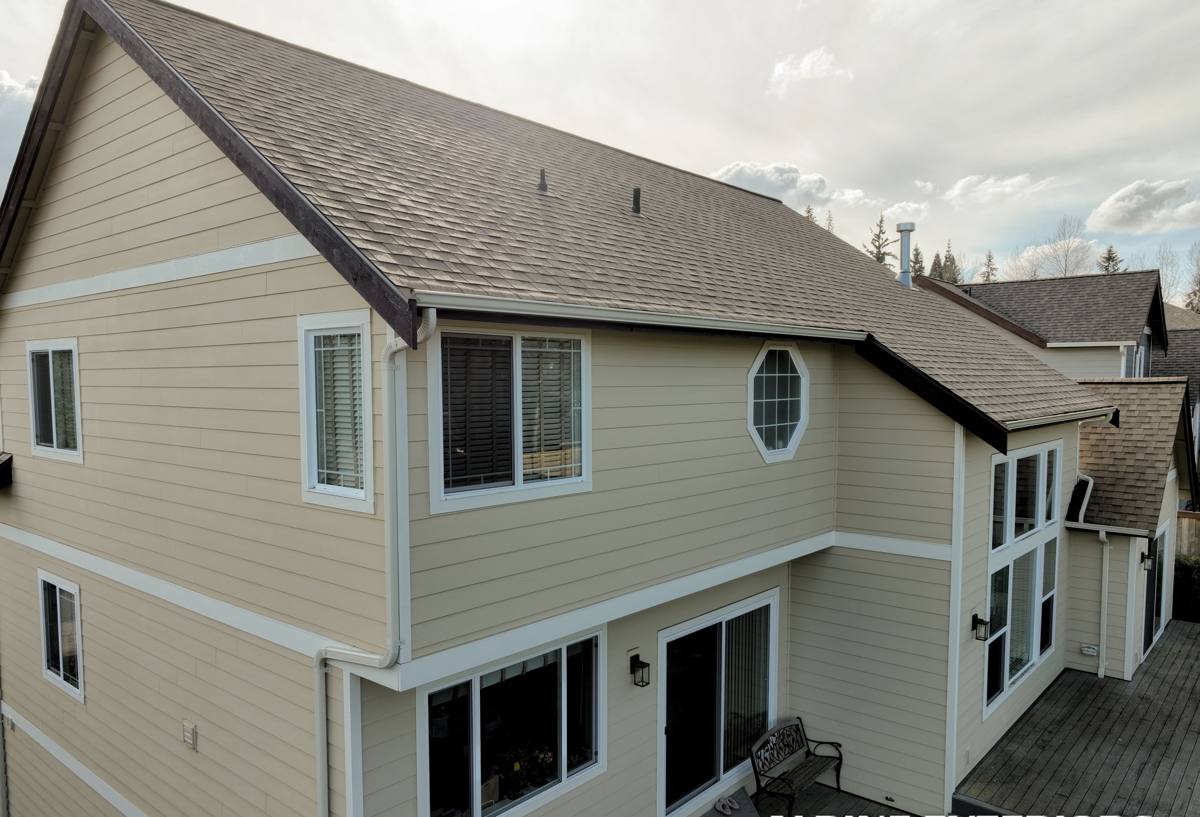
What Lyman Homes Are Up Against
A handful of regional factors show up again and again when we're evaluating windows for replacement in this area:
- Driving rain: Wind-driven rain doesn't just hit windows head-on — it gets pushed sideways and upward under poorly sealed trim and sills, which is where most hidden rot starts.
- Salt-tinged marine air: This corner of Washington sits close enough to Puget Sound air patterns that metal hardware, screens, and lesser-grade fasteners corrode faster than they would inland.
- Long moss season: Shaded, tree-covered lots common around Lyman stay damp for months at a time. Moss and algae don't just grow on roofs — they take hold on window sills, tracks, and exterior trim, holding moisture against the frame.
- Humidity and condensation: Wet valley air combined with warm interiors creates condensation pressure on older or poorly sealed glass units, which shows up as fogging, drips, and eventually soft wood at the sill.
- Temperature swings: Cold nights and milder days cause expansion and contraction in frames and sealants — a slow, repetitive stress that eventually opens gaps in a mediocre install.
None of these factors are dramatic on their own. The problem is they're constant. A window that would last decades in a dry climate can start failing in half that time here if it wasn't installed with this environment in mind.
Signs Your Windows Are Ready for Replacement
Before we ever talk about new windows, it's worth knowing what to actually look for. Most homeowners in Lyman call us after noticing one or two of these — but if you're seeing several at once, it's a good sign the whole window, not just the glass, needs attention.
- Fogging or a haze between the panes of a double-pane window (the seal has failed and the gas fill is gone)
- Soft, spongy, or discolored wood at the sill or bottom corners of the frame
- Windows that are noticeably harder to open, close, or lock than they used to be
- Visible daylight or a draft you can feel around the frame when it's windy
- Moss, black staining, or algae building up in the tracks or on the exterior trim
- Paint that keeps peeling or bubbling near the window regardless of how often it's repainted
- A noticeable temperature difference near the window compared to the rest of the room
What a Correct Window Installation Actually Involves
The window itself is only part of the job. Most window failures we get called out to replace weren't caused by a bad window — they were caused by a rushed or incomplete installation that let water get behind it. The details matter more than the brand of glass.
| Step | Why It Matters Here |
|---|---|
| Removing old flashing and inspecting the rough opening | Hidden rot behind old trim is common on older Skagit County homes and has to be addressed before a new window goes in, not covered over |
| Installing (or correcting) a proper drainage plane and flashing | Directs wind-driven rain away from the wall cavity instead of letting it pool at the sill |
| Sill pan installation under the window | Gives any water that does get past the frame a way out, rather than a place to sit and soak into wood |
| Correct shimming and squaring | An out-of-square window stresses the seals over time, which is exactly the kind of slow failure our freeze-thaw swings accelerate |
| Sealing with the right materials in the right order | Wrong sealant order or type can trap moisture inside the wall instead of keeping it out |
| Exterior trim and finish detailing | Proper caulking and paint-ready trim resist the moss and algae buildup common on shaded lots |
Skipping or rushing any one of these steps is usually invisible on install day — the window looks fine, closes fine, and the problem doesn't show up for a year or two. By the time it does, you're often looking at sheathing or framing repair, not just a window swap. That's the real cost of a corner-cut install.
Choosing the Right Window for This Area
There's no single "best" window material — the right choice depends on your home, your budget, and how much upkeep you want to take on. Here's how the common options actually perform in a wet, wooded, marine-influenced climate like Lyman's:
| Material | Moisture Performance | Maintenance | Typical Trade-Off |
|---|---|---|---|
| Vinyl | Good — won't rot, resists moisture well | Low | Fewer color/finish options; frame can flex on larger sizes |
| Fiberglass | Very good — stable in wet/dry cycling, low expansion | Low | Higher upfront cost than vinyl |
| Wood (unclad interior/exterior) | Poor in this climate unless meticulously maintained | High — regular painting/sealing required | Best classic look, but our long wet season is hard on exposed wood |
| Wood-clad (wood interior, vinyl/aluminum/fiberglass exterior) | Good — exterior shell handles the weather | Moderate | Combines interior warmth of wood with better weather resistance outside |
| Aluminum | Fair — durable but conducts cold and can condense | Low | Less common in residential retrofits here due to thermal performance |
For most homes in this area, we steer people toward vinyl or fiberglass for the bulk of the house, sometimes with wood-clad units on a front elevation where the look matters more and the exposure is more sheltered. We're honest about the maintenance burden of exposed wood windows here — it's not that they can't work, it's that our moss season and rain totals mean they need a level of upkeep a lot of homeowners underestimate going in.
Glass and Performance Options Worth Considering
Beyond the frame material, a few glass and hardware upgrades tend to pay off specifically because of our climate:
- Low-E coatings with argon or krypton gas fill: Improve insulation and reduce condensation risk on cold, humid days
- Corrosion-resistant hardware: Worth the upgrade given the marine influence on air quality in this part of the county
- Warm-edge spacer systems: Reduce the temperature difference at the glass edge that drives condensation and eventual seal failure
Our Process, Start to Finish
We keep the process straightforward, and we walk you through it before any work starts:
- On-site assessment: We look at your existing windows, the condition of the framing and trim around them, and talk through what's actually needed versus what's optional.
- Honest estimate: You get a clear, itemized quote — no pressure, no inflated urgency tactics.
- Material selection: We help you weigh frame material, glass package, and finish options against your budget and how the window will actually be exposed to weather on your lot.
- Removal and inspection: Old windows come out carefully, and we inspect the rough opening for hidden moisture damage before anything new goes in.
- Correct installation: Flashing, sill pans, shimming, and sealing done in the right order, every time — not shortcuts hidden behind fresh trim.
- Final check and cleanup: We test operation, check seals, and leave the site clean.
Why Hire a Crew That Already Works in Lyman
A window installer who mostly works drier, more urban parts of the state can do a technically fine install and still miss the details that matter here. A crew that regularly works Skagit County homes already knows which older neighborhoods tend to have rot hiding behind original trim, how shaded, tree-covered lots change the moisture picture, and why a sealant that works fine in July can behave differently through a wet Skagit winter. That local pattern-recognition is the difference between an install that looks good on day one and one that's still tight and dry ten years later.
It also means faster, more realistic scheduling around our weather — knowing which weeks are workable for exterior work and which aren't, instead of promising a timeline that doesn't hold up.
Energy Efficiency and Moisture Control Go Together
Homeowners often come to us focused purely on energy bills, and new windows do help — draft reduction and better glass packages make a real difference in comfort and heating costs through our cold, damp winters. But in this climate, energy efficiency and moisture control aren't separate issues. A window that's sealed well enough to stop drafts is also sealed well enough to stop the water intrusion that causes rot and mold. Getting the installation right solves both problems at once; getting it wrong can quietly create a moisture problem even with an expensive, high-efficiency window.
Get a Straightforward Estimate
If your windows in Lyman are fogging, sticking, drafting, or just showing their age, we're happy to take a look and give you an honest read on what's actually needed — no pressure, no upsell. Use the form below to request a free estimate, and we'll walk the property with you and talk through your options in plain terms.