 Burlington
 Why Blanchard's Climate Is Hard on a Roof
Blanchard sits in that stretch of Skagit County where Puget Sound air meets the lowland farmland east of I-5, and that combination is tougher on roofing than most homeowners realize. You get salt-laden air drifting in off the water, long stretches of driving rain that comes in sideways off south and southwest winds, and a moss season that can run eight or nine months out of the year under the tree cover common in this part of Burlington. None of those three things is fatal to a roof on its own. Together, over years, they find every weak point in a roofing system that wasn't detailed for this exact climate.
A metal roof handles this environment better than most materials when it's specified and installed correctly. It sheds moss instead of feeding it, it doesn't absorb water the way organic-mat shingles do, and it can be finished to resist salt-air corrosion. But "metal roof" isn't one product — the coating, the fastening method, and the flashing details all matter more here than they would in a drier, inland climate, and getting those choices wrong is how a metal roof underperforms in Blanchard even though it looks fine on paper.
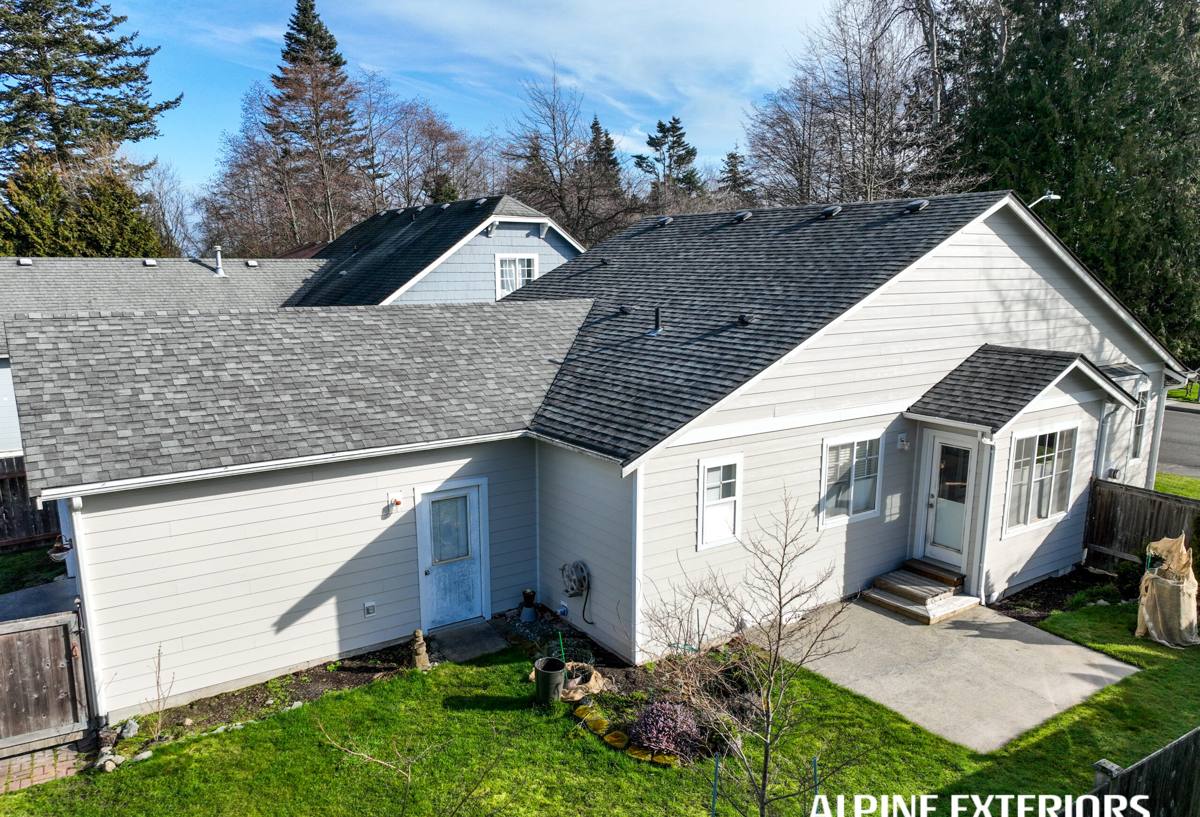
What Salt Air Actually Does to Roofing Metal
Coastal and near-coastal air carries fine salt particles that settle on any exposed metal surface. Over time, on the wrong material or finish, that accelerates corrosion — starting at cut edges, fastener heads, and anywhere the protective coating has been scratched or thinned during installation. Blanchard isn't beachfront, but it's close enough to the Sound, and exposed enough to marine air moving up the valley, that this is a real design consideration and not a theoretical one.
What this means for material choice
Galvalume and quality painted steel with a proper factory finish hold up well in this environment when the coating stays intact. Bare or thinly coated galvanized steel is more vulnerable long-term. Aluminum is naturally more corrosion-resistant and is worth discussing for homes closer to open water or with a lot of direct salt exposure, though it comes with its own cost and handling trade-offs. The right call depends on the specific property, not a blanket rule.
Driving Rain and Wind-Driven Moisture
Straight-down rain is easy for almost any roof to shed. Blanchard's weather doesn't cooperate that way — wind off the Sound and up the Skagit Valley regularly pushes rain sideways and under standard laps, especially at low-slope sections, valleys, and anywhere two roof planes meet. This is where a metal roof either performs or leaks, and it comes down to details most homeowners never see once the panels are on.
- Underlayment type and lap direction relative to prevailing wind and water flow
- Panel overlap and seam design at low-slope areas
- Flashing at valleys, walls, chimneys, and roof-to-wall transitions
- Fastener placement and sealing method, especially on exposed-fastener systems
- Eave and rake edge detailing to stop wind-driven water from getting behind the panel
Any one of these done wrong is a slow, hidden leak that can take a year or two to show up as a stain inside the house — long after the crew that installed it is gone.
Moss: The Slow, Persistent Threat
Between the tree cover around Blanchard and the region's long wet season, moss pressure here is constant. On composition shingles, moss roots into the granule surface and holds moisture against the material, which is exactly what accelerates decay. Metal roofing doesn't give moss the same foothold — there's no organic mat for spores to root into, and the smooth, sloped surface sheds moisture faster than shingles do. That's a real advantage in a place like Blanchard.
It's not a guarantee against moss, though. Moss and lichen can still establish in debris that collects in valleys, behind chimneys, or wherever panels meet a shaded, slow-draining area. A metal roof still needs occasional debris clearing to keep that advantage — it just needs far less attention than a shingle roof would in the same spot.
Comparing Metal Roofing Systems for This Area
Not every metal roofing system makes sense for every Blanchard home. Roof pitch, budget, and how much of the roof is visible from the street all factor in. Here's how the common options stack up for this specific climate.
| System | Best for | Climate trade-offs here |
|---|---|---|
| Standing seam (concealed fastener) | Most roof pitches, best long-term water resistance | Hidden fasteners and raised seams handle wind-driven rain and moss runoff the best; higher upfront cost |
| Exposed-fastener panel | Budget-conscious projects, outbuildings, simpler roofs | More economical, but fastener seals need to be right the first time and checked over the years — more failure points in driving rain |
| Metal shingles/shakes | Homes wanting a traditional look with metal performance | Good moss and rain resistance with a more familiar profile; more seams than standing seam, so flashing detail matters even more |
For most Blanchard homes with typical roof pitches, we lean toward standing seam or a well-detailed metal shingle system because they tolerate wind-driven rain and moss debris the best over a 30-40+ year service life. Exposed-fastener panels still have a place, particularly on shops, additions, or lower-visibility roof sections, when the budget calls for it and it's installed with sealing details built for this climate.
Coating and finish matter as much as the panel type
Two roofs using the same panel profile can perform very differently depending on the paint system and substrate underneath. In an area with salt air and heavy moss growth, we don't cut corners on coating quality just to hit a lower number — it's the difference between a roof that still looks and performs well in year 20 and one that's chalking, fading, or corroding at the seams well before that.
What a Correct Installation Involves
A metal roof is only as good as the details underneath it. On every Blanchard project, that means getting the layers right, not just the visible panel.
Underlayment and dry-in
A synthetic, high-temperature underlayment rated for metal roofing goes down first, with extra attention to lap direction and sealing at penetrations. This is the roof's backup line of defense if wind ever pushes water past the panel laps — which, in this climate, it eventually will during a bad storm.
Ventilation
Metal roofs need proper attic or roof-deck ventilation to manage condensation, which is a bigger issue in the Pacific Northwest's damp, mild winters than most people expect. Poor ventilation can trap moisture under the panels regardless of how good the exterior detailing is.
Flashing and penetrations
Every valley, wall transition, vent pipe, and chimney is a place where two materials meet, and that's where most roof leaks actually start — not in the open field of panels. We flash these areas to shed water in the direction it will actually travel during a sideways Skagit Valley storm, not just straight down.
Fastening and sealing
Whether it's concealed clips on a standing seam system or gasketed screws on an exposed-fastener panel, fastener spacing, torque, and sealant choice all affect how the roof holds up to wind uplift and repeated wet-dry cycles over the years.
Our Process
- On-site assessment. We look at pitch, existing roof condition, ventilation, tree cover, and exposure to prevailing wind and salt air specific to your property.
- System recommendation. We walk you through panel type, coating, and color options that fit your roof, your budget, and this climate — with honest trade-offs, not a one-size-fits-all pitch.
- Tear-off and deck check. Old roofing comes off and we inspect the deck for any rot or damage before anything new goes down, which matters more in a wet climate where hidden moisture damage is common.
- Dry-in and flashing. Underlayment, ventilation components, and flashing go in first, detailed for wind-driven rain.
- Panel installation. Panels are installed to spec with attention to seam alignment, fastening, and sealing at every penetration.
- Final walkthrough. We review the finished roof with you, including what maintenance to expect and what to watch for.
Maintenance in a Moss-Prone, Salt-Air Area
A correctly installed metal roof in Blanchard needs far less upkeep than a shingle roof, but "far less" isn't "none." A short annual check goes a long way toward protecting the investment.
- Clear needles, leaves, and debris from valleys and around penetrations, especially after fall windstorms
- Check gutters and downspouts so water isn't backing up under the eave edge
- Look for any scratched or scuffed finish (from ladders, branches, or debris) and touch up promptly to prevent corrosion from starting at the exposed metal
- Have flashing and sealant at penetrations checked periodically — these age faster than the panels themselves
Why It Matters to Hire a Crew That Already Works Blanchard
Metal roofing installation isn't forgiving of guesswork, and a crew that hasn't worked much in this specific part of Skagit County can miss things that only show up after a few seasons of local weather — wind direction relative to a particular roof orientation, how much moss pressure a shaded lot actually sees, or how salt air off the Sound behaves once it moves inland toward Burlington. We work siding and roofing projects throughout Burlington and the surrounding Skagit County communities, including Blanchard, and we bring that local experience to every detail decision on your roof, not just the parts that are visible from the street.
If you're weighing a metal roof for a home in Blanchard, we're happy to walk your roof, talk through what it actually needs, and give you a straightforward, no-pressure estimate — no invented urgency, just an honest look at your options.