 Burlington
 Metal Roofing for Lyman: A Roof Built for This Specific Climate
Lyman sits along the Skagit River corridor east of Burlington, close enough to the Salish Sea to catch salt-laden air on a west wind, and tucked against the foothills where rain lingers and shade holds moisture on rooflines far longer than it does in drier parts of the state. That combination — salt air, driving rain, and a long moss season — is hard on roofing materials that aren't specified and installed with this exact climate in mind. A roof that performs well in eastern Washington or even in a drier part of Puget Sound isn't automatically the right call here.
Metal roofing, done correctly, holds up well against all three of those pressures. But "metal roofing" isn't one product — it's a category with real differences in panel type, coating, fastening method, and detailing, and those differences matter more in Lyman than they would somewhere with a milder, drier climate. This page covers what a metal roof needs to do here, what a correct installation looks like, and how we approach the work as a crew that's already familiar with this area.
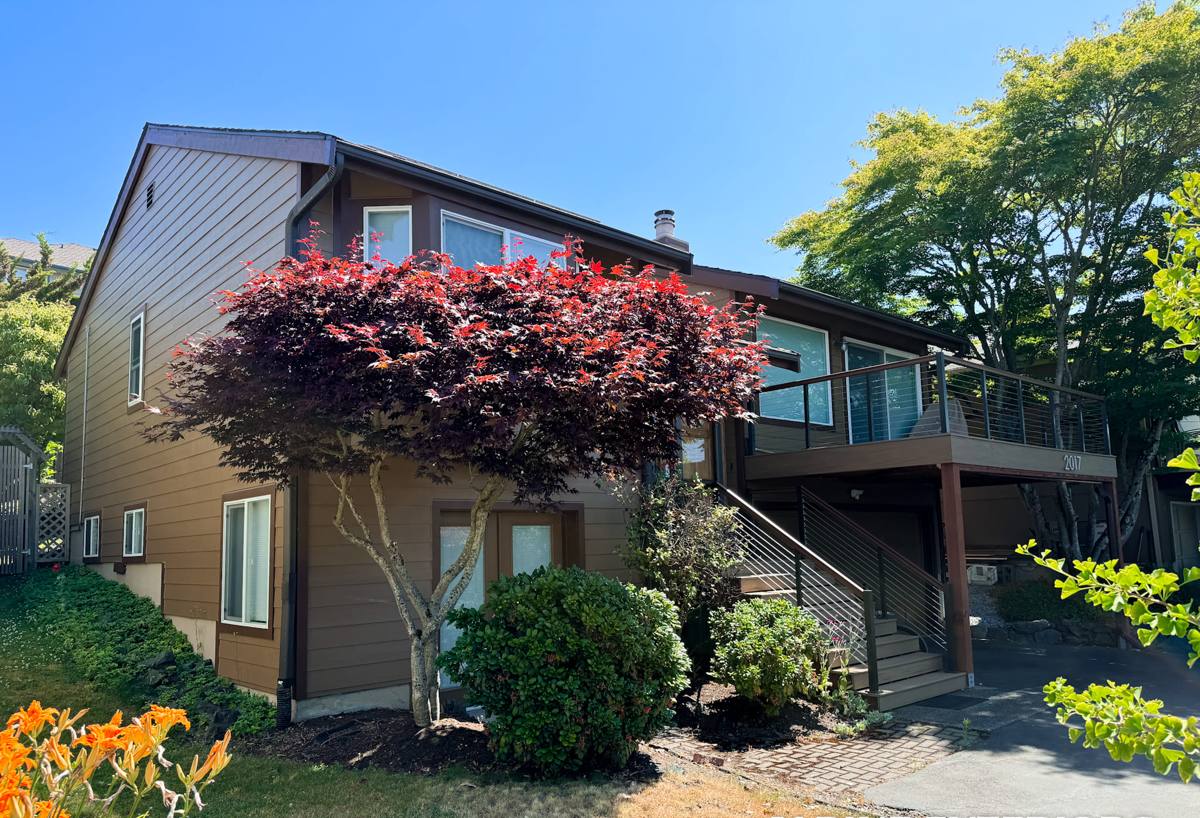
What Skagit County Weather Actually Does to a Roof
Salt Air and Corrosion
Even well inland from the coast, moisture carrying trace salt gets pushed up the Skagit valley and settles on exposed metal — fasteners, flashing, panel edges. Over years, untreated or poorly coated steel components can develop surface corrosion long before the roof itself would otherwise need replacing. This is why coating quality and fastener selection aren't cosmetic choices; they're the difference between a roof that looks the same in year 15 and one that's showing rust streaks by year 8.
Driving Rain
Storms coming up the valley don't always fall straight down. Wind-driven rain finds any weak point in flashing, fastener seals, or panel overlap and pushes water sideways and upward under normal gravity-fed drainage assumptions. A metal roof that's only detailed for vertical rainfall will eventually leak at valleys, penetrations, and low-slope transitions during the wetter, windier months.
Moss and Shade
Lyman's tree cover and proximity to the river mean a lot of roofs sit in partial shade for much of the day, especially in fall and winter when the sun angle is low. Combined with a long wet season, that's ideal moss and algae growth conditions. Moss holds moisture against roofing surfaces, and on the wrong material or with poor detailing, that trapped moisture accelerates deterioration at seams and fastener penetrations.
Why Metal Holds Up Better Here Than Many Alternatives
Metal roofing sheds water fast, doesn't absorb moisture the way organic shingle materials can, and gives moss less to grip onto compared to a textured asphalt surface. It's also a material where wind-driven rain resistance and corrosion resistance can both be engineered into the system through panel profile, sealed seams, and coating specification — rather than relying on the material's raw composition to fight the elements on its own.
That said, metal isn't maintenance-free, and it isn't automatically the right fit for every roof geometry or budget. We'll walk through the honest trade-offs below rather than oversell it.
Panel Types We Work With
| System | Best For | Trade-Offs |
|---|---|---|
| Standing seam (concealed fastener) | Long-term low maintenance, strong wind-driven rain resistance | Higher upfront cost; requires precise installation |
| Exposed fastener panel | Budget-conscious projects, outbuildings, some residential roofs | Fasteners need periodic inspection and eventual re-torquing or replacement |
| Metal shingle / shake profile | Homes wanting a traditional look with metal's durability | More seams and detail work than standing seam; installation quality matters more |
For most Lyman homes dealing with sustained wind-driven rain and salt air exposure, we lean toward standing seam for primary roof planes because concealed fasteners remove one of the main long-term corrosion and leak points. Exposed fastener systems still have a place — they're a legitimate, more affordable option for shops, additions, or lower-slope sections — but they carry a higher maintenance obligation in this specific climate, and we tell customers that upfront rather than let it surface later as a surprise.
What a Correct Installation Actually Involves
The panel itself is only part of what makes a metal roof perform. Most metal roof failures we're called to look at in this region trace back to installation shortcuts, not the material. A correct job includes:
- A fully sealed underlayment system — not just standard felt — rated for the moisture exposure a shaded, rain-heavy roof will see over decades
- Ice and water shield at eaves, valleys, and any low-slope transition, since those are where wind-driven rain concentrates
- Proper panel overlap and seam sealing matched to the actual roof pitch, not a generic minimum
- Corrosion-resistant fasteners and flashing components matched to the panel's coating so dissimilar metals don't accelerate corrosion at contact points
- Continuous ridge and soffit ventilation sized to the attic volume, so trapped moisture isn't condensing against the underside of the deck
- Clean, closed valley and penetration flashing rather than caulk-dependent details that degrade faster than the roof itself
Ventilation deserves its own mention. Metal doesn't breathe or absorb moisture like organic materials, which is an advantage on the roof surface — but it means any moisture that gets trapped in the attic from daily living (showers, cooking, laundry) has nowhere to go except through proper intake and exhaust venting. In a climate as consistently damp as Skagit County's, under-ventilated attics under metal roofs are one of the more common issues we see on inspections, and it's almost always fixable at the ventilation detailing rather than requiring a roof tear-off.
Moss and Long-Term Maintenance
No roofing material in this climate is moss-proof if conditions favor growth — shade, moisture, and organic debris buildup. Metal resists moss better than most, but gutters, valleys, and any spot where leaves or needles collect can still hold enough moisture to support growth over time. Our standard is to detail roofs to shed debris rather than trap it, and to point out during estimates where a particular tree canopy or roof geometry is going to need more attention than average.
For homeowners already dealing with moss on an existing roof, we can talk through appropriate treatment approaches for the specific material involved — metal, in particular, requires different care than asphalt shingles, since some common moss treatments and removal methods can damage coatings if used incorrectly.
Our Process, Start to Finish
- On-site assessment — we look at existing roof condition, deck condition, ventilation, shade exposure, and drainage patterns specific to your property
- System recommendation — panel type, coating, and detailing matched to your roof's pitch, exposure, and budget, with the trade-offs explained plainly
- Written estimate — scope, materials, and timeline in writing before any work starts
- Tear-off and deck inspection (when applicable) — we don't cover up deck damage; if we find rot or soft spots, we show you before proceeding
- Installation — underlayment, flashing, panels, and ventilation installed to the standard described above
- Final walkthrough — we review the finished work with you and answer questions about care and warranty coverage
What Drives Cost on a Metal Roofing Project
| Factor | Why It Matters |
|---|---|
| Panel system | Standing seam costs more upfront than exposed fastener panels but requires less long-term maintenance |
| Roof complexity | Valleys, dormers, and multiple pitches mean more flashing work and labor time |
| Existing roof condition | Deck repair, if needed, is priced separately from the roofing system itself |
| Ventilation upgrades | Adding or correcting ridge/soffit venting is often worthwhile to bundle into the same project |
| Accessibility | Steep pitches or difficult site access affect labor and safety equipment needs |
We don't publish flat per-square pricing because these factors genuinely change the number from one Lyman roof to the next — a straightforward gable roof and a roof with multiple valleys and dormers aren't comparable jobs even at the same square footage. A site visit gets you an accurate number.
Signs a Lyman Roof Needs Attention
- Rust streaking at fastener heads or panel seams on an existing metal roof
- Moss buildup concentrated in shaded valleys or north-facing slopes
- Water staining on interior ceilings after wind-driven storms specifically, rather than steady rain
- Visible daylight or gaps at flashing around chimneys, vents, or skylights
- Granule loss, curling, or soft spots if you're currently on asphalt and considering a switch to metal
- Condensation or musty odor in the attic, which often points to a ventilation issue rather than a roofing material issue
If any of these sound familiar, it's worth getting eyes on the roof before the wetter months make an existing problem worse.
Why a Crew That Already Works Lyman Makes a Difference
Roofing crews that mainly work drier regions or standard suburban tracts don't always default to the detailing this area actually requires — the extra ice-and-water coverage at valleys, the fastener and flashing compatibility for salt-tolerant longevity, the ventilation sizing for a consistently damp attic environment. We work throughout the Burlington area and into communities like Lyman regularly enough that these aren't special-case adjustments for us; they're the baseline we build to. That familiarity also means we know which roof geometries in this area tend to develop moss or drainage issues first, and we can flag that during the estimate rather than after the fact.
If you're weighing a new metal roof, a replacement, or just want an honest read on what your current roof needs, we're happy to take a look. Reach out for a free, no-pressure estimate using the form below.