 Burlington
 Building a Deck That Actually Holds Up in Mount Vernon
A deck in Mount Vernon lives a harder life than the glossy photos in a materials catalog suggest. Between the salt-laden air drifting in off the Skagit Bay and Puget Sound lowlands, the near-constant fall and winter rain, and a moss season that can stretch from October well into April, a deck here is under attack from the weather almost year-round. We build and repair decks specifically for that reality, not for a generic climate that doesn't exist in Skagit County.
This page covers what a Mount Vernon deck actually needs, what separates a deck that lasts twenty-plus years from one that starts failing in five, and how we approach these projects when we're on-site.
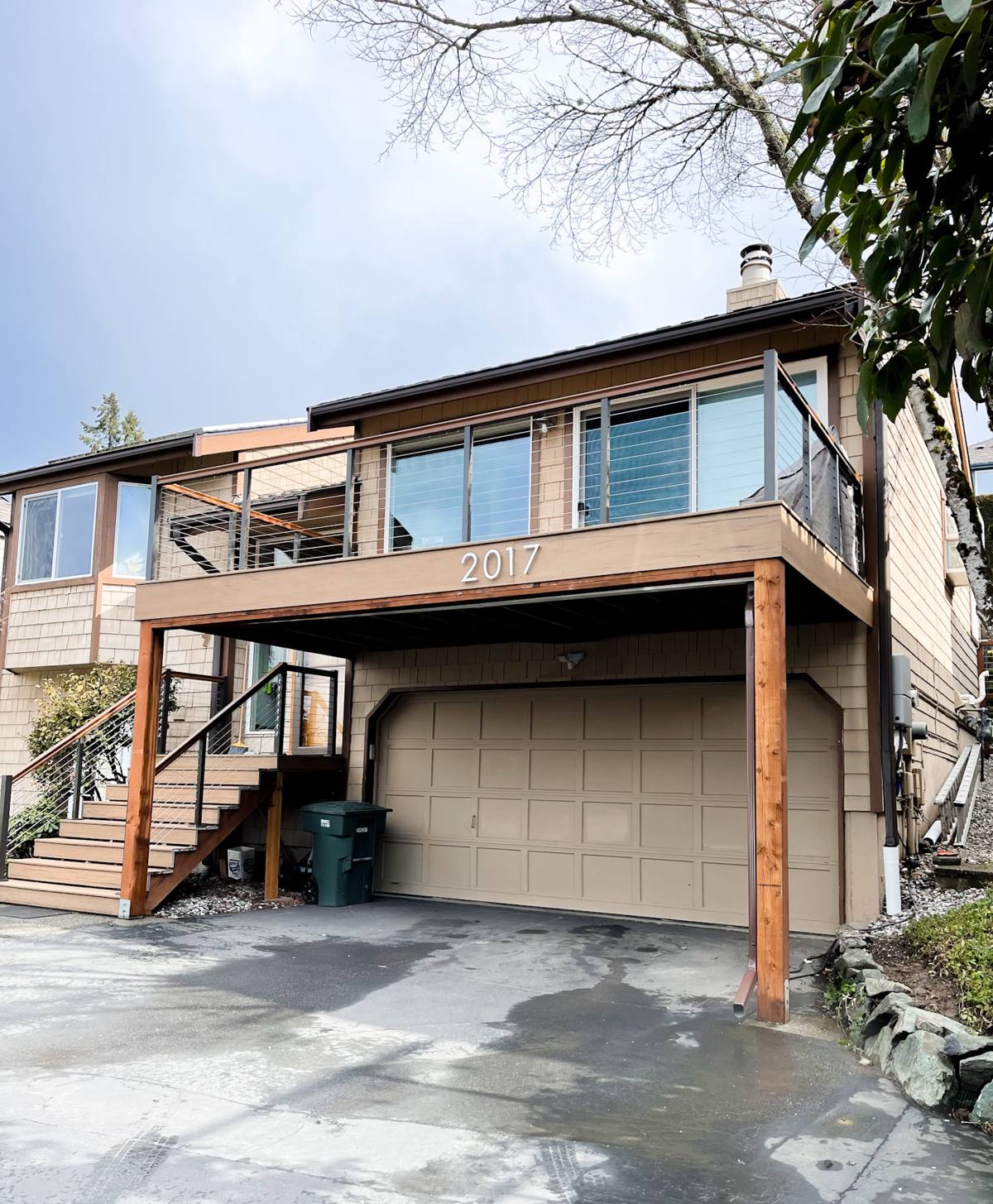
What Skagit County Weather Does to a Deck
Every material and fastener choice we make on a Mount Vernon deck traces back to three regional facts: salt in the air, a lot of rain, and long stretches of shade and dampness that grow moss faster than most homeowners expect.
Salt Air and Fasteners
Mount Vernon sits close enough to Skagit Bay and the greater Puget Sound that salt-laden moisture reaches homes on prevailing winds, especially on higher ground and open lots. Salt air accelerates corrosion in ungalvanized or poorly coated hardware. Over a few seasons, cheap fasteners can rust, stain the decking around them, and lose holding strength at the exact joints carrying the most load. We use stainless steel or heavy hot-dip galvanized fasteners and structural connectors rated for coastal exposure, not the minimum-grade hardware that's fine inland but shortens a deck's life here.
Driving Rain and Standing Water
Western Washington rain doesn't just fall straight down — wind-driven rain gets under railings, behind ledger boards, and into any gap that isn't properly flashed or sloped. A deck that traps water instead of shedding it will rot from the inside before the surface ever looks bad. Every horizontal surface on a deck we build is pitched to drain, and every place where water could collect against wood gets flashed or sealed.
Moss, Algae, and Extended Shade
Skagit County's long wet season, combined with mature tree cover common in and around Mount Vernon, means decks here spend months at a time damp and shaded. That's ideal moss and algae growth conditions, and moss on a walking surface isn't just unsightly — it's slick and it holds moisture against the decking material, speeding up rot or surface degradation depending on what you built with. Material choice, gap spacing, and even deck orientation all affect how much moss becomes a maintenance headache.
Choosing the Right Decking Material
There's no single "best" decking material — there's the right material for your budget, your maintenance appetite, and how much shade and moisture your specific lot deals with. Here's how the common options actually perform in this climate:
| Material | Moisture Behavior | Moss/Algae Resistance | Maintenance | Typical Lifespan |
|---|---|---|---|---|
| Pressure-Treated Pine/Fir | Resists rot with proper sealing; needs re-sealing regularly | Moderate — moss gains a foothold if not cleaned | Annual cleaning, re-staining every 2-3 years | 15-20 years with upkeep |
| Cedar | Naturally rot- and insect-resistant; still needs sealing to hold color and shed water | Better natural resistance, but still needs periodic cleaning | Cleaning and oil/sealant every 1-2 years | 20-25 years with upkeep |
| Composite/PVC Decking | Doesn't absorb water or rot; some early-generation composites could trap surface moisture | Textured caps resist algae growth better than wood, but still get slick in constant shade | Periodic washing, no staining or sealing | 25-30+ years, manufacturer-warrantied |
We don't push one material on every job. A shaded, tree-covered lot with heavy moss pressure is a different conversation than an open, sunnier lot where a wood deck can dry out between rains. We'll walk your specific site with you and explain the real trade-offs — cost up front versus maintenance over time — rather than just selling whatever has the best margin.
What a Correctly Built Deck Requires
Decking material gets all the attention, but most deck failures we get called to repair start below the surface, in the structure and the details you don't see once the boards go down.
Ledger Board and Flashing
The ledger board — where the deck attaches to the house — is the single most common failure point on decks in wet climates. If it isn't properly flashed with the flashing lapped correctly over the house's water-resistive barrier, water gets behind it and rots both the ledger and the rim joist it's attached to, often silently for years. This is also a structural safety issue, since the ledger carries a significant share of the deck's load. We flash every ledger connection correctly and use proper structural fasteners rated for the connection — not construction screws.
Footings and Frost Depth
Skagit County's frost depth requirements and local soil conditions determine how deep footings need to go and how they need to be sized. Undersized or shallow footings can shift over time, especially in the region's wetter, heavier soils, leading to a deck that develops a lean or bounce years after it was built. We size and place footings to local code and site soil conditions, not a one-size-fits-all minimum.
Joist Spacing, Ventilation, and Under-Deck Drainage
Tight joist spacing and proper blocking keep decking from flexing and cupping over time. Just as important — and often skipped — is making sure there's adequate airflow underneath the deck and that water draining off the surface has somewhere to go besides pooling against your foundation or crawlspace vents. On low decks close to grade, this detail alone determines whether the framing stays dry or slowly rots from underneath.
Railings and Stairs
Railings and stair stringers see constant weather exposure and constant physical load, which makes them a common spot for both rot and code non-compliance on older or DIY-built decks. We build railings and stairs to current code height, baluster spacing, and load requirements, with the same attention to fastener grade and flashing as the rest of the structure.
Our Process for Mount Vernon Deck Projects
- Site visit and assessment — we look at your lot's sun/shade exposure, drainage, soil, and how the deck connects to your house before recommending materials or layout.
- Design and material selection — we go over the real trade-offs between wood and composite options for your specific site and budget, not a generic pitch.
- Permitting — most decks above a certain height or attached to the house require a permit; we handle the application and inspections so you don't have to navigate the county or city process yourself.
- Construction — footings, framing, ledger flashing, decking, and railings, built to code and to the details above.
- Final walkthrough — we go over the finished deck with you, including what maintenance it will and won't need going forward.
Permits and Local Considerations Around Mount Vernon
Mount Vernon and the surrounding unincorporated parts of Skagit County each have their own permitting requirements for attached and detached decks, and enforcement varies by jurisdiction and by the deck's height and size. Some lower-lying areas near the Skagit River also fall within mapped flood zones, which can affect footing and framing requirements. We handle the permit application and coordinate inspections as part of the build, and we'll flag early on if your property has any zoning or floodplain factors that affect the design — better to know that before we start digging footings than after.
Maintenance That Actually Matters Here
Every deck needs some upkeep, but in this climate a few specific things matter more than the generic "clean it once a year" advice you'll find online. Here's what we tell homeowners to actually stay on top of:
- Clear leaves and debris from between boards and off the surface before fall rains set in — trapped organic matter holds moisture and feeds moss growth.
- Sweep or pressure-wash moss off the walking surface each spring before it gets slick and established — a stiff brush and mild cleaner is often enough if caught early.
- Check the gap around the ledger board and any spot where the deck meets the house for signs of water staining or soft wood.
- Re-seal or re-stain wood decking on the schedule appropriate to the species — don't wait until the wood is visibly graying and cracking.
- Confirm gutters and downspouts near the deck are directing water away from the structure, not onto or under it.
- Inspect railing posts and stair stringers annually for movement, since these connections take the most physical stress.
Why Local Experience Matters for a Mount Vernon Deck
A deck built from a generic national playbook doesn't account for what actually happens to wood, hardware, and finishes when they sit through a Skagit Valley winter. Crews who already work in Mount Vernon know which fastener grades hold up to the salt air, how long moss takes to establish on a shaded north-facing deck, and what the local permitting offices actually require versus what's just boilerplate code language. That local knowledge shows up in fewer callbacks and a deck that still looks and performs well a decade in, not just on installation day.
If you're planning a new deck or need an honest look at whether an existing one is still structurally sound, we're happy to come take a look. Reach out for a free, no-pressure estimate using the form below.