 Burlington
 Windows in Mount Vernon Take a Different Kind of Beating
Mount Vernon sits in the flat, low-lying part of Skagit County, close enough to Skagit Bay and the Sound that salt-laden marine air is a fact of life, not an occasional visitor. Add the Skagit Valley's long, wet fall-through-spring stretch of driving rain, and a moss season that can run eight months or more on north-facing walls, and you've got conditions that are genuinely harder on window frames, seals, and trim than what a house fifty miles inland deals with. Wind-driven rain doesn't just fall on a window — it gets pushed sideways into every gap in the flashing and frame, which is exactly where older or poorly installed windows fail first.
We're based in Burlington, a few minutes up the road, and Mount Vernon is one of the communities our crews are in on a regular basis. That matters for window replacement specifically, because the right approach here isn't generic — it's shaped by what this exact climate does to a house over ten, twenty, or thirty years.
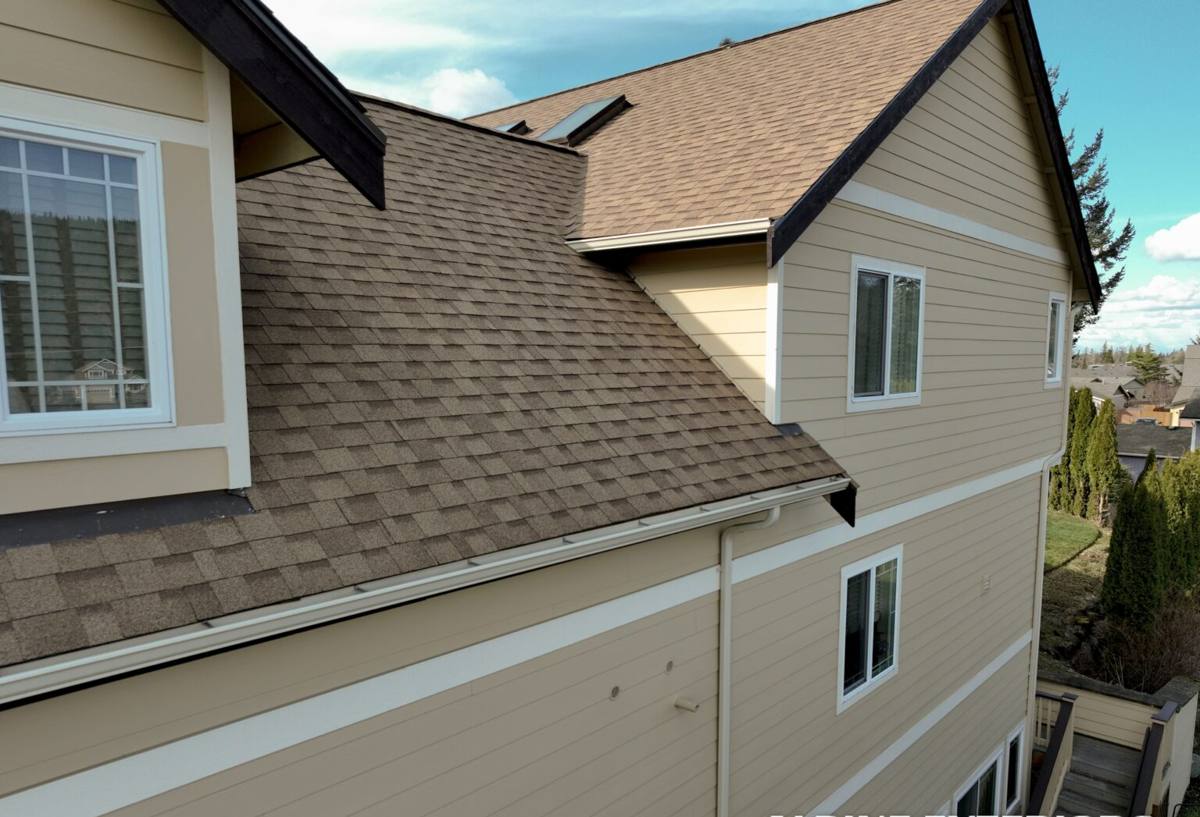
How to Tell Your Windows Are Losing the Fight
Windows rarely fail all at once. They give you warning signs for years before a homeowner finally calls someone. In Skagit County's climate, the signs tend to be moisture-related first and energy-related second:
- Fog or a haze between the panes of a double-pane window — the seal has failed and moist air has gotten into the gap
- Soft, discolored, or spongy wood trim around the frame, especially on the north or west-facing walls that catch the worst of the weather
- Windows that stick, won't latch fully, or have swollen shut during the wet months
- Visible moss or dark streaking building up on the sill or lower frame
- A noticeable draft or cold spot near the glass even with the window fully closed
- Rising heating bills without any other explanation
- Condensation forming on the inside of the glass regularly through the winter
Any one of these on its own might just mean a resealing or minor repair. Several of them together, especially rot in the surrounding framing, usually means the window and the flashing behind it need to come out and be done right.
What a Correct Window Replacement Actually Involves
Swapping a window is easy to do badly and easy to make look fine for a year or two before the problems show up. A correct replacement in this climate is really a moisture-management job that happens to involve glass and a frame. That means:
The Opening Gets Inspected, Not Just the Window
Before a new window goes in, we check the rough opening for rot, soft sheathing, and old flashing that's failed. If water has been getting behind the old unit — which is common on homes that have taken years of wind-driven rain — that damage has to be addressed first. Installing a new window over a compromised opening just hides the problem for a while.
Flashing and Water Management Come First
The window itself is almost never the actual weak point; the flashing details around it are. We integrate a sill pan, proper head flashing, and side flashing that shed water outward and downward, lapped correctly with the house's weather-resistive barrier. This is the step that's most often shortcut on a fast, cheap install, and it's the step that determines whether the window is still performing in fifteen years or leaking again in three.
Air Sealing and Insulation Around the Frame
A gap around the frame isn't just an energy loss — in a wet climate it's also a path for moisture and condensation to collect inside the wall cavity. We seal and insulate that gap properly rather than relying on trim to hide a sloppy fit.
Fit and Level, Not Just "It Closes"
A window that's slightly out of square will bind, won't seal evenly, and will wear out its hardware and weatherstripping faster. We shim, level, and square every unit before it's fastened and sealed.
Coordination With Siding and Trim
Because we also do siding work, we pay close attention to how the new window ties into the surrounding wall cladding and trim. A window replacement that ignores the siding interface is a common source of the leaks that show up two or three winters later.
Choosing the Right Window for a Skagit County House
Material and construction quality matter more here than in a drier climate, because the window is dealing with sustained moisture exposure and, closer to the water, salt air. Here's how the common options generally compare for this area:
| Material | How It Handles This Climate | Maintenance | General Notes |
|---|---|---|---|
| Vinyl | Good moisture and salt-air resistance; won't rot; performs consistently over a wide temperature range | Low — occasional cleaning | The most common choice for straightforward replacements; good value |
| Fiberglass | Excellent stability in wet, temperature-swinging conditions; expands and contracts close to the rate of glass, which helps seals last | Low | Higher upfront cost; strong long-term performance in coastal-influenced climates |
| Wood (unclad) | Beautiful but the most vulnerable to Skagit Valley's rain and moss exposure unless maintained diligently | High — regular repainting and sealing | We recommend this mainly for interior-facing applications or homes with significant weather protection |
| Wood-Clad (vinyl or aluminum exterior) | Combines an interior wood look with an exterior shell that resists moisture and salt air | Moderate | A middle-ground option where appearance matters and budget allows |
For most Mount Vernon homes, we steer people toward vinyl or fiberglass for anything facing prevailing weather, and reserve unclad wood for protected elevations where a homeowner specifically wants that look and is prepared to keep up with it. That's a maintenance and moisture-behavior recommendation based on how these materials actually perform here — not a knock on any manufacturer.
Our Process for a Mount Vernon Window Replacement
- Walkthrough and assessment — we look at every window being considered, check framing condition, and note any signs of past water intrusion
- Measurement and product selection — exact measurements for each opening, and a straightforward conversation about material, glass package, and budget
- Written estimate — a clear scope and price before anything is ordered, so there are no surprises
- Removal and opening repair — old units come out carefully, and any rot or damaged sheathing found underneath gets repaired before the new window goes in
- Flashing and installation — sill pan, flashing, air sealing, and precise setting of the new window
- Trim and finish work — interior and exterior trim tied in cleanly, matched to the surrounding wall where possible
- Walkthrough and cleanup — every window operated and checked with you before we consider the job done
What Actually Drives the Cost
Every home is different, so we don't publish a flat price list, but the main variables that move a window replacement estimate up or down are consistent:
| Factor | Why It Matters |
|---|---|
| Number and size of windows | More openings and larger glass areas mean more material and labor |
| Material chosen | Vinyl, fiberglass, and clad-wood windows carry different unit costs |
| Condition of the rough opening | Rot repair or sheathing replacement adds time and material before the new window can go in |
| Access and height | Second-story or hard-to-reach windows take longer and may need additional equipment |
| Glass package | Upgraded low-E coatings or gas fills add cost but improve comfort and efficiency |
| Trim and siding tie-in | Matching existing trim profiles or coordinating with siding repair adds scope |
The honest range for a straightforward window replacement is broad — a single standard window is a very different job than a whole-house replacement with rot repair — which is why we always measure and inspect before quoting instead of guessing over the phone.
Why a Crew That Already Works Mount Vernon Is Worth Something
A window replacement done by a crew that hasn't worked in this specific area much can still turn out fine, but there's real value in local familiarity. We know what the flashing failures typically look like on the housing stock common around Mount Vernon and greater Skagit County. We know how much wind-driven rain a west or south wall actually takes in a January storm coming off the water, versus a protected wall that can get away with less. We're not learning the local building department's requirements for the first time on your project, and we're close enough that a callback or a final adjustment doesn't mean a half-day drive for us.
None of that replaces good workmanship — but it does mean fewer surprises and a crew that's already calibrated to what actually holds up here.
Questions Worth Asking Before You Hire
Whoever you choose for a window replacement in Mount Vernon, these are worth asking before you sign anything:
- Will you inspect and repair the rough opening if there's hidden rot, or just install over it?
- What flashing and sill pan details do you use, specifically?
- Is the estimate written and itemized, or a verbal ballpark?
- What's the manufacturer's warranty, and what's your own workmanship warranty?
- Do you carry current liability insurance and, if required, a Washington contractor license?
- How do you handle unexpected rot or damage found once the old window is out?
- Can you show how the new window will tie into the existing siding and trim?
Keeping New Windows Performing in This Climate
A properly installed window in Skagit County should need very little from you, but a few habits extend its life:
Rinse accumulated salt residue and grime off exterior frames a couple of times a year, especially on walls exposed to weather off the water. Keep gutters and downspouts clear so runoff isn't sheeting down across window heads. Check exterior caulking at the trim joints annually and touch it up before a small gap becomes a path for water. And if you notice moss starting to build up on a sill or lower frame, clear it early — left alone through a wet Skagit Valley winter, it holds moisture against the surface far longer than the weather alone would.
If your windows in Mount Vernon are drafty, fogged, hard to operate, or just original to a house that's due, we're glad to come take a look. The estimate is free, there's no pressure, and you'll get a straight answer about what your windows actually need — use the form below to get started.