 Burlington
 Building New in Anacortes: Why Window Choice Matters From Day One
When you're building new in Anacortes, windows are one of the few components you only get to install correctly once. On a retrofit, a mistake can sometimes be corrected later without tearing into the wall assembly. On new construction, the window opening, the flashing, and the water management plan for the whole wall are built around the window going in at that moment. Get it wrong and the consequences — rot, staining, callbacks on trim and siding — can take years to show up, long after the framing crew and the window installer have moved on to other jobs.
Anacortes sits out on Fidalgo Island, fully exposed to Rosario Strait and the open water around the San Juans. That means new construction here faces a different set of conditions than an inland Skagit County build. Salt-laden air, wind-driven rain off the water, and long stretches of damp, low-light weather all put more stress on a window opening than a typical build fifteen miles inland. We treat new-construction window work in Anacortes as its own job, not a smaller version of what we'd do anywhere else in the county.
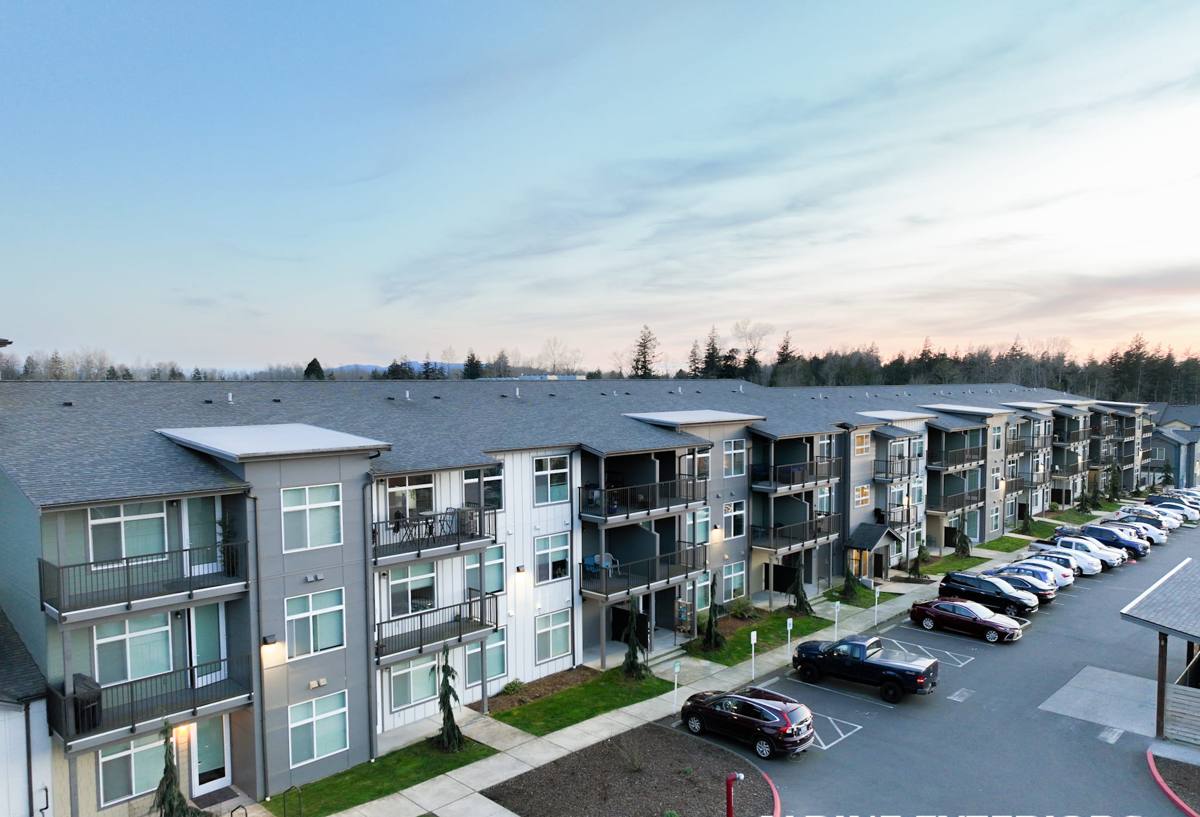
What Skagit County's Marine Climate Demands From New Windows
Three things define window performance on the Anacortes side of our service area, and all three should shape decisions made before the windows are ever ordered.
Salt air and corrosion
Airborne salt accelerates corrosion on hardware, fasteners, and some finishes faster than a few miles inland. Cheap cam locks, unprotected screws, and low-grade cladding show pitting and streaking well before a comparable window would in Burlington or Mount Vernon. Hardware and fastener quality is not a place to cut cost on an Anacortes build.
Driving rain
Storms coming off the strait don't just fall — they push. Wind-driven rain finds any gap in flashing or sealant and forces water sideways and upward, which is exactly the direction a poorly lapped flashing detail fails. This is the single biggest reason new-construction windows fail on the water side of Skagit County: not the window itself, but the water management around it.
Moss and prolonged dampness
Anacortes has a long moss season, and that dampness doesn't stay confined to roofs. Sills, sub-sills, and any horizontal trim near a window opening stay wet longer here than in drier parts of the county, which means end-grain wood trim, unsealed cuts, and marginal drainage details get punished. A correct new-construction detail gives water a way out, every time, without relying on caulk alone to keep it there.
New-Construction vs. Retrofit: Why the Approach Is Different
We get asked fairly often why a "new-construction window" costs and installs differently than a replacement window. The answer is the nailing fin.
New-construction windows have an integral nailing flange that fastens directly to the framing and gets integrated into the wall's water-resistive barrier (house wrap or building paper) with flashing tape and a proper shingle-lap sequence. This is the strongest, most weathertight way to install a window, but it only works when the wall is open — which is exactly the situation you have during a new build or a full re-side down to the studs.
Retrofit or "replacement" windows, by contrast, are built to fit into an existing opening without disturbing the surrounding siding, relying on the existing frame and flange instead of a new one. Both approaches are legitimate, but they are not interchangeable. Using a retrofit window on new construction — or vice versa — leads to compromised water management, and it's a mistake we see often enough to call out directly.
What a Correct New-Construction Installation Actually Involves
A window that looks straight and level from inside the house can still be set up to fail. The details that matter happen in layers, most of them hidden once the siding goes on.
The rough opening
The opening needs to be framed square, plumb, and sized correctly with the manufacturer's tolerances in mind — not just "close enough" for the window to physically fit. An opening that's out of square forces the installer to compensate with shims and sealant, which is where long-term problems start.
The sill pan
Every new-construction window opening on a coastal build should get a sloped sill pan flashing before the window ever sets in place. This is the last line of defense: if any water does get past the window itself, the sill pan directs it back outside instead of letting it sit against the framing. On a site exposed to driving rain off the strait, we don't consider this optional.
Flashing and the water-resistive barrier
Flashing tape gets integrated with the house wrap in a specific order — sides first, then head flashing lapped over the top, following a shingle-style sequence so every layer sheds water down and out, never trapping it. Head flashing with a drip cap is standard practice on any wall facing prevailing weather off the water.
Fastening and sealing
The nailing fin gets fastened per the manufacturer's schedule — enough fasteners, spaced correctly, driven straight rather than at an angle that tears the flange. Sealant goes where it belongs (and just as importantly, is left out where it doesn't — a sill's weep path should never get sealed shut).
Interior air sealing and insulation
The gap between the window frame and the rough opening gets insulated and air-sealed from the inside, which affects both energy performance and condensation control. A window that's watertight on the outside but drafty and prone to interior condensation on the inside isn't a complete job.
Frame Material Choices for an Anacortes Build
Frame material has a real effect on how a window holds up to salt air and sustained moisture. There's no single "best" answer for every project — it depends on budget, the style of the home, and how much long-term maintenance the owner wants to take on.
| Frame Material | How It Handles Salt Air & Moisture | Maintenance | Where It Fits Best |
|---|---|---|---|
| Vinyl | Won't rust or corrode; performs well in coastal air when hardware is good quality | Low — rinse occasionally, no painting | Budget-conscious builds, rental or spec homes |
| Fiberglass | Excellent — dimensionally stable, doesn't expand/contract with temperature swings, resists moisture well | Low | Homes where long-term durability matters more than upfront cost |
| Wood-clad | Good on the exterior (clad side), but any exposed or damaged wood is vulnerable in a damp climate | Higher — cladding seams and any exposed wood need monitoring | Homes prioritizing an interior wood look, with owners willing to maintain it |
| Aluminum | Conducts cold and can corrode without a quality anodized or powder-coated finish | Moderate | Less common for residential in this climate; we typically steer clients elsewhere |
For most Anacortes new builds we see, vinyl and fiberglass cover the vast majority of budgets and needs well. We'll talk through the honest trade-offs for your specific project rather than push a single product — the right call depends on the home, not a one-size answer.
Glass Packages and Performance Specs Worth Getting Right
The frame gets most of the attention, but the glass package does a lot of the actual work — comfort, condensation resistance, and energy performance all trace back to it.
| Spec | Why It Matters Here |
|---|---|
| Low-E coating | Reduces heat loss through the glass during Skagit County's long cool, overcast stretches |
| Argon or krypton fill | Improves insulating value between panes; standard on most quality double-pane units today |
| Warm-edge spacer | Reduces condensation risk at the glass edge — relevant given how often humidity stays high here |
| Impact-rated or laminated options | Worth discussing for exposed, water-facing elevations that take direct wind-driven rain and debris |
We size and spec glass packages based on the wall's orientation — a window facing open water or prevailing wind gets different consideration than one tucked on a protected side of the home.
Our Process, From Plans to Final Walkthrough
- Plan review: we look at window schedules, rough opening sizes, and elevations before ordering anything, catching sizing or spec issues while they're still cheap to fix.
- Coordination with the framer: we confirm rough openings are square, correctly sized, and framed to manufacturer tolerances before windows arrive on site.
- Sill pan and flashing installation: sloped sill pans and shingle-lapped flashing go in ahead of the window, integrated with the house wrap.
- Window setting: units are set plumb, level, and square, and fastened per manufacturer specification.
- Sealing and air-sealing: exterior sealant where it belongs, interior insulation and air-sealing around the frame.
- Trim-out coordination: we work with the siding and trim crews so exterior details tie in cleanly and water paths stay unbroken.
- Final walkthrough: every unit gets checked for operation, seal, and finish before we call the job done.
Common Mistakes We See on New-Construction Window Jobs
Most window failures we're called to diagnose in the Anacortes area trace back to one of a handful of avoidable errors:
- Skipping or improperly sloping the sill pan flashing
- Flashing tape applied out of sequence, trapping water instead of shedding it
- Sealant applied along the bottom of the sill, blocking the weep path
- Rough openings that are out of square, forcing excessive shimming
- Low-grade hardware or fasteners that corrode quickly in salt air
- Interior air-sealing skipped, leading to drafts and condensation later
- Using a retrofit-style window in a new-construction opening, or the reverse
None of these are visible on the day the window goes in. They show up a year or two later as staining, soft trim, or a draft that wasn't there before — which is exactly why the installation details matter more than they might seem to at the time.
Why a Crew That Already Works Anacortes Matters
Window installation isn't identical from one part of Skagit County to another. A crew that mainly works inland can install a window correctly by the book and still miss the extra margin that Anacortes conditions call for — a more conservative flashing lap, a hardware upgrade that inland jobs don't need, or a sill detail sized for wind-driven rain rather than ordinary rainfall. We work new-construction and re-side projects across Burlington, Mount Vernon, and out to the coast, so we adjust our details based on where the job actually sits, not a single generic standard applied everywhere.
We also know how our work needs to hand off to framers, siding crews, and trim carpenters on a job site, which matters on new construction where several trades are touching the same wall assembly in sequence. A window installed in isolation from the rest of the building envelope is where problems start.
Get an Estimate for Your Anacortes Build
If you're framing a new home or addition in the Anacortes area and want window installation done right from the rough opening forward, we're glad to walk through your plans and give you a straightforward, no-pressure estimate. There's a form below — reach out and we'll take a look at what your project needs.