 Burlington
 Roofing Built for Clear Lake's Weather, Not Just Any Weather
Clear Lake sits in a pocket of Skagit County where the climate asks more of a roof than most manufacturers' warranty language accounts for. You've got long stretches of driving rain off the water and low pressure systems, damp air that never fully dries out between storms, and enough shade from the tree cover around the lake to keep moss and moisture sitting on roof surfaces far longer than they would on a more exposed lot in town. A roof installed without those specifics in mind might look fine for a year or two, then start showing granule loss, moss colonies, and soft decking well before it should.
A new roof installation in this area isn't just about swapping old shingles for new ones. It's about building a roof system — decking, underlayment, ventilation, flashing, and surface material — that's matched to how water and moisture actually behave on a Clear Lake roofline through a wet Skagit County winter and a mossy summer.
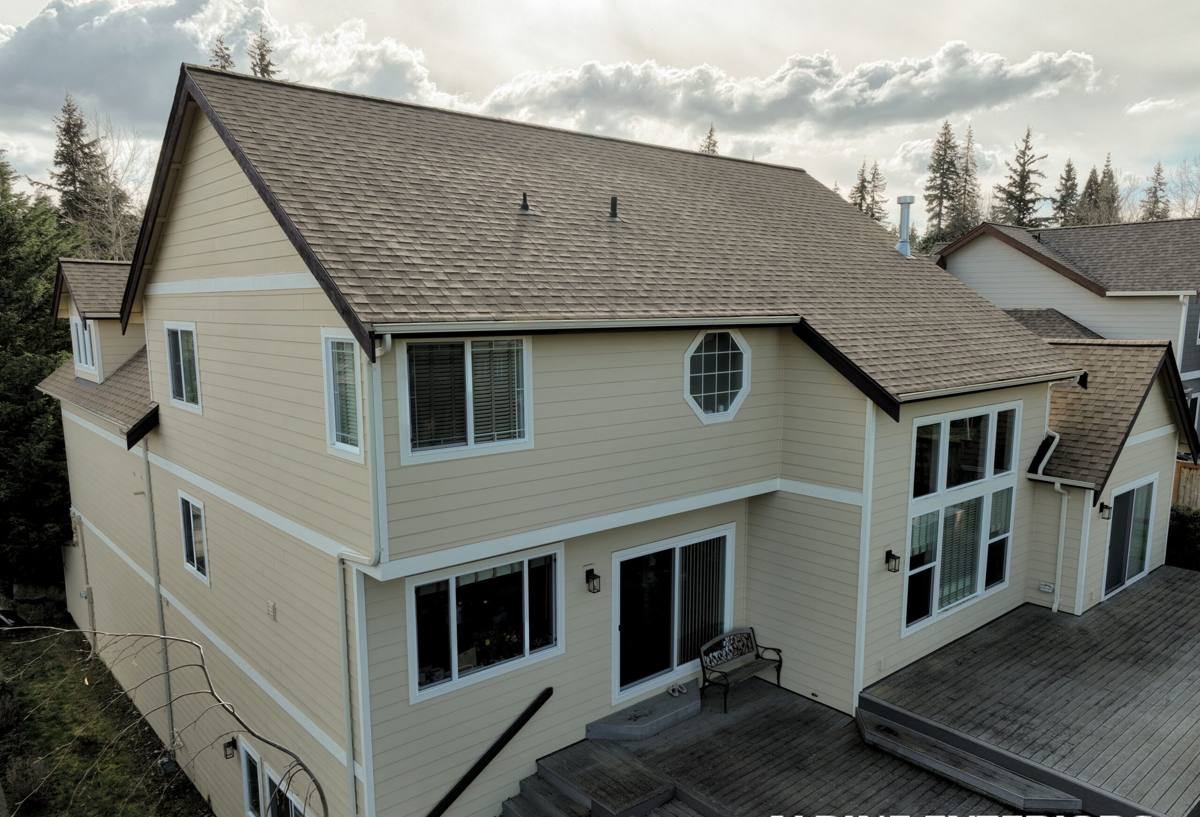
What the Local Climate Actually Does to a Roof
Rain That Doesn't Let Up
Burlington and the surrounding Skagit Valley see extended rain events, not just quick showers. Water sits on a roof surface and works into every seam, nail penetration, and valley for hours or days at a time. Roofs here need underlayment and flashing details sized for sustained saturation, not just occasional downpours.
Moss Season Runs Long
Between the tree canopy around Clear Lake and the region's mild, damp winters, moss has a wide window to establish itself — often close to year-round on north-facing slopes or shaded sections. Moss isn't just cosmetic. It holds moisture against the shingle surface, lifts shingle edges as it grows, and accelerates granule loss, which shortens the life of an otherwise sound roof.
Salt Air Off the Water
Being close to Puget Sound and the Samish/Padilla Bay area means homes in this part of Skagit County get some exposure to salt-laden air, which speeds up corrosion on exposed metal — fasteners, flashing, vents, and gutter hardware. Roofing components that aren't rated for that exposure can rust and fail years ahead of schedule, even while the shingles themselves still look serviceable.
Signs a Clear Lake Home Needs a New Roof, Not a Repair
- Granules collecting in gutters or at downspout outlets, especially after wind or heavy rain
- Moss or dark algae streaking across large sections, not just isolated spots
- Shingles that are cupping, curling at the edges, or visibly brittle
- Soft or spongy decking felt when walking the roof, or sagging visible from the ground
- Daylight visible through the roof deck from inside the attic
- Repeated leaks in the same area despite prior patch repairs
- Roof age at or beyond 20-25 years for asphalt composition shingle in this climate
- Rusted or failing flashing around chimneys, skylights, and valleys
One or two of these on their own might mean a targeted repair is enough. Several at once, especially combined with roof age, usually means repairs are just delaying an inevitable full replacement — often at higher total cost than doing it right the first time.
What a Correct Installation Actually Involves
Full Tear-Off and Deck Inspection
We don't install new roofing over old layers. A full tear-off lets us see the actual deck condition — something you can't evaluate from the ground or even from inside the attic. Any soft, delaminated, or water-damaged sheathing gets identified and replaced before anything new goes down. Skipping this step is one of the most common ways a "new roof" fails early, because the new material is only as good as what it's fastened to.
Ice and Water Shield in the Right Places
Valleys, eaves, and roof penetrations are where sustained Skagit County rain finds its way in. Self-adhering ice and water barrier membrane in these zones gives the roof a sealed layer that ordinary underlayment alone doesn't provide, which matters more here than in drier climates.
Synthetic Underlayment Across the Field
Over the full roof deck, a synthetic underlayment provides a second line of defense against wind-driven rain and holds up to the extended damp exposure a roof might see during a multi-day install if weather shifts mid-project.
Flashing Rated for Salt Air Exposure
Step flashing, valley flashing, and pipe boots get selected with the area's salt air exposure in mind. Using the right metal and coating here avoids the premature rust-through that's common with lower-grade hardware in coastal-influenced Skagit County neighborhoods.
Balanced Attic Ventilation
Intake at the eaves and exhaust at the ridge, sized to the attic volume, keep moist air moving instead of condensing against the underside of the deck. Poor ventilation is a major hidden contributor to premature decking rot and interior moss-friendly conditions, and it's a step that's easy to shortcut on a re-roof if nobody's paying attention.
Fastening to Manufacturer and Code Spec
Nail placement, pattern, and count affect wind resistance and warranty validity. This is a detail that separates a roof that holds up through Skagit County's winter wind events from one that doesn't.
Comparing Roofing Materials for a Clear Lake Home
| Material | Moss/Moisture Resistance | Typical Lifespan (This Climate) | Notes for This Area |
|---|---|---|---|
| Standard 3-tab asphalt shingle | Lower — flatter profile holds moisture | 15-20 years | Lowest upfront cost, but shortest service life given local moss pressure |
| Architectural (dimensional) asphalt shingle | Moderate to good, especially with algae-resistant granules | 25-30 years | Most common choice locally; good balance of cost, durability, and appearance |
| Standing seam metal | Excellent — sheds moss and water quickly | 40-50+ years | Higher upfront cost; needs coastal-rated fasteners and coatings for salt air |
| Synthetic/composite shingle | Good | 30-40 years | Useful where appearance of shake or slate is wanted without the moisture retention of natural wood |
For most Clear Lake homes, an architectural asphalt shingle with algae-resistant granules hits the right balance of upfront cost and long-term performance against moss. Metal roofing is worth serious consideration for homeowners planning to stay long-term or who want to minimize moss maintenance almost entirely, but it needs to be installed with hardware rated for the salt exposure this area sees.
How Our Process Works
- On-site assessment — we walk the roof and attic, check decking condition where accessible, evaluate ventilation, and note any moss or moisture patterns specific to your roof's exposure and tree cover.
- Written estimate — a clear scope covering tear-off, decking repair allowance, underlayment, flashing, ventilation work, and material options, so you're comparing apples to apples if you're getting other bids.
- Scheduling around weather — we plan installs to minimize the window your home is exposed to open sky, working with Skagit County's rain patterns rather than against them.
- Tear-off and deck repair — old roofing removed, deck inspected and repaired as needed before anything new is installed.
- Underlayment, flashing, and ventilation installed — the parts of the job that don't show but determine how long the roof actually lasts.
- Final material installation — shingles or metal installed to manufacturer spec and local code.
- Cleanup and walkthrough — site cleared of debris and nails, and we walk the finished roof with you.
Why a Crew That Already Works Clear Lake Makes a Difference
A roofing crew that's unfamiliar with this specific pocket of Skagit County will often price and spec a job as if it were a generic Pacific Northwest roof. That misses details that matter here: how much shade a given lot gets off the lake, whether a home sits close enough to open water to warrant upgraded flashing hardware, and how local permitting and inspection typically go in Burlington and unincorporated Skagit County.
Working this area regularly also means we're not guessing at moss pressure or drainage patterns — we've seen how roofs on similar lots around Clear Lake actually hold up over time, and we spec accordingly rather than defaulting to a one-size-fits-all install.
Maintaining Your New Roof Against Moss and Moisture
- Keep overhanging branches trimmed back to reduce shade and debris buildup on the roof surface
- Clear gutters and downspouts each fall so water isn't backing up under the roof edge
- Have moss treated at the first sign of growth rather than waiting for it to spread
- Check attic ventilation isn't blocked by insulation at the eaves
- Schedule a visual roof check every year or two, especially after major storms
None of this replaces a correctly installed roof, but it extends the life of one — especially in a spot like Clear Lake where moss and moisture have every advantage.
If your roof is showing its age or you're just not sure whether a repair will hold, we're happy to take a look. Reach out for a free, no-pressure estimate — someone who knows this area's roofs will walk the property with you and give you a straight answer on what it actually needs.