 Burlington
 Edison Roofs Face a Different Set of Problems
Edison sits close enough to open saltwater that homes here deal with a combination most inland Skagit County towns don't: salt-laden air, wind-driven rain off the water, and long stretches of gray, damp weather that never really dries out a roof between storms. That combination is hard on roofing systems that were designed with a drier, more sheltered climate in mind. A roof that performs fine in a protected valley can fail early in Edison if it wasn't built for the exposure.
We're a Burlington-based crew, and Edison is part of our regular service area — not a stretch job we take once a year. That matters more than it sounds, because the failure patterns we see on Edison roofs (moss buildup in shaded, moisture-holding sections, corroded fasteners near the water, soft decking at eave edges) are specific enough that a contractor unfamiliar with the area can miss them entirely.
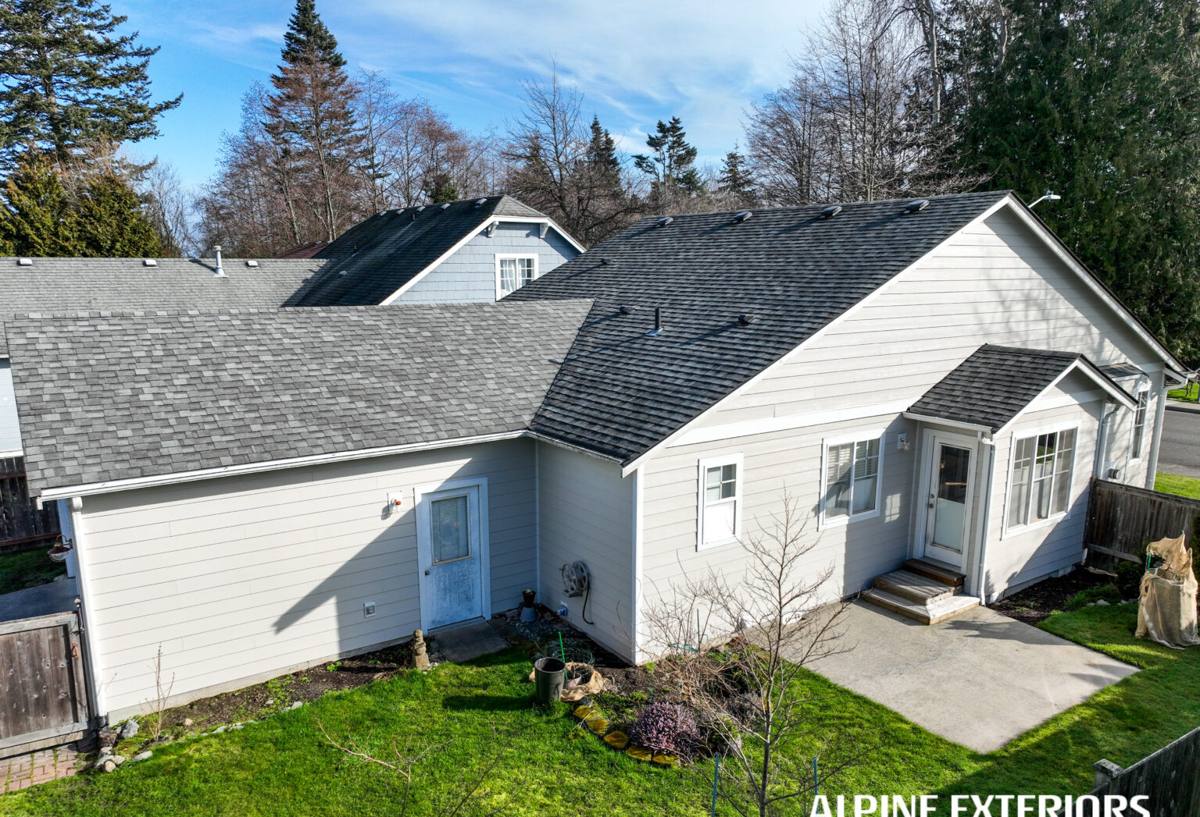
What Driving Rain and Salt Air Actually Do to a Roof
Wind-Driven Rain
Rain that falls straight down is easy for any roof to shed. Rain that's pushed sideways by wind off the water finds its way under shingle tabs, around poorly sealed flashing, and into any gap in the underlayment. Over years, this is what causes hidden leaks that show up as a stain on a ceiling long after the water first got in — not because the roof covering failed outright, but because the secondary moisture barrier underneath it wasn't built to handle sideways-driven water.
Salt Air and Metal Components
Salt in the air accelerates corrosion on exposed metal — nails, flashing, gutter hardware, and roof vents. Standard electro-galvanized fasteners can start showing rust streaks years before they should. This doesn't mean metal roofing itself is a bad fit near the water; it means the specific fasteners, flashing metals, and coatings used have to be chosen for salt exposure, not just picked off the shelf because they're the cheapest option.
Moss and a Long Wet Season
Skagit County's wet season runs long, and shaded, north-facing, or tree-covered roof sections in and around Edison rarely get enough sun to dry out fully. That's exactly the environment moss needs. Moss isn't just a cosmetic problem — as it grows, it lifts shingle edges, holds moisture against the roof deck, and slowly works its way into seams that were never meant to stay wet for weeks at a time.
Signs an Edison Home Actually Needs a New Roof
Not every roofing problem means a full replacement. But there are signs that point past repair and toward a new roof:
- Granule loss heavy enough that you can see it collecting in gutters or at downspout outlets
- Shingles that are cupping, curling, or cracking across large sections rather than one isolated spot
- Soft or spongy decking felt underfoot in the attic, especially near eaves or valleys
- Moss that keeps returning within a season or two of being cleaned off
- Daylight visible through the roof deck from inside the attic
- A roof that's simply reached the end of its expected service life, even without an active leak
- Repeated patch repairs on the same sections year after year
If you're seeing two or more of these, it's worth having someone look at the whole system rather than continuing to patch individual spots.
What a Correct New Roof Installation Involves
A new roof is more than swapping old shingles for new ones. Done right, it's a layered system, and each layer has a job:
Tear-Off and Deck Inspection
We remove the old roofing down to the deck rather than layering over it. This lets us actually see the plywood or sheathing underneath — which is the only way to catch rot, soft spots, or water damage before they're sealed under a brand-new roof for another 20-plus years.
Moisture Barrier and Underlayment
This layer does most of the real work against wind-driven rain. In an area like Edison, we pay particular attention to ice-and-water shield or self-adhering membrane at eaves, valleys, and any low-slope transitions, since these are the spots most likely to take on water when rain is coming in sideways rather than straight down.
Flashing
Flashing around chimneys, skylights, roof-to-wall transitions, and vent penetrations is where the majority of roof leaks actually originate — not through the shingles themselves. New flashing, properly lapped and sealed, is not optional on a correct installation, even if the old flashing "still looks fine."
Ventilation
A roof deck that can't breathe traps moisture underneath the roofing material, which shortens the life of everything above it and encourages the exact conditions moss and rot need. Balanced intake and exhaust ventilation is part of a correct installation, not an upsell.
Roofing Material
The visible layer — shingles, metal panels, or another covering — chosen and installed to hold up to the specific conditions of an Edison roof, not just to match the neighborhood.
Choosing a Roofing Material for Edison's Conditions
There's no single "correct" material for every home — the right choice depends on the roof's exposure, slope, budget, and how much upkeep the homeowner wants to take on. Here's how the common options stack up against Edison's specific conditions:
| Material | Salt Air Resistance | Moss Resistance | Maintenance |
|---|---|---|---|
| Architectural asphalt shingles | Good, with corrosion-resistant fasteners | Moderate — benefits from zinc/copper strips | Periodic moss treatment on shaded slopes |
| Standing seam metal | Very good, with marine-grade fasteners and coatings | Good — sheds moisture quickly | Low; occasional fastener/seam check |
| Composite/synthetic shingle | Good | Moderate to good depending on surface texture | Low to moderate |
| Wood shake | Requires ongoing treatment near salt air | Poor without regular maintenance | High |
We don't install wood shake as a default recommendation for homes with heavy moss exposure — not because it can't be a good-looking roof, but because the maintenance burden to keep it performing well in a wet, shaded, salt-exposed setting is significant, and most homeowners underestimate it going in. We'd rather have that conversation honestly up front than sell a roof that needs constant attention.
Our Installation Process, Start to Finish
- On-site assessment. We inspect the existing roof, attic ventilation, and deck condition, and talk through what your home's exposure actually calls for.
- Written estimate. Materials, scope, and cost laid out clearly, with options if more than one approach makes sense for your home.
- Scheduling around weather. Roofing in this region means working around rain windows, not ignoring them. We plan tear-off and dry-in to happen in the same work session whenever possible.
- Tear-off and deck repair. Old roofing removed, deck inspected, any damaged sheathing replaced before anything new goes down.
- Underlayment, flashing, and ventilation installed. The layers that determine whether the roof actually keeps water out for the long haul.
- Roofing material installed to manufacturer specification, which is what keeps material warranties valid.
- Cleanup and final walkthrough. Site cleared, magnetic sweep for stray fasteners, and a walkthrough so you know exactly what was done.
Why a Crew That Already Works Edison Matters
Roofing decisions here aren't generic. A crew that mainly works drier, inland areas may not think twice about standard fastener grades, standard underlayment coverage, or standard ventilation specs — because in their usual conditions, standard is usually enough. In Edison, "standard" is often the reason a roof underperforms its expected lifespan.
Working Burlington and the surrounding Skagit County communities regularly means we're not guessing at how a roof behaves near the water — we're seeing it, repairing it, and replacing it on a regular basis. That shows up in small decisions: which flashing details get extra attention, where we upgrade fastener grade without being asked, and which roof sections we flag for better ventilation even if that wasn't the original complaint.
What to Expect During the Project
A full roof replacement is disruptive, but it shouldn't be chaotic. Here's what a well-run project looks like:
- A clear start date and realistic timeline, communicated up front — not left vague
- Protection placed over landscaping, walkways, and anything below the work area
- Noise and activity concentrated during the tear-off and dry-in phase, when the roof is most exposed
- Daily cleanup, not a mess left to accumulate over multiple days
- A final magnetic sweep of the yard and driveway for dropped nails or fasteners
- A walkthrough where you can ask questions before the crew leaves the job as finished
Keeping a New Roof Performing Through Moss Season
Even a correctly installed roof benefits from a little seasonal attention in this climate. Keeping gutters clear so water doesn't back up under the roof edge, keeping overhanging branches trimmed back so shaded sections get more sun and airflow, and having moss growth addressed before it spreads rather than after are all low-cost habits that extend the life of the investment you just made. A roof built for Edison's conditions will handle the wet season on its own — but a little upkeep means it keeps doing that for its full expected lifespan rather than a shortened one.
If your Edison home needs a new roof, or you're not sure yet whether it does, we're glad to take a look and give you a straight answer. Fill out the form below for a free, no-pressure estimate — no obligation, just an honest read on what your roof actually needs.