 Burlington
 Samish Island's Climate Is Harder on Siding Than Most of Skagit County
Samish Island sits out where Samish Bay and Padilla Bay meet the open water, and that location changes what siding has to survive. Homes here take on salt-laden air blowing straight off the bay, wind-driven rain that hits walls at an angle instead of falling straight down, and long stretches of grey, damp weather that keep north- and west-facing walls wet for days at a time. Add in the tree cover that shades many island lots and you get one more problem: moss and algae that colonize any siding surface that stays damp and shaded long enough.
None of this is unique to one house on the island — it's the baseline condition every exterior wall out there deals with, season after season. Siding that's rated for a typical inland Skagit County lot often gets outperformed on Samish Island simply because the exposure is more constant and more corrosive. That's the backdrop for every board and batten job we do out there.
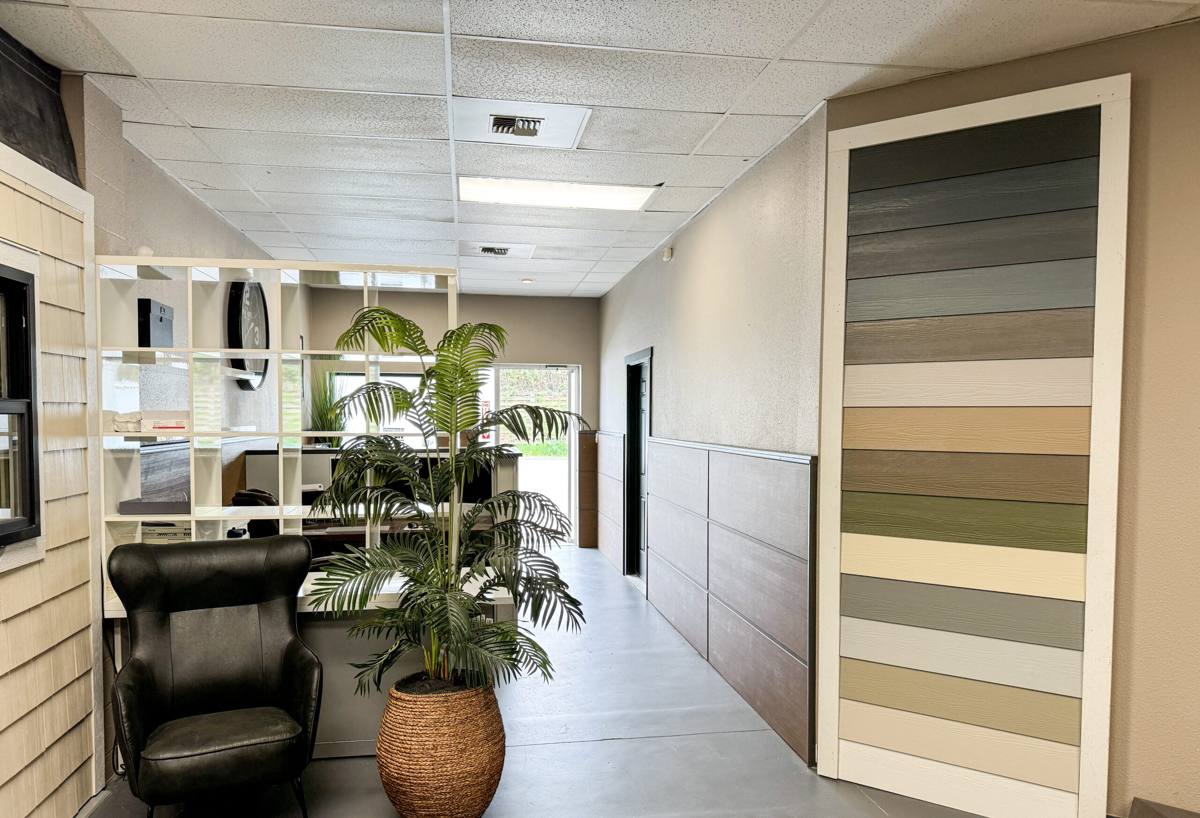
Why Board & Batten Fits Samish Island Homes
Board and batten is a vertical siding pattern — wide flat panels with narrow battens covering the seams — that reads as clean, tailored, and a little more architectural than standard lap siding. It's a strong match for the mix of cabins, remodeled farmhouses, and newer builds you see around the island, and it pairs well with the board-and-batten or shingle detailing that's common on Pacific Northwest coastal homes.
Beyond looks, the vertical orientation has a practical upside in a wet climate: water runs down the face of the panel and off the bottom edge instead of pooling along a series of horizontal laps. That doesn't eliminate moisture management concerns — the seams and battens still need to be built correctly — but the basic geometry works with the weather instead of against it.
Where Board & Batten Makes Sense
- Gable ends and dormers, where vertical lines break up a tall wall plane
- Full exteriors on cabin-style or farmhouse-style homes common near the water
- Accent sections paired with lap siding for a two-material look
- Additions or remodels where a distinct vertical texture separates old and new construction
Why We Install Only James Hardie — Not Vinyl, LP, or Cedar
We standardized on James Hardie fiber cement for every siding job we do, board and batten included, and Samish Island's exposure is a big part of why. Vinyl board and batten looks the part from a distance, but it's a thin plastic product that can warp, oil-can, or crack in sustained wind and temperature swings, and it doesn't hold up to the kind of direct, salt-tinged rain this location sees. LP SmartSide is a wood-strand product with a resin-saturated shell; it performs reasonably well in moderate climates, but any breach in that shell — a cut edge, a fastener hole, a gap at a joint — lets moisture into the wood substrate, and repeated wet-dry cycling in a marine environment is exactly the stress that shortens its life. Cedar board and batten is genuinely beautiful and it's a traditional choice out here, but real wood in constant salt air and shade needs disciplined refinishing on a schedule most owners don't keep up with, and once it falls behind, rot and moss take hold fast.
James Hardie fiber cement is cement, sand, and cellulose fiber — it doesn't rot, it isn't a food source for the moss and algae that thrive in this climate the way bare wood is, and it holds paint and factory finish far longer than wood substrates because it doesn't expand and contract with moisture the same way. It's also non-combustible, which matters everywhere in Washington but especially as wildfire smoke seasons have gotten longer. That combination — dimensional stability, resistance to moisture-driven decay, and a factory finish designed for exactly this kind of exposure — is why it's the only product we put on a house.
| Material | How It Handles Salt Air & Damp Shade | Long-Term Maintenance |
|---|---|---|
| James Hardie fiber cement | Non-combustible, doesn't rot, resists moisture-driven swelling | Periodic wash; ColorPlus finish holds color for years without repainting |
| Vinyl | Can warp or crack under wind and temperature swings; seams open over time | Low upkeep but limited repair options once damaged |
| LP SmartSide | Engineered wood strand — vulnerable once the protective shell is breached | Requires prompt sealing of any cuts, holes, or joint gaps |
| Cedar | Attractive but prone to moss growth and rot in shaded, damp exposure | Needs regular refinishing/sealing on a strict schedule |
What a Correct Board & Batten Installation Involves
Board and batten fails on the details, not the concept. Almost every problem call we get on this style traces back to shortcuts at the seams, the fasteners, or the wall assembly behind the siding — issues that don't show up on day one but surface after a few wet seasons.
Rainscreen Gap
We install with a drainage gap behind the panels rather than fastening siding directly to the weather-resistive barrier. That gap lets any moisture that gets behind the siding — from wind-driven rain forced past a seam, or simple condensation — drain and dry out instead of sitting against the wall assembly. On a site with Samish Island's rain exposure, this is not optional detailing; it's the difference between siding that dries out between storms and one that stays chronically damp.
Panel Seams and Battens
Vertical panel joints are the weak point in any board and batten system if they're not built correctly — proper flashing or Z-flashing behind horizontal joints, correct panel gapping per Hardie's specifications, and battens set to cover seams with the right fastening pattern so the assembly moves with temperature changes instead of cracking.
Fastening and Flashing
Fiber cement needs to be fastened per manufacturer spec — correct fastener type, spacing, and depth — and every penetration (vents, hose bibs, light fixtures, window and door trim) needs proper flashing and sealant. On a house exposed to driving rain off the water, a poorly flashed penetration is where water finds its way in.
Factory Finish
We install Hardie's ColorPlus factory-applied finish wherever possible rather than field-painting. It's baked on under controlled conditions and holds up to UV and moisture far longer than a site-applied coat, which matters on walls that get constant salt air and rarely get a chance to fully dry.
Our Process on Samish Island Jobs
- On-site assessment — we look at wall orientation, tree shading, existing moisture damage, and how exposed each elevation is to wind-driven rain off the bay.
- Tear-off and substrate check — old siding comes off and we inspect sheathing for rot or soft spots before anything new goes up; problems get fixed before they're covered.
- Weather barrier and rainscreen install — the drainage plane goes in correctly, not as an afterthought.
- Board and batten install — panels and battens set to Hardie spec, with attention to seams, flashing, and fastening.
- Trim, caulking, and finish work — window and door trim, corners, and penetrations sealed properly.
- Final walkthrough — we go over the finished job with you before we consider it done.
Living With Board & Batten in a Salt Air, Moss-Heavy Climate
Fiber cement is low-maintenance, not zero-maintenance. On Samish Island, we tell homeowners to expect:
- An annual rinse-down, especially on shaded north and west walls, to keep moss and algae from getting a foothold
- A visual check of caulking around windows, doors, and penetrations every year or two — caulk is the first thing to wear out, not the siding itself
- Keeping vegetation trimmed back from walls so airflow can help siding dry between storms
- Prompt attention to any gutter or downspout issues, since concentrated water runoff is harder on siding than general rain exposure
None of this is unusual upkeep — it's the same short list we'd give any coastal Skagit County homeowner. The difference on Samish Island is that skipping it catches up with a house faster than it would somewhere more sheltered.
What Drives Cost on a Board & Batten Job Out Here
| Factor | Why It Matters on Samish Island |
|---|---|
| Wall exposure and orientation | West- and water-facing walls often need extra flashing attention |
| Substrate condition | Older homes may have hidden moisture damage that needs repair before siding goes on |
| Panel size and trim complexity | Dormers, gables, and multiple roof lines add cutting and flashing detail |
| Access | Tree cover and lot layout on the island can affect staging and scaffolding needs |
| Full replacement vs. accent application | Board and batten on select gables costs less than a full-exterior install |
We give a firm, written estimate after walking the actual house — not a phone-quote based on square footage alone, since so much of the real cost on an island property comes down to exposure and access specifics you can't see from a satellite photo.
Why a Crew That Already Works Samish Island Matters
Samish Island isn't a typical subdivision job. Getting equipment and material staged efficiently on some of these lots takes local knowledge, and knowing which walls on an island property need the most attention to flashing and drainage — because they face the water or sit in near-constant shade — comes from having done the work out there before, not from a general siding checklist. A crew that treats every Skagit County address the same way misses the specific reason Samish Island siding fails faster than siding a few miles inland.
We're a Burlington-based crew that works this stretch of Skagit County regularly, and Samish Island's mix of salt air, driving rain, and heavy shade is a condition we plan for from the first site visit, not something we discover partway through the job.
If you're weighing options for a board and batten project on Samish Island, we're glad to walk the house with you and give you a straight, no-pressure estimate — fill out the form below to get started.