 Burlington
 Decks on Samish Island Face a Different Climate Than Most of Skagit County
Samish Island sits out on the water, and that changes what a deck has to survive. Homes a few miles inland in Burlington or Mount Vernon deal with plenty of rain, but they aren't getting salt-laden air blowing off Samish Bay every day, and they aren't fighting the shaded, damp microclimate that builds up around tree-lined shoreline lots. A deck built here needs to be planned for those specific conditions from the start, not just built to a general Pacific Northwest standard and hoped for the best.
This page covers what actually matters for a custom deck on Samish Island: material choices that hold up to salt air, the hardware and framing details that determine whether a deck lasts 10 years or 30, how moss and slip risk get managed, and what to expect from a contractor who already builds out here regularly.
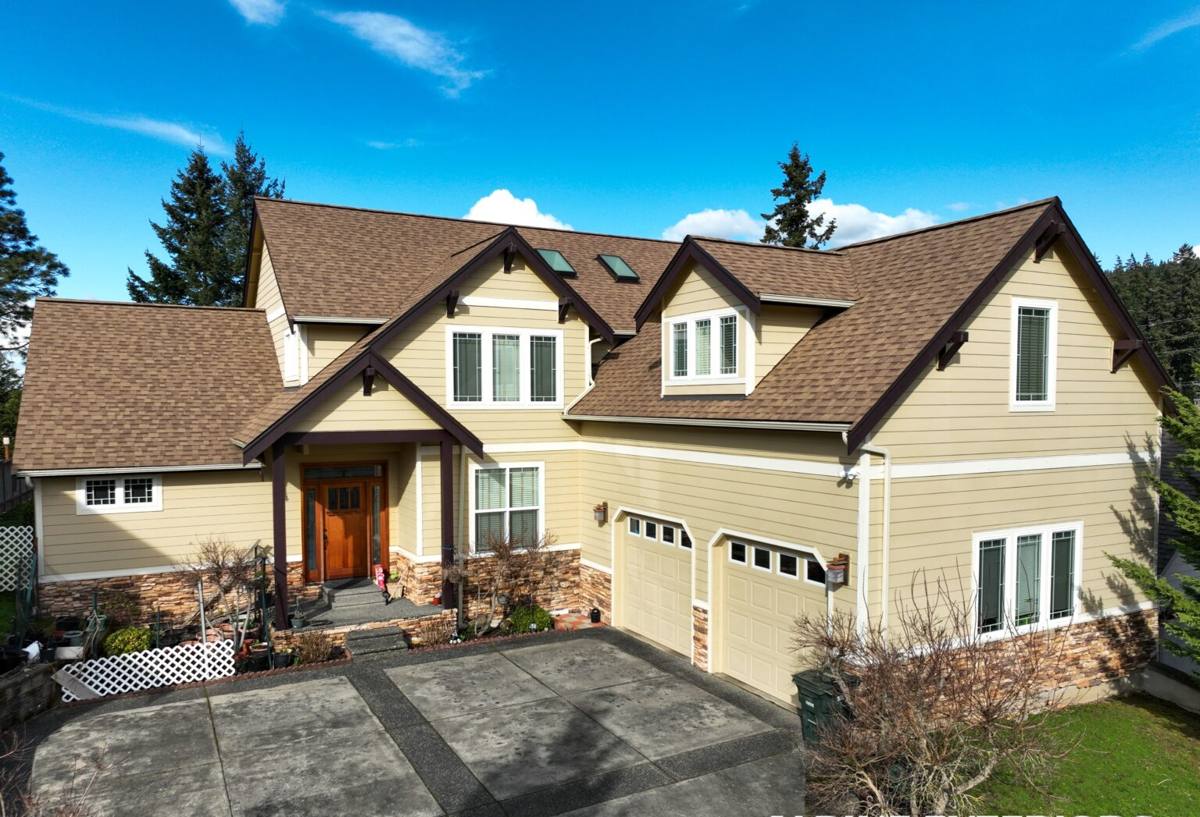
What Salt Air, Driving Rain, and Moss Season Actually Do to a Deck
Salt Air
Airborne salt from Samish Bay settles on every exposed surface, including metal. It speeds up corrosion on fasteners, connectors, and railing hardware well beyond what you'd see on a similar deck a few miles inland. Untreated or under-rated hardware can start rusting and staining decking within a couple of seasons, long before the wood or composite boards themselves show any wear.
Driving Rain
Wind-driven rain off the water doesn't just fall straight down — it gets pushed sideways into ledger connections, under railing posts, and into any gap where flashing was skipped or done poorly. On a typical inland deck, a minor flashing shortcut might go unnoticed for years. On a wind-exposed Samish Island lot, water finds those gaps fast, and rot follows.
Moss Season
Skagit County's wet season runs long, and shaded or tree-covered lots near the water stay damp even longer than open ground. That combination — moisture, shade, and mild temperatures — is exactly what moss and algae need to take hold on deck boards, especially on the north or water-facing side of a house where sun doesn't reach the surface for much of the year.
Choosing a Decking Material for a Salt-Air Property
There's no single "best" decking material for every Samish Island lot — the right choice depends on sun exposure, how close the deck sits to the water, and how much maintenance a homeowner actually wants to do. Here's how the common options compare in this specific environment:
| Material | Salt-Air / Moisture Behavior | Maintenance | Typical Lifespan Here |
|---|---|---|---|
| Cedar (traditional wood) | Naturally rot-resistant, but finish breaks down faster in salt air and needs more frequent recoating | Annual cleaning, refinishing every 2-4 years | 15-20 years with consistent upkeep |
| Pressure-treated wood | Good structural durability if properly sealed; end cuts and fastener holes are vulnerable points | Regular sealing, moss removal on shaded sections | 15-20 years, less if maintenance lapses |
| Composite (wood-plastic blend) | Resists rot well; some products can still stain or grow surface algae in shaded, damp spots | Periodic washing, no sealing or staining needed | 20-25+ years, manufacturer-dependent |
| Capped/PVC decking | Best moisture and salt resistance of the group; fully sealed surface sheds water and doesn't absorb salt | Occasional washing | 25-30+ years, manufacturer-dependent |
We'll walk a specific lot and talk through which of these fits the budget and the site before recommending anything. A shaded, water-facing deck and a sunny, open one on the same street can reasonably end up with different material recommendations.
Fasteners and Hardware: Where Coastal Decks Actually Fail First
More Samish Island deck failures start at the hardware than at the decking material. Standard galvanized fasteners and connectors are built for general outdoor use, not sustained salt exposure, and they can start corroding, staining the wood around them, and losing holding strength well before the structure around them shows any other sign of trouble.
For a deck this close to salt water, that means using stainless steel or marine-rated fasteners and structural connectors throughout — not just on the visible railing hardware, but on joist hangers, ledger bolts, and post bases that are harder to inspect once the deck is finished. It costs more upfront than standard hardware. It's also the single detail that most determines whether a deck is still structurally sound in 15 years or needs early, expensive repair because a connector failed out of sight.
Framing, Ledger Attachment, and Keeping Water Out of the Structure
The ledger board — where the deck attaches to the house — is the single most common point of hidden water damage on any deck, and driving rain off the water makes it a bigger risk on Samish Island than on a typical inland build. Proper flashing at the ledger, correctly lapped and sealed, keeps wind-driven rain from working its way behind the siding and into the house framing.
Below the surface, we also pay attention to airflow. A deck built low to the ground or tight against a damp, shaded foundation traps moisture underneath it, which speeds up rot in the framing and creates ideal conditions for moss to spread up from underneath. Adequate clearance and drainage planning under the deck matter as much as anything visible from the yard.
Moss, Algae, and Slip Safety
Even a well-built deck on a shaded Samish Island lot is going to see moss and algae pressure that a sunny inland deck simply won't. The goal isn't to eliminate that pressure entirely — it's to build a deck that sheds water and dries out fast enough that moss doesn't get a foothold, and to choose a surface that stays safe underfoot even when it does.
- Proper board spacing so water drains through instead of pooling on the surface
- Decking with a slip-resistant surface texture, especially on shaded or north-facing sections
- Framing layout that avoids unnecessary shade traps where trees or the house block sun for most of the day
- A realistic cleaning schedule discussed upfront, since even the best materials need occasional washing in this climate
- Stair treads and transitions built with extra attention, since that's where a slick surface is most dangerous
We'll flag during the walkthrough if a particular section of the planned deck is likely to be a moss magnet, so it's a known trade-off going in rather than a surprise the first wet winter.
Permits and Site Considerations on Samish Island
Skagit County requires permits for most new deck construction, and decks built close to the water's edge can also fall under state and county shoreline regulations that don't apply to a typical inland Burlington property. We handle the permitting process as part of the job, but it's worth knowing upfront that a deck's distance from the shoreline can affect what's allowed and what paperwork is needed before work starts.
Access is also a practical factor. Samish Island is reached by a low causeway road out from the mainland, and material deliveries and equipment staging take a bit more planning than a job on a standard in-town lot. It's not a complication when a crew already works the area regularly — it's just a detail that gets accounted for in scheduling rather than causing delays mid-project.
How We Build a Custom Deck for Samish Island Conditions
- Site walkthrough: We look at sun exposure, distance from the water, shade patterns, and existing drainage before talking materials.
- Design and material selection: We go over the honest trade-offs between wood, composite, and capped decking for that specific lot and budget.
- Permitting: We confirm what Skagit County requires for the site, including any shoreline-related review, and handle the applications.
- Framing and hardware: Structural framing goes in with stainless or marine-rated fasteners and connectors, proper ledger flashing, and adequate under-deck clearance.
- Decking and railing installation: Boards and railing are installed to the manufacturer's specifications, with attention to drainage and slip-resistant detailing where the site calls for it.
- Final walkthrough: We go over care and cleaning expectations specific to a salt-air, moss-prone environment, so there are no surprises later.
Why It Matters to Hire a Crew That Already Works Samish Island
A lot of deck problems on the island aren't the result of bad workmanship in general — they're the result of a deck built to a standard that would be fine in Mount Vernon or Sedro-Woolley but doesn't account for salt air, driving rain off the bay, or a long, shaded moss season. Hardware that would hold up fine inland corrodes faster here. Flashing details that rarely get tested by wind-driven rain elsewhere get tested constantly on an exposed shoreline lot.
We build decks throughout Skagit County, including regularly on Samish Island, and we plan every part of the job — material, hardware, framing, and drainage — around what this specific climate does to a deck over time, not just what code minimums require.
If you're considering a new deck or a rebuild on Samish Island, we're happy to walk the site and give you a straightforward, no-pressure estimate. Use the form below to get in touch.