 Burlington
 Samish Island's Siding Has a Harder Job Than Most Skagit County Homes
Samish Island sits out where the land narrows and the water closes in on both sides. That location is part of what makes it a great place to live, and it's also exactly why the siding on these homes takes more abuse than siding a few miles inland in Burlington or Mount Vernon. Salt-laden air moves off the water and settles on exterior walls day after day. Wind-driven rain doesn't just fall straight down here — it gets pushed sideways into siding seams, trim joints, and anywhere water can find a way in. And for a good stretch of the year, shaded and north-facing walls stay damp long enough to grow moss, algae, and mildew.
None of that is unusual for coastal Skagit County. But it does mean that whatever goes on the outside of a Samish Island home needs to be chosen and installed with that environment in mind, not just picked because it looks good in a showroom. That's the specific problem this page is about: what James Hardie fiber cement siding needs to do right, and what correct installation looks like, on a home in this exact setting.
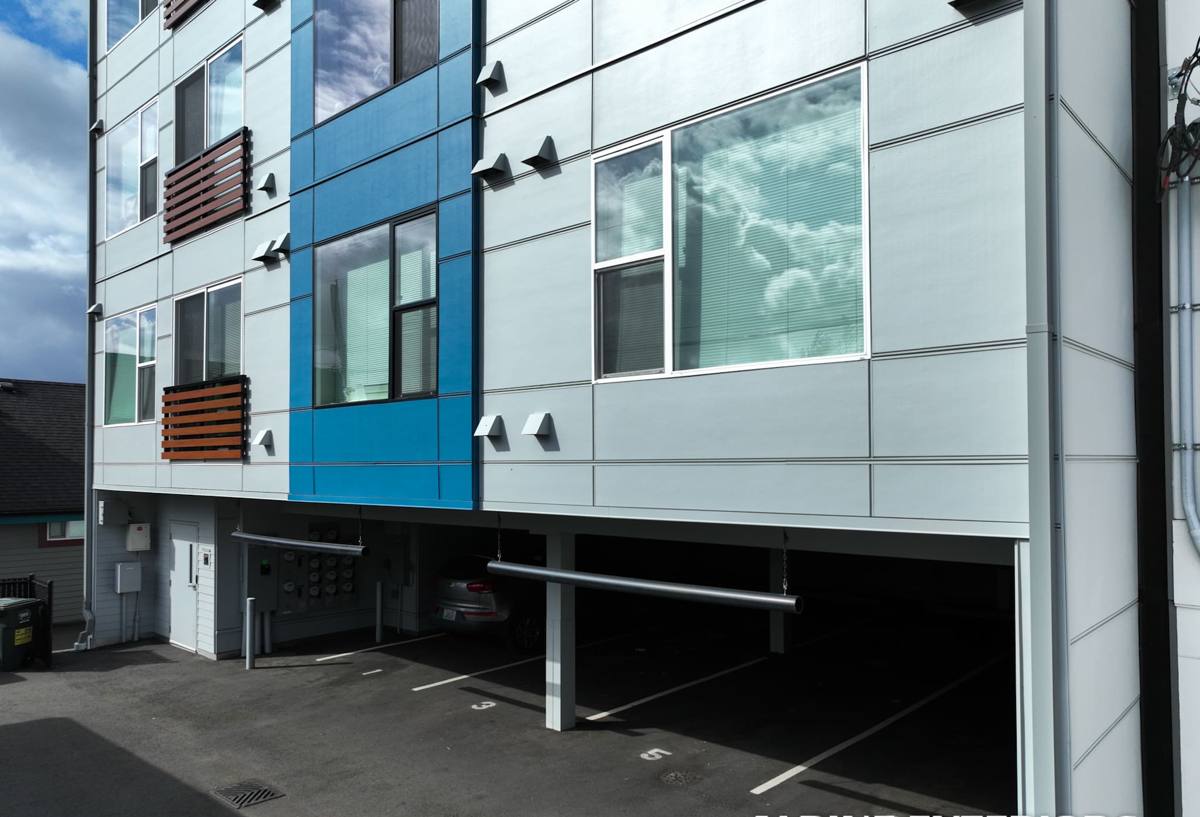
Why Salt Air, Rain, and Moss Change the Calculus
Salt air
Airborne salt is corrosive to metal fasteners, flashing, and hardware, and it accelerates the breakdown of finishes that aren't built to handle it. Paint film on wood or engineered wood siding tends to chalk and fail faster in a salt-air environment, which means more frequent repainting to keep water out. James Hardie's ColorPlus factory finish is baked on and formulated to resist fading and hold up under UV and weather exposure better than a field-applied paint job, which matters more here than it would on a home twenty miles inland.
Driving rain
Wind off the water pushes rain into places gravity alone wouldn't take it — up under laps, into butt joints, around window and door trim. Fiber cement itself doesn't rot or absorb water the way wood-based products can, but the water resistance of the whole wall assembly depends on how the siding was installed: lap spacing, fastener placement, and flashing details around every penetration.
Moss and organic growth
Shaded north walls, tree cover, and the general dampness of a coastal Skagit County site create ideal conditions for moss and algae to take hold on any exterior surface, siding included. James Hardie panels themselves are cement-based and don't feed mold and mildew the way wood-based siding does, but growth can still sit on the surface of any siding if a wall stays wet and shaded long enough. Trim details, gutter placement, and keeping vegetation off the walls all play into how much maintenance a home needs later.
Why We Only Install James Hardie — Especially Out Here
We don't install LP SmartSide, vinyl, Cemplank, Allura, primed spruce, or cedar. That's a standing decision for every home we work on, and it matters even more on a site like Samish Island. Engineered wood products rely on a factory-applied treatment and a strong paint seal to keep moisture out; any break in that seal — a fastener hole, a cut edge, a scuff during installation — becomes a place water can get in, and a marine environment gives water more opportunities to find that break. Vinyl can warp and become brittle with UV and temperature swings, and it's not selected for looks or resale value on higher-end coastal homes. Cedar is genuinely handsome but needs ongoing sealing and refinishing to hold up against damp, salt-exposed conditions, which is a real ongoing cost most homeowners underestimate when they choose it.
James Hardie fiber cement is non-combustible, doesn't support rot, and is manufactured in climate-specific HZ formulations — the HZ5 product line is engineered for the kind of wet, moderate coastal climate Samish Island sits in. Combined with the factory ColorPlus finish and Hardie's transferable warranty, it's the product we're willing to put our name behind on a site with this much moisture and salt exposure.
Product Comparison for a Coastal Skagit County Site
| Factor | James Hardie Fiber Cement | Engineered Wood / Vinyl / Cedar |
|---|---|---|
| Moisture behavior | Does not rot or swell; cement-based core | Wood-based products can swell/delaminate; vinyl can warp with heat |
| Finish durability in salt air | Factory-baked ColorPlus finish resists fading and chalking | Field paint or factory coatings often need earlier repainting/resealing |
| Fire resistance | Non-combustible | Combustible (wood-based); vinyl can deform under heat |
| Maintenance in this climate | Periodic washing; repaint interval is long | More frequent sealing, caulking, or repainting to keep moisture out |
| Warranty structure | Strong transferable manufacturer warranty | Varies; often shorter or non-transferable |
What a Correct Hardie Installation Involves Here
The product is only half the equation. A lot of siding failures — on any brand — come down to installation shortcuts, not the material itself. On a Samish Island home, a few details matter more than they would elsewhere:
- Weather-resistive barrier and flashing first. The house wrap and flashing behind the siding are what actually keep driving rain out of the wall assembly; the siding is the second line of defense, not the only one.
- Correct fastener type and placement. Hardie specifies fastener type, spacing, and how far from panel edges to nail. In a salt-air environment, using the wrong fastener material invites corrosion that can stain the siding and eventually fail.
- Proper clearance at grade and hard surfaces. Siding installed too close to soil, decks, or patios stays damp longer and is more likely to wick moisture — a bigger issue where humidity and rainfall are already elevated.
- Sealed and flashed penetrations. Every window, vent, and fixture that passes through the siding is a potential entry point for wind-driven rain if it isn't flashed and sealed correctly.
- Factory-cut edges kept intact where possible. Field cuts expose the raw core of the panel; those cut edges should be sealed per Hardie's instructions so moisture doesn't get a foothold at the cut.
- Panel and joint spacing per manufacturer spec. Gaps that are too tight can trap moisture at joints; gaps that are too wide undercut the finished look and can let water track behind the panel.
Our Process on a Samish Island Home
1. On-site assessment
We look at existing siding condition, sheathing and moisture damage if any, sun and shade exposure on each elevation, and how exposed the home is to wind off the water. That exposure varies a lot even within a small area, so we don't quote a Samish Island job the same way we'd quote a sheltered inland lot.
2. Product and color selection
We walk through Hardie's plank, panel, and trim options and the appropriate HZ formulation for this climate, along with ColorPlus color choices that hold up to sun and salt exposure over time.
3. Tear-off and wall prep
Old siding comes off, the sheathing gets inspected and repaired if there's hidden moisture damage, and the weather-resistive barrier and flashing get installed or corrected before a single piece of new siding goes up.
4. Installation to manufacturer spec
Fastening, spacing, flashing, and sealing follow James Hardie's published installation requirements — not shortcuts, because those requirements are also what keeps the manufacturer warranty valid.
5. Final walkthrough
We go over the finished job with the homeowner, including basic care and what to expect from the finish over time in this climate.
What This Means for Upkeep Going Forward
- Rinse siding periodically to clear salt residue and organic buildup, especially on shaded or water-facing walls.
- Keep gutters and downspouts clear so water isn't running down or pooling against siding.
- Trim back vegetation and tree cover that keeps walls shaded and damp longer than necessary.
- Inspect caulking around windows, doors, and trim annually — sealant is the first thing to wear in a coastal climate.
- Address any impact damage or exposed cut edges promptly rather than letting them sit through a wet season.
Why Local Experience on Samish Island Specifically Matters
A crew that's worked this area knows which elevations on a typical Samish Island lot take the worst of the wind and rain, how much salt exposure to expect based on proximity to the water, and where moss and algae tend to build up fastest. That's not something you get from a general contractor working from a standard spec sheet — it comes from having actually installed and maintained siding on homes in this specific stretch of Skagit County. It also means we're not guessing about which Hardie products and details make sense here versus a drier, more sheltered site inland.
Get a Straightforward Estimate
If you're weighing a siding replacement on Samish Island, we're happy to come take a look, walk you through what your home's specific exposure calls for, and give you a straightforward, no-pressure estimate. Use the form below to get started.