 Burlington
 Samish Island Puts a Roof Through a Lot
Samish Island sits out where Skagit County meets the water, and that location shapes everything about how a roof ages there. Homes on the island catch salt-laden air off Samish Bay and Padilla Bay, take driving rain straight off the water with almost nothing to break the wind, and sit under enough shade and dampness for a good part of the year that moss and algae get a real foothold. A roof that would last two decades in a drier, more sheltered part of the county can show real wear in half that time if it wasn't built for these conditions in the first place.
That's the case we make for treating a Samish Island roof replacement as its own project, not a copy-paste of what we'd install a few miles inland in Burlington or Mount Vernon. The framing, the underlayment, the fastener choice, the ventilation plan — all of it should reflect the fact that this roof will spend its life next to salt water, under coastal rain, and in a climate that keeps moss happy most of the year.
What Salt Air and Driving Rain Actually Do
Corrosion Where You Can't See It
Salt air is hard on metal. Nails, flashing, and fasteners that aren't rated for coastal exposure can start corroding years before the shingles above them show any sign of trouble. Once a fastener weakens, wind uplift resistance drops with it — and Samish Island gets plenty of wind straight off the water. We treat fastener and flashing selection as a coastal-grade decision here, not an afterthought.
Wind-Driven Rain Finds the Weak Spots
Rain that comes in mostly sideways behaves differently than rain that falls straight down. It gets pushed up under shingle tabs, into open valleys, and around any flashing detail that isn't sealed and lapped correctly. On a more sheltered lot, a minor flashing shortcut might never get tested. On Samish Island, wind-driven rain finds it eventually. That's why valleys, chimney flashing, and any roof-to-wall transitions get extra attention on every replacement we do out there.
Moss, Algae, and a Long Damp Season
Shade, moisture, and mild temperatures are exactly what moss and roof algae want, and Samish Island offers all three for a good stretch of the year. Moss doesn't just look bad — it holds moisture against the roof surface, works its way under shingle edges, and can shorten the life of the roofing material underneath it. A roof built for this area needs a real moss-prevention strategy, not just a one-time cleaning after it's already established.
What a Correct Roof Replacement Actually Involves
A roof replacement is more than stripping old shingles and laying new ones. Done right, especially in a coastal climate, it includes:
- Full tear-off to bare decking, so we can actually see the condition of the wood underneath
- Repair or replacement of any decking that's soft, delaminated, or water-stained
- A synthetic or ice-and-water underlayment suited to sustained wet weather, not just a bare minimum felt layer
- Corrosion-resistant fasteners and flashing appropriate for coastal exposure
- Properly lapped and sealed flashing at every valley, chimney, skylight, and wall intersection
- A balanced intake-and-exhaust ventilation system, sized to the actual attic, not a generic rule of thumb
- Edge metal and drip edge details that shed wind-driven rain instead of letting it wick back under the roofline
Skip any one of these and the roof might still look fine from the ground for a few years. The problems that show up later — soft decking, streaking, granule loss, leaks at the valleys — usually trace back to a step that got shortened during the original install.
Materials That Hold Up on Samish Island
There's no single "best" roofing material for every home, but some choices make more sense than others once salt air and moss are part of the equation. We walk every homeowner through the honest trade-offs rather than pushing one product as a universal answer.
| Material | How It Handles Salt Air & Rain | Moss & Algae Resistance | General Lifespan Here |
|---|---|---|---|
| Architectural asphalt shingles | Good, with corrosion-resistant fasteners and proper flashing | Better with algae-resistant granules; still benefits from periodic cleaning | 20-30 years with correct install and upkeep |
| Standard 3-tab asphalt shingles | Adequate, but less margin for error on flashing details | Lower resistance; moss takes hold faster without maintenance | 15-20 years |
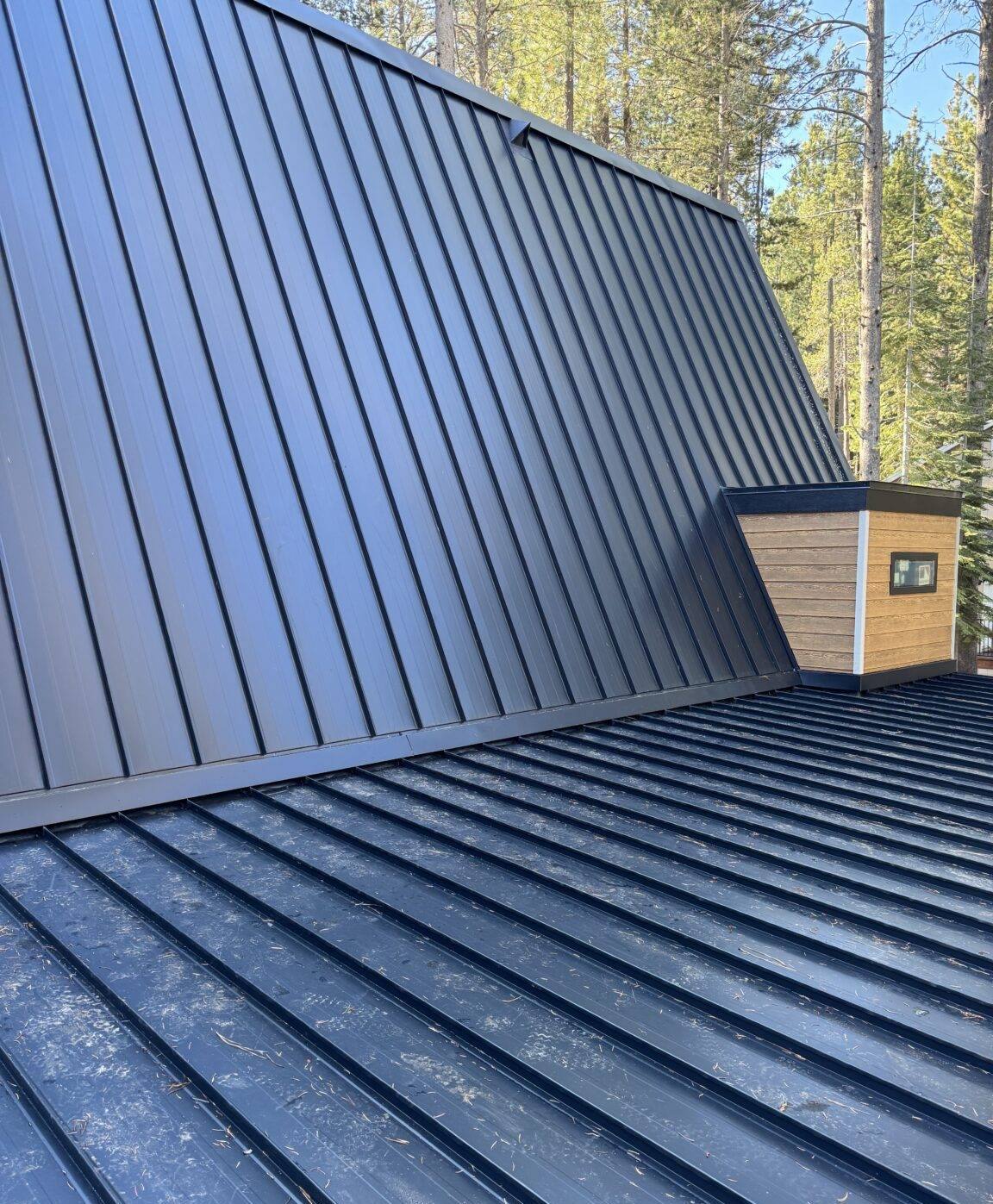
| Metal roofing (standing seam) | Excellent when coastal-rated fasteners and coatings are used | High — little surface texture for moss to grip | 40+ years |
| Wood shake | High maintenance burden in sustained damp conditions | Low — wood shakes are naturally prone to moss and moisture retention | Highly maintenance-dependent |
We're honest that wood shake, while attractive, asks for a level of ongoing maintenance that's tough to keep up with in a climate this damp — moisture retention and moss growth are simply part of the material's nature, not a defect in any particular product. Architectural shingles with algae-resistant granules and correctly detailed metal roofing tend to be the two options that ask the least of a homeowner over time on a site like Samish Island.
Ventilation: The Part Homeowners Rarely See
A roof can be installed with excellent shingles and still fail early if the attic underneath it can't breathe properly. Trapped moisture from cooking, showers, and daily living has to escape somewhere, and in a coastal, damp climate, an attic that can't vent that moisture out becomes an incubator for mold and rot from the inside — often before anything shows on the exterior.
Correct ventilation balances intake (usually at the eaves) with exhaust (ridge or roof vents), sized to the square footage of the attic. We check this on every Samish Island replacement, because a roof that looks perfect from the street can still be quietly rotting from the underside if the ventilation was never right to begin with.
Our Process for a Samish Island Roof Replacement
Assessment First
We start with a full roof and attic inspection — not just a look at the shingles, but a check of the decking, flashing, ventilation, and any signs of moss or water intrusion. That tells us what the replacement actually needs to solve, not just what it needs to cover up.
A Straightforward Plan and Estimate
We walk through material options, what each one costs to install and to maintain over time, and why we're recommending what we're recommending. No pressure to upgrade to something you don't need, and no vague pricing — you get a real number tied to your roof, not a range pulled out of the air.
Scheduling Around the Weather
Samish Island's exposure means we pay close attention to weather windows. Tear-off and dry-in happen in a single push whenever possible, so the roof deck isn't left exposed to a sudden squall off the water. We don't start a tear-off we can't finish and properly dry in before the next system rolls through.
The Install Itself
Full tear-off, decking repair as needed, coastal-appropriate underlayment and fasteners, careful flashing work at every transition, and ventilation balanced to the attic — the same fundamentals covered above, applied and inspected step by step rather than rushed.
Cleanup and Walkthrough
We clear the site of old material and debris, run a magnetic sweep for stray fasteners, and walk the finished roof with you so you know exactly what was done and what to expect from it going forward.
A Quick Homeowner Checklist
Before committing to any roof replacement on Samish Island, it's worth asking a contractor these questions:
- Will the crew do a full tear-off, or install over existing layers?
- What underlayment is being used, and is it rated for sustained wet exposure?
- Are the fasteners and flashing corrosion-resistant, or standard-grade?
- Is attic ventilation being assessed and corrected as part of the job, or left as-is?
- Does the estimate include valley and flashing detail work, or just field shingles?
- What's the plan if weather moves in mid-tear-off?
A contractor who answers these clearly, without hesitation, is one who's actually done coastal roofs before.
Why Local Experience on Samish Island Matters
A crew that already works this stretch of Skagit County knows how the wind sets up off the water, how fast moss reestablishes on a north-facing slope out here, and which flashing details actually need the extra attention versus which ones are fine as standard. That's not something you get from a general roofing checklist — it comes from having done the work on this specific kind of site before. It also means fewer surprises during the estimate, because we've already seen how homes in this exact setting perform over time.
If your roof is showing granule loss, moss buildup, soft spots, or you're just past the age where a coastal roof starts asking questions, we're happy to take a look. Reach out for a free, no-pressure estimate — we'll walk your roof, give you a straight assessment, and lay out real options for your home and your budget.