 Burlington
 Samish Island's Siding Takes a Different Kind of Beating
Samish Island sits out where the fresh water of Skagit County meets Samish Bay and Puget Sound proper, and that location changes what siding has to survive. Homes here don't just deal with Skagit County's normal wet-season rain — they deal with salt-laden air coming off the water, near-constant wind exposure with nothing to break it, and a moss and algae season that runs longer than it does just a few miles inland in Burlington. We work on siding all over the Burlington area, and Samish Island jobs are consistently among the toughest on the list, not because the work itself is exotic, but because the failures show up faster and in different places than they do on a sheltered lot in town.
If you own a home out here, you've probably already noticed that whatever is happening to your siding seems to happen quicker than it should. That's not your imagination. Salt air accelerates corrosion on fasteners and trim metal, wind-driven rain finds gaps that would stay dry on a calmer site, and the extra humidity off the water keeps moss and algae growing on north- and west-facing walls for more months out of the year. Siding repair on Samish Island has to account for all of that, not just patch what's visibly broken.
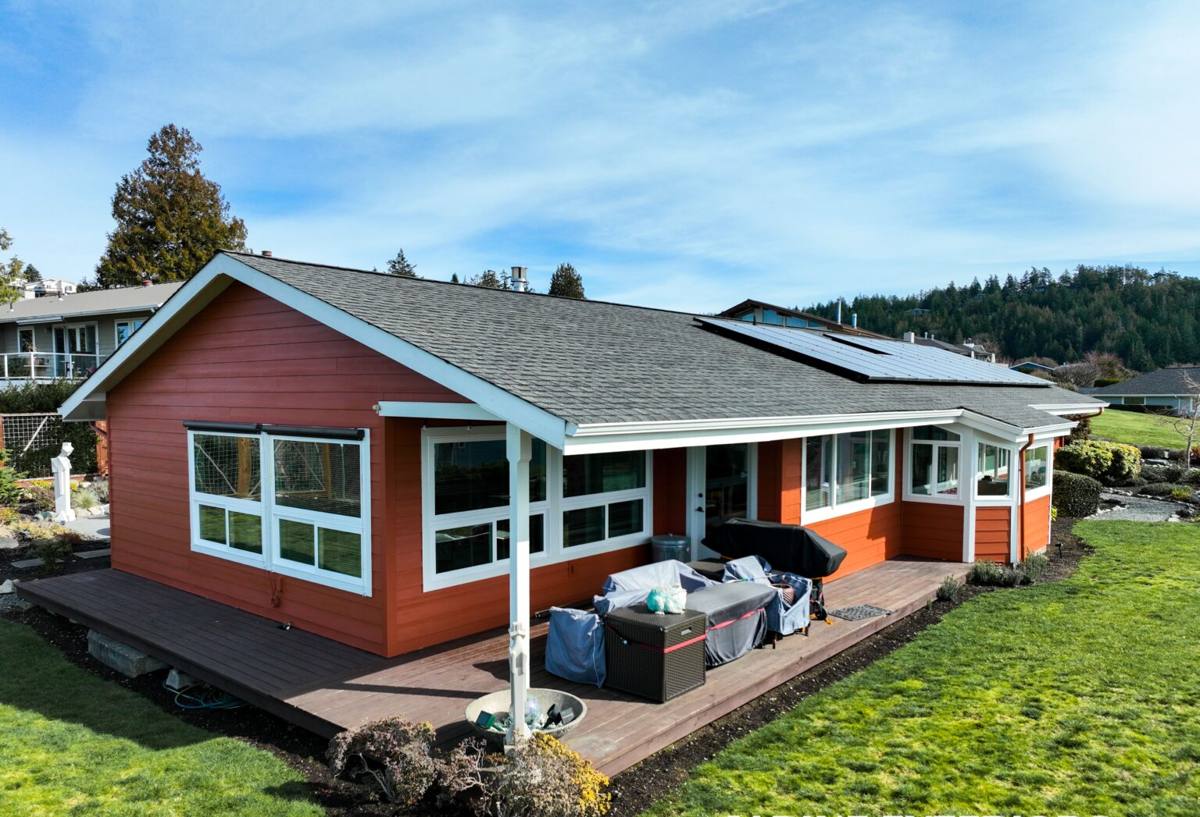
What "Correct" Siding Repair Actually Means Out Here
A lot of siding repair — everywhere, not just here — is done wrong in a way that doesn't show up for a year or two. Someone caulks over a gap instead of finding out why water got behind the board. Someone replaces a rotted piece of trim but doesn't check whether the flashing behind it failed first. On a sheltered inland lot, sloppy repair might buy you a few extra years before it fails again. On Samish Island, with salt air and constant wind-driven moisture, shortcuts fail faster and often take more of the wall assembly with them.
Diagnosing Before Fixing
Correct repair starts with figuring out why the siding failed in the first place, not just patching the symptom. Common root causes we look for on island and near-shore homes include:
- Failed or missing flashing at windows, doors, and butt joints, letting wind-driven rain track behind the siding
- Corroded fasteners — especially on older installs using non-coated or under-spec nails — that lose their grip and let boards work loose
- Caulk joints that have dried out, cracked, or were never the right joint to caulk in the first place
- Moisture trapped behind siding due to missing or damaged house wrap, or a rainscreen gap that got closed off during a prior repair
- Moss and algae growth holding moisture against the surface long enough to soften the substrate underneath
- Impact damage from wind-blown debris, which is more common on an exposed island lot than a sheltered one
Skip this step and you're just delaying the next repair call — often on the same wall, sometimes on a bigger section of it.
Matching, Not Just Patching
Once we know the cause, the actual repair on James Hardie fiber cement involves removing the damaged boards cleanly, correcting whatever let moisture in (flashing, house wrap, fastener pattern), and installing new HZ5-rated Hardie boards matched to the existing ColorPlus finish so the repair doesn't stand out as an obvious patch. Fastener choice matters more here than almost anywhere else we work — corrosion-resistant fasteners rated for coastal exposure aren't optional on Samish Island the way they might be considered a nice-to-have inland.
Why Salt Air and Moss Season Change the Math
Skagit County as a whole gets plenty of rain, but Samish Island adds two variables that push repair needs beyond what a typical Burlington home faces.
Salt Air's Effect on Fasteners and Trim
Salt in the air accelerates oxidation on any exposed or marginally protected metal — nail heads, trim flashing, hose bib fittings near the wall, even hardware on shutters or light fixtures mounted to siding. Fiber cement itself doesn't corrode, but the fasteners and flashing holding it in place can, and a corroded fastener eventually loses its grip, letting a board shift, crack at the nail line, or pull away enough for water to get behind it. Repairs on Samish Island homes need corrosion-resistant fastener specs from the start — cutting that corner is exactly the kind of shortcut that turns a small fix into a bigger one within a couple of seasons.
Extended Moss and Algae Season
The extra ambient moisture from being surrounded by water means north- and west-facing walls, and anything shaded by trees or the house itself, tends to stay damp longer into the year than the same orientation would on a drier inland lot. Moss and algae aren't just cosmetic — sustained growth holds moisture against the siding surface, and over time that moisture works into seams, fastener holes, and any spot where the factory finish has been nicked or scratched. Homes on the island benefit from a shorter check-and-clean interval than a typical Burlington property, especially on the shaded sides.
Our Process for a Samish Island Repair Call
- On-site inspection. We walk the exterior, identify every affected area (not just the spot you called about), and check flashing, house wrap, and fastener condition behind any board we're pulling.
- Root-cause diagnosis. We explain what actually caused the failure — moisture path, fastener corrosion, impact, or growth — before quoting a fix.
- Written scope and estimate. You get a clear description of what's being replaced, what's being corrected behind it, and why, before any work starts.
- Removal and correction. Damaged boards and trim come off; flashing, wrap, or fastener issues get corrected — not just covered up.
- Reinstallation with matched materials. New James Hardie boards go in with coastal-appropriate fasteners, matched to your existing ColorPlus color where the product line allows it.
- Final check. We walk the repair with you, and point out any other areas worth watching given the site's exposure.
Repair vs. Replacement: How We Help You Decide
Not every call ends in a small patch, and not every call needs a full re-side. The honest answer depends on how much of the wall assembly is affected and how old the existing siding is.
| Factor | Favors Repair | Favors Full Replacement |
|---|---|---|
| Extent of damage | Isolated boards or a single wall section | Multiple walls, or damage tracks back to widespread flashing/wrap failure |
| Age of existing siding | Hardie siding under warranty, otherwise sound | Older vinyl, LP, or wood product reaching end of service life |
| Underlying moisture barrier | House wrap intact where exposed | House wrap missing, degraded, or never installed correctly |
| Color match feasibility | Current ColorPlus line still available | Discontinued color or faded finish makes patches obvious |
| Fastener condition sitewide | Localized corrosion only | Widespread fastener corrosion across multiple elevations |
We'll always tell you honestly which side of that table your home falls on rather than upselling a repair into a replacement, or patching over something that really needs a fuller fix.
Why We Only Work in James Hardie Fiber Cement
We don't install LP SmartSide, vinyl, Cemplank, Allura, primed spruce, or cedar, and that standard matters even more on an exposure site like Samish Island. Vinyl siding can warp and gap under sustained wind and temperature swings, opening exactly the kind of seams that let wind-driven salt air moisture work behind the panel. Wood products need paint and caulk maintenance that's harder to keep up with in a climate that stays damp longer, and any lapse in that maintenance shows up as rot faster near the water. LP SmartSide and other engineered wood products are sensitive to sustained moisture exposure at cut edges and seams, which is a tougher standard to hold on a site with more moisture days per year than the county average.
James Hardie fiber cement is non-combustible, holds its factory ColorPlus finish without the repainting cycle wood siding demands, and its HZ5 product line is engineered specifically for the kind of wet, temperature-variable climate Western Washington's coastal areas produce. That's not a marketing point for us — it's why we're comfortable putting our name behind repairs on some of the most exposed sites we work, including Samish Island.
A Practical Maintenance Checklist for Samish Island Homes
Between repair visits, a few habits go a long way toward catching problems while they're still small:
- Rinse siding (especially north- and west-facing walls) once or twice a year to knock back moss and algae before it takes hold
- Walk the exterior after major wind events and check for loose boards, popped fasteners, or shifted trim
- Inspect caulk joints at windows, doors, and corner trim annually — hairline cracks are easier to catch than the water damage behind them
- Keep gutters and downspouts clear so runoff isn't sheeting down wall sections
- Trim back vegetation that shades siding and keeps it damp longer than it should stay
- Call for an inspection at the first sign of a soft spot, discoloration, or a board that looks slightly out of line — these are cheaper to fix early
Why a Local Crew That Already Works This Site Matters
Samish Island isn't a typical Burlington neighborhood job. Access, wind exposure, and the site-specific moisture pattern all factor into how a repair should be scoped and executed, and a crew that hasn't worked the area before is more likely to underestimate fastener needs or miss a flashing detail that wouldn't matter on a sheltered inland lot. We're based in Burlington and have done repair work across Skagit County's varied exposure conditions, from sheltered residential streets to open, wind-exposed waterfront sites. That local pattern recognition is part of what you're paying for when you hire a crew that already knows what this specific location does to a house.
If you're dealing with damaged, aging, or failing siding on a Samish Island home, we're happy to take a look and give you a straight answer on what it needs — repair, partial replacement, or a longer-term plan. Reach out for a free, no-pressure estimate using the form below.