 Burlington
 Why Stanwood Homes Need a Different Approach to Siding Repair
Stanwood sits close enough to Puget Sound and the Stillaguamish delta that salt-laden air and wind-driven rain are simply part of the weather pattern, not an occasional event. Add in the long gray stretch from October through April when moss and algae get a running start on anything shaded or north-facing, and you have a climate that is genuinely harder on exterior siding than most manufacturers' warranty testing accounts for. A repair that would hold up fine in a drier inland town can fail here in a fraction of the time if it isn't done with this specific environment in mind.
We work throughout Skagit County and the surrounding areas, including Stanwood, and the repair calls we get here have a consistent signature: moisture that found its way behind the cladding rather than damage from a single storm. Understanding that pattern is the difference between a repair that lasts and one that's patching a symptom.
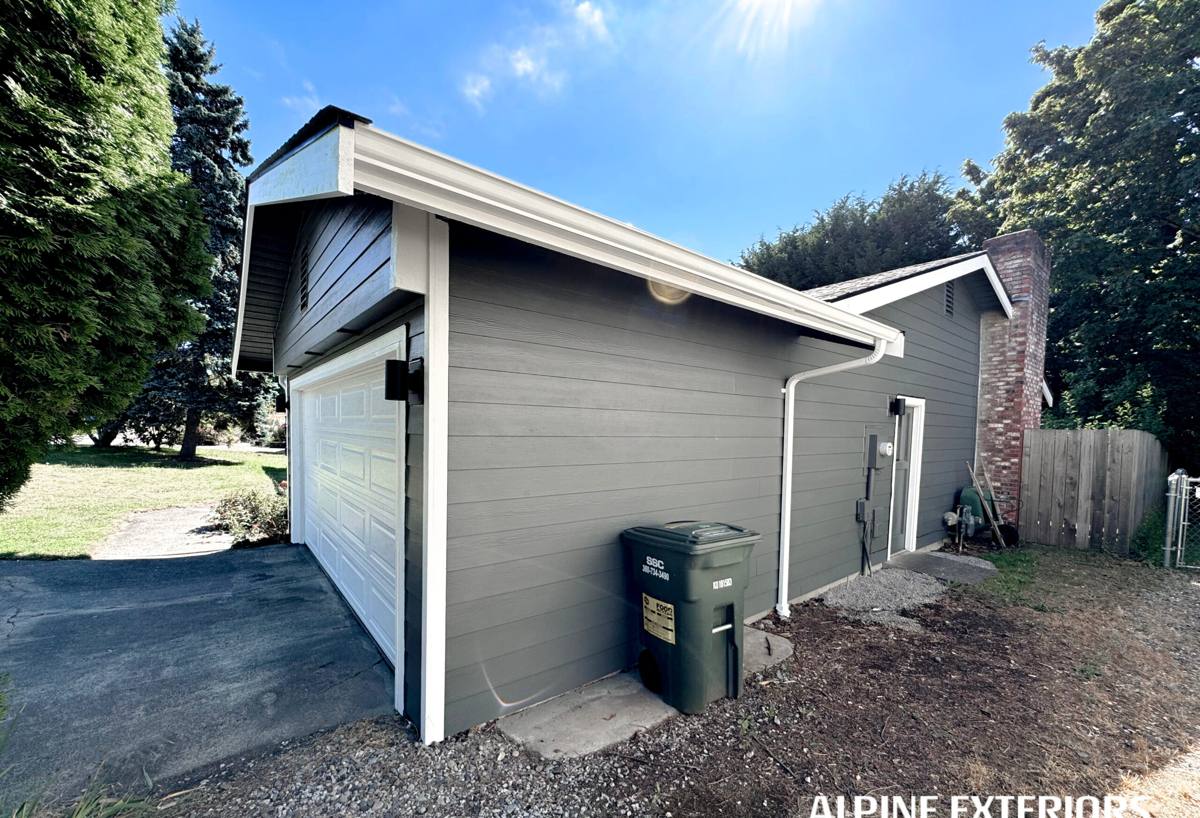
What Driving Rain and Salt Air Actually Do to Siding
Wind-driven moisture
Stanwood's exposure to weather systems moving up Puget Sound means rain doesn't always fall straight down — it gets pushed sideways into wall assemblies, especially on gable ends and around window and door trim. Siding that was installed with tight but not properly flashed or caulked joints can look fine for years while water is quietly working its way behind the panels every time a storm blows through.
Salt-air corrosion and fastener failure
Proximity to saltwater accelerates corrosion on exposed fasteners, flashing, and any metal trim components. Once a nail head or J-channel starts to corrode, it stops doing its job of holding panels tight or shedding water, and that's often the first domino in a chain that ends with a soft, damaged wall behind the siding.
Moss, algae, and trapped moisture
The long wet season here gives moss and algae months to establish themselves on siding that doesn't dry out quickly — particularly on north walls, under overhangs, and near landscaping that keeps humidity high against the wall. Beyond the cosmetic issue, moss holds moisture against the siding surface far longer than open air would, which matters a great deal for any material that isn't fully moisture-stable.
How to Tell If Your Siding Needs Repair (Not Just Cleaning)
Not every stained or mossy wall needs repair work — sometimes it just needs a wash. But certain signs point to something happening behind the surface, not just on it.
- Soft or spongy spots when you press on the siding, especially near the bottom courses or around windows
- Visible gaps, cracks, or separation at seams, corners, or trim joints
- Paint or finish that's bubbling, peeling, or flaking in a localized area rather than uniformly across the wall
- Dark staining that keeps returning shortly after cleaning, particularly below window sills or under roof lines without gutters
- Visible warping, buckling, or panels that look wavy rather than flat
- A musty smell noticeable from inside near an exterior wall
- Fastener heads that are rusted, popped, or leaving streaks down the siding
Any one of these on its own might be minor. Two or three together, especially clustered in one area, usually means moisture has been getting behind the siding for a while.
What a Correct Siding Repair Actually Involves
Diagnosis before demolition
A repair that only replaces the visibly damaged piece often misses the point of entry. Before we touch a panel, we're looking for how water got in — a failed caulk joint, missing or misinstalled flashing, a nail driven too tight, trim that was never properly sealed at the top. Replacing the damaged siding without fixing the entry point just buys you the same repair again in a couple of years.
Checking what's underneath
Once panels come off, the water-resistive barrier and any sheathing underneath need an honest look. If there's soft or delaminated sheathing, that has to be addressed before new siding goes back on — covering it up is how small repairs turn into much larger problems down the road.
Matching material and finish
On homes where the existing siding is still in good shape overall, a quality repair means matching the profile, reveal, and color closely enough that the patch doesn't stand out. On fiber cement in particular, factory-finished color match is far more consistent than field-painted patches, which is one of the practical arguments for the product we actually install.
Re-flashing and re-sealing correctly
Given how much of Stanwood's siding trouble traces back to wind-driven rain finding a gap, every repair we do involves checking and correcting flashing details — head flashing above windows and trim, proper kick-out flashing where rooflines meet walls, and sealant used only where it belongs rather than as a substitute for proper flashing.
What "get away with it" repairs skip
| Step | Quick patch approach | Correct repair approach |
|---|---|---|
| Finding the leak source | Replace only the visibly bad board | Trace water path, fix flashing/sealant at the source |
| Sheathing check | Skipped if not obviously rotted | Inspected and probed behind every removed section |
| Fasteners | Reuse existing nail pattern | Corrosion-resistant fasteners, correct spacing and depth |
| Color/profile match | Closest available board, field-touched paint | Matched profile and factory finish where possible |
| Flashing details | Caulk over the gap | Proper flashing reinstalled, sealant used correctly |
Why We Only Repair and Replace With James Hardie Fiber Cement
We don't install LP SmartSide, vinyl, Cemplank, Allura, primed spruce, or cedar, and that standard applies to repair work in Stanwood the same as it does to full replacements. In a climate defined by salt air, driving rain, and months of damp shade, the material you patch a wall with matters as much as the workmanship.
James Hardie fiber cement doesn't absorb moisture the way wood-based products can, which matters directly for the moss-and-trapped-moisture pattern common here. It's non-combustible, which is simply a good baseline regardless of climate. The ColorPlus factory finish holds color more consistently over time than field-applied paint, which is especially useful when you're patching a section of an older wall and need the new piece to blend in rather than stand out a year later. And Hardie's HZ5 product line is engineered specifically for wetter, harsher climates like this one — it's not a generic product stretched to fit every region.
We won't pretend other siding materials are without their merits — vinyl is inexpensive and low-maintenance in mild climates, and cedar has real aesthetic appeal. But for the specific combination of salt exposure, wind-driven rain, and a long wet season that Stanwood deals with, we've made fiber cement our standard because it holds up to real-world conditions here better than the alternatives, not because of a marketing preference.
Our Repair Process, Step by Step
- On-site inspection: We look at the visible damage and check surrounding areas — corners, trim, roof-to-wall intersections — for related issues you might not have noticed.
- Moisture and structural check: Where damage suggests water intrusion, we check behind the siding before quoting the scope of work, so the estimate reflects the actual repair, not just the visible symptom.
- Honest scope and estimate: You get a clear explanation of what needs to happen and why — including if a small area turns out to need more attention than expected, or conversely if it's a smaller fix than it looked.
- Repair execution: Damaged material comes out, underlying issues get addressed, correct flashing and fasteners go in, and new Hardie material goes on matched as closely as possible to your existing siding.
- Final check: We walk the repaired area with you before considering the job done.
Why Hiring a Crew That Already Works in Stanwood Matters
Siding repair isn't a one-size-fits-all trade. A crew that mostly works drier inland regions may not instinctively check for the specific failure points that show up here — the wind-driven rain patterns around gable ends near open water, the moss buildup on shaded north walls, the corrosion timeline on fasteners this close to salt air. Working regularly in Skagit County and communities like Stanwood means we're not guessing at what the local climate does to a wall over time; we're seeing the same patterns repeatedly and building repairs that account for them.
It also means a faster, more accurate estimate. We're not learning the region's quirks on your project — we already know what to look for the moment we start pulling boards.
Maintaining Your Siding Between Repairs
A good repair buys you years, but a little seasonal attention stretches that further, especially given how much moisture and moss this area deals with.
- Rinse siding gently once or twice a year to knock back moss and algae before it establishes — avoid high-pressure washing, which can force water behind panels
- Keep gutters clear so overflow isn't running down and pooling against wall sections
- Trim back shrubs and landscaping that keep a wall section shaded and damp longer than the rest of the house
- Do a quick visual check after major windstorms for anything that looks newly loose, cracked, or shifted
- Address small caulking gaps at trim and windows before they become entry points for wind-driven rain
If you're noticing soft spots, staining, or gaps in your siding, it's worth getting a straight answer on what's actually happening behind the wall before it gets more expensive to fix. We offer free, no-pressure estimates for siding repair in Stanwood and throughout the Burlington area — fill out the form below and we'll take a look.