 Burlington
 Metal Roofing in Stanwood: Built for This Coastline, Not Just Any Roof
Stanwood sits close enough to Puget Sound and the Stillaguamish delta that homes here deal with a different mix of weather than roofs ten miles inland in Skagit County. Salt-laden air off the water, long stretches of driving rain in the fall and winter, and a moss season that can run most of the year all put specific demands on a roof. A metal roof done right handles all three. A metal roof done wrong — wrong fastener, wrong flashing detail, wrong panel choice for a salt-air zone — can fail in ways that are expensive to fix and hard to spot until water's already inside the attic.
We work on homes throughout the Burlington and Stanwood area, and this page is about one thing: what a correct metal roofing job looks like on a Stanwood house, and why the details matter more here than they would somewhere drier and further from the water.
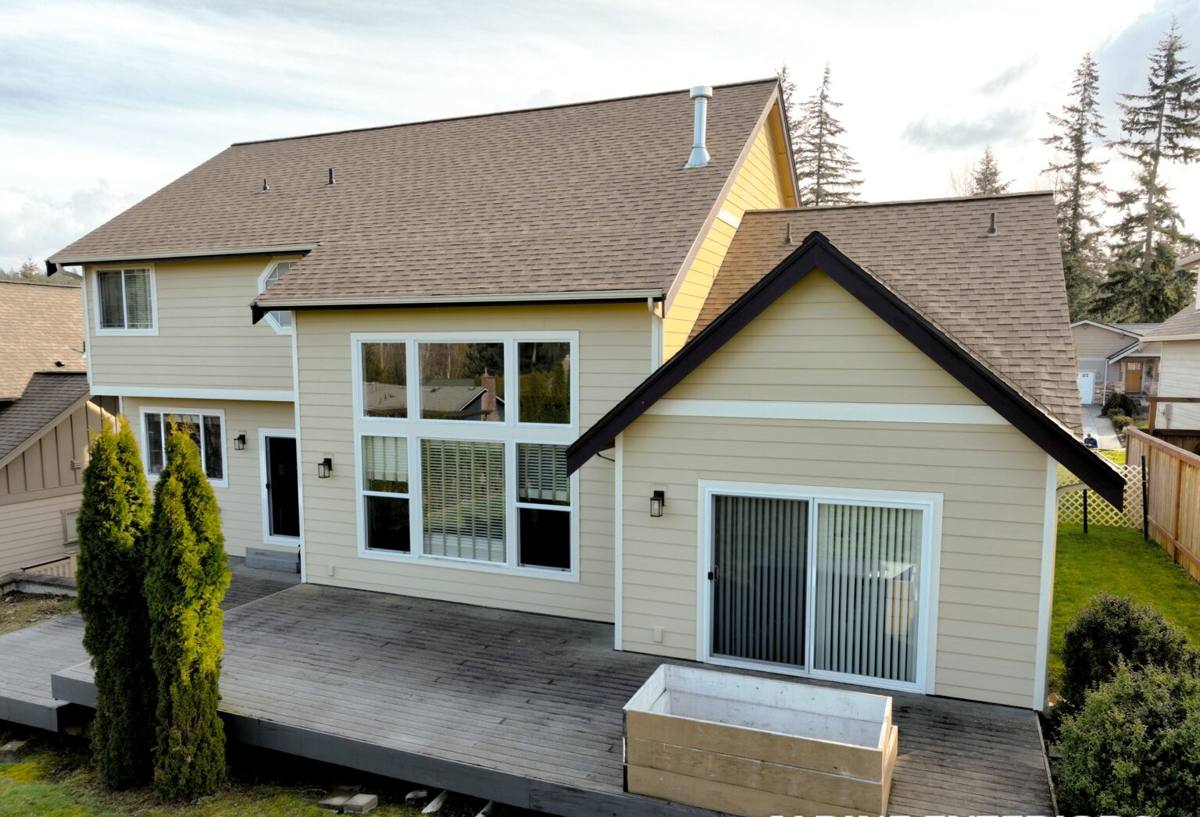
What Stanwood's Climate Actually Does to a Roof
Salt air and corrosion
Homes closer to the water and open exposures see airborne salt that accelerates corrosion on unprotected or poorly coated metal. This doesn't mean metal roofing is a bad choice near the coast — it's actually one of the more durable options available — but it does mean the specific alloy, coating, and fastener hardware matter a lot more here than they would on a roof twenty miles inland.
Driving rain and wind-driven water
Storms off the Sound often bring rain sideways, not straight down. That changes how water behaves on a roof. Water gets pushed up under laps, into vents, and around penetrations that a straight-down rain would never reach. Underlayment, panel overlap, and flashing details all need to account for wind-driven water, not just gravity.
Moss and organic growth
The long wet season in this part of Skagit County keeps roofs damp for extended stretches, which is exactly what moss needs to get established. Moss holds moisture against roofing material, and on the wrong surface it can work into seams and fasteners over time. Metal roofing sheds moss far more easily than shingles because there's no rough surface for spores to grab onto, but panel design and slope still affect how well a roof stays clear.
Why Metal Roofing Fits Stanwood Homes Well
- Sheds wind-driven rain more effectively than a lapped shingle surface when installed with proper underlayment and flashing
- Resists moss growth far better than asphalt shingles, since there's no granular surface for spores to colonize
- Handles decades of Pacific Northwest wet-dry cycling without the granule loss or curling that shortens shingle life
- Sheds standing water fast, which matters on the low-slope sections common on additions, porches, and shop buildings in this area
- Lower long-term maintenance than shingles once it's installed correctly, since there's no moss treatment or granule replacement cycle
None of that is automatic, though. A metal roof only delivers those advantages if the coating, fasteners, and installation details are matched to a salt-air, high-rainfall environment. That's the part that separates a roof that looks good going up from one that still performs in fifteen years.
What a Correct Metal Roofing Job Involves Here
Material and coating selection
Not every metal roofing product is a good fit close to salt air. We steer homeowners toward panel finishes and coatings rated for coastal or marine-influenced environments, and we're upfront when a lower-cost option isn't appropriate for a given site — that's a maintenance and longevity call, not a knock on any particular manufacturer. The trade-off is usually straightforward: a coating built for coastal exposure costs a bit more up front and holds up without chalking, fading, or corroding at the edges for far longer.
Fastener and flashing hardware
Fasteners and flashing are often where a metal roof actually fails near the coast, long before the panels themselves show any wear. Mismatched metals can set up galvanic corrosion, and standard fasteners can rust and back out over time in a salt-air environment. We use hardware rated to match the panel system and the exposure, not whatever's cheapest at the supply house.
Underlayment built for wind-driven rain
Given how often rain here comes in sideways, we don't treat underlayment as an afterthought. A synthetic, high-performance underlayment under the panels gives the roof a second line of defense if wind pushes water past a lap or around a penetration — which happens on every roof eventually, metal or not.
Flashing at every transition
Valleys, chimneys, vents, skylights, and wall transitions are where roofs leak — almost never through the field of the panels. Correct step flashing, counterflashing, and sealed penetrations at every one of these points is non-negotiable, and it's the part of the job that separates a roof crew that knows what they're doing from one just laying panels down.
Ventilation
Metal roofs need proper attic and roof-deck ventilation just as much as any other roof system — arguably more, since a poorly ventilated metal roof can trap condensation on the underside of the panels. We check and correct ventilation as part of the job, not as a separate upsell later.
Metal Roofing Options: How They Compare for a Stanwood Property
| Panel Type | Typical Fit | Salt-Air / Moss Performance | Cost Factor |
|---|---|---|---|
| Standing seam (concealed fastener) | Main roofs, homes near the water | Best — no exposed fasteners to corrode, sheds water and moss cleanly | Higher upfront, lowest long-term maintenance |
| Exposed-fastener panel | Shops, outbuildings, budget-conscious main roofs | Good, but fasteners need periodic inspection and eventual replacement | Lower upfront, more maintenance over time |
| Stone-coated steel | Homes wanting a shingle or shake look | Good; check coating warranty for coastal exposure | Mid-range |
| Aluminum panel systems | Properties with heavier salt exposure | Naturally corrosion-resistant, well suited to marine air | Mid to higher, depends on finish |
The right choice depends on how exposed the specific property is, the roof's slope and geometry, and what the homeowner wants to spend upfront versus over the life of the roof. We walk through this in person rather than quoting a single "best" option for every house, because a shop roof and a main house roof close to the water can call for different answers.
Our Process on a Stanwood Metal Roofing Project
- On-site assessment — We look at slope, exposure to wind and salt air, existing moss or moisture damage, ventilation, and the condition of the roof deck underneath.
- Material and system recommendation — Based on that assessment, we recommend a panel type, coating, and fastener system suited to the specific property, and explain the trade-offs plainly.
- Deck inspection and repair — Any soft, rotted, or moisture-damaged decking gets addressed before a single panel goes down. Installing over a compromised deck just hides a problem, it doesn't fix it.
- Underlayment and flashing installation — This is the step that determines whether the roof actually keeps water out during a sideways rainstorm, so we don't rush it.
- Panel installation — Installed to the manufacturer's specifications for fastener spacing, overlap, and expansion allowance, since metal panels move with temperature swings and need room to do that without stressing seams.
- Final walkthrough — We review the completed roof with the homeowner, including care and maintenance notes specific to a coastal, high-rainfall property.
What to Check Before You Hire Anyone for This Job
- Ask what coating or finish they're specifying for a salt-air location, and why — a vague answer is a red flag
- Ask how they handle flashing at valleys and penetrations, since that's where most roof leaks actually originate
- Confirm they inspect and repair the roof deck before installing, not just over whatever is already there
- Ask about ventilation as part of the scope, not as an add-on discovered mid-project
- Get manufacturer warranty terms in writing, including whether the warranty covers coastal or marine environments specifically
- Ask how long they've been doing roofing work in this specific area, not just roofing in general
Why a Crew That Already Works Stanwood Matters
A roofing crew based further away or unfamiliar with this stretch of the Sound may not think twice about specifying standard-grade fasteners or a coating rated for a drier climate, because it works fine where they usually build. On a Stanwood property, that same choice can mean corrosion at the fastener heads or flashing seams years before it should show up. Working this area regularly means we've seen how salt air, wind-driven rain, and moss actually play out on real roofs here over time — not in a spec sheet, but on houses a few miles from the ones we're bidding on next.
It also means we're not guessing at slope and exposure conditions specific to this part of Skagit County. A roof facing open water or exposed to prevailing wind needs different flashing and fastener attention than one tucked behind trees a half mile inland, and knowing which is which before the crew shows up saves time and avoids costly rework.
Maintenance: What Actually Keeps a Metal Roof Performing Here
Metal roofing is low-maintenance, not no-maintenance. In this climate, that means periodic checks for debris buildup in valleys, an eye on any moss or organic growth building along shaded slopes, and a look at flashing and sealant at penetrations every few years. None of this is heavy lifting, but skipping it is how a well-installed roof still runs into avoidable problems a decade in.
If you're weighing metal roofing for a home in Stanwood or elsewhere near Burlington, we're happy to take a look and walk you through what makes sense for your specific property. There's no pressure and no cost for the estimate — just a straight answer on what your roof needs and what it would take to do it right.