 Burlington
 Window Replacement for Stanwood Homes
Stanwood sits close enough to Puget Sound and the Stillaguamish delta that its homes take a different kind of weathering than houses further inland. Salt-laden air off the water, long stretches of driving rain, and a moss season that seems to start earlier every year all work on window frames, sills, and seals in ways that generic window advice doesn't address. If you're noticing drafts, fogged glass, or wood that's gone soft around the frame, you're not imagining it — you're living with what this climate does to windows over time.
We do window replacement work throughout the Burlington and Skagit County area, and Stanwood is part of our regular service territory. That matters more than it sounds like it should. A crew that's replaced windows in this specific pocket of the county has already seen how the local weather pattern interacts with different frame materials, flashing details, and siding types, and that experience shows up in how the job gets done.
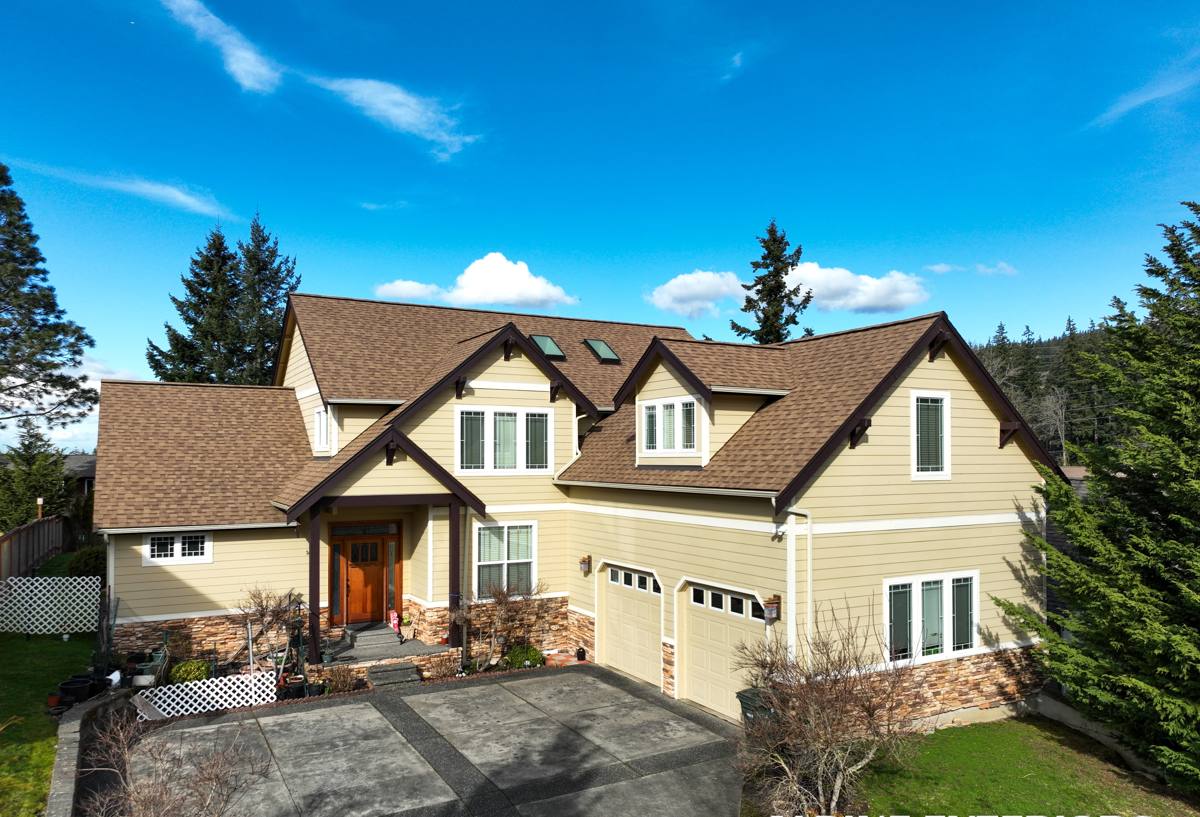
What This Climate Does to Windows
Three things drive most of the window failures we see in this area, and they compound each other over the years.
Salt Air
Proximity to saltwater accelerates corrosion on metal window components — hinges, balances, screen frames, and especially older aluminum sashes. It also degrades certain sealants and finishes faster than you'd see in a drier, inland climate. Homes closer to the water tend to show hardware failure and finish breakdown years before homes just a few miles inland.
Driving Rain
Skagit County doesn't just get rain — it gets wind-driven rain that hits windows at an angle, which puts real pressure on flashing details and sill pans that a light, straight-down rain never would. Windows that were installed without proper flashing integration, or with sealant as the only line of defense, are the ones that eventually let water track behind the frame and into the wall assembly.
Moss and Sustained Moisture
A long moss season means extended periods where wood trim, sills, and even some vinyl cladding stay damp rather than drying out between rain events. Moss and algae growth on and around window frames holds moisture against the material, which is especially hard on painted or bare wood components and on caulk lines that were never designed to stay wet for weeks at a time.
None of these factors on their own necessarily ruins a window fast. Together, over ten or fifteen years, they're why so many Stanwood homes end up with soft sills, foggy double-pane glass, and frames that don't seal the way they used to.
Signs a Stanwood Home Needs Window Replacement
Not every window problem means full replacement — sometimes it's a hardware fix or re-caulking. But certain signs point clearly toward replacement rather than repair.
- Fogging or a visible haze between panes on double- or triple-pane glass (the seal has failed and the gas fill is gone)
- Soft, spongy, or discolored wood at the sill or lower frame corners
- Visible gaps or daylight around the frame when the window is closed
- Windows that are hard to open, close, or lock — often a sign the frame has shifted or swollen
- Persistent condensation on the inside of the glass, even in normal indoor humidity
- Cold drafts near the window that you can feel with your hand along the frame edge
- Visible mold, mildew, or moss buildup on or immediately around the window trim
- Rising heating bills without any other obvious cause
If you're seeing two or more of these on a given window, it's worth getting a straightforward look rather than waiting for the problem to spread to the wall framing underneath.
What a Correct Replacement Job Actually Involves
Window replacement is one of those jobs where the visible result can look identical whether it was done right or done fast. The difference shows up years later, usually as water damage inside the wall. Here's what we consider non-negotiable on every install.
Removing the Old Window Properly
This means checking the condition of the rough opening once the old window is out — sheathing, framing, and any existing flashing — rather than just dropping a new unit into whatever's there. In a wet climate like this, hidden rot around an old window opening is common enough that we treat every removal as a chance to inspect, not just swap.
Flashing and Water Management
Given how much driving rain this area gets, correct flashing integration — sill pan, side flashing, and head flashing that all shed water down and out, layered correctly with the weather-resistive barrier — is the single most important part of the job. Sealant matters too, but sealant is a backup, not the primary defense.
Air Sealing and Insulation
The gap between the new window frame and the rough opening needs to be insulated and air-sealed correctly — not overpacked with foam, which can bow the frame, and not left loose, which leaves a draft path and a place for moist air to condense.
Interior and Exterior Finish Work
Trim, caulking lines, and touch-up work should leave the window looking finished on both sides, with sealant joints that are actually built to move with the building rather than crack the first season.
Comparing Frame Materials for This Climate
Material choice matters more here than it would in a milder, drier region. Here's how the common options hold up against salt air, driving rain, and sustained moisture.
| Frame Material | Salt Air Performance | Moisture Resistance | Maintenance |
|---|---|---|---|
| Vinyl | Good — won't corrode or pit like metal | Good; no rot risk, but seams need quality welds | Low — occasional cleaning |
| Fiberglass | Very good — stable and non-corrosive | Very good; minimal expansion/contraction | Low — durable finish |
| Aluminum | Poor without upgraded coatings — prone to corrosion near saltwater | Fair; prone to condensation without thermal break | Moderate — watch for pitting and hardware wear |
| Wood / Wood-Clad | Fair — needs a well-maintained exterior clad or finish | Fair; vulnerable if finish fails or moss holds moisture against it | Higher — periodic finish maintenance required |
We don't push one material on every job — the right choice depends on your home's style, budget, and how exposed the specific window locations are to wind-driven rain. But we'll tell you plainly if a material is a poor match for a given wall's exposure, especially on west- and south-facing elevations that take the brunt of the weather here.
Cost Factors for Stanwood Window Replacement
There's no honest single price for "window replacement" — it depends on scope and condition. These are the variables that actually move the number.
| Factor | Why It Matters |
|---|---|
| Number of windows and sizes | Larger and custom-sized units cost more than standard sizes |
| Frame material | Vinyl is typically the most economical; fiberglass and wood-clad cost more upfront |
| Condition of the rough opening | Hidden rot or framing damage found during removal adds repair scope |
| Full-frame vs. insert replacement | Full-frame replaces the whole unit and flashing system; inserts fit into an existing, sound frame at lower cost |
| Glass package | Double- vs. triple-pane, low-E coatings, and gas fills affect both price and performance |
| Access and site conditions | Second-story or hard-to-access windows take more time and equipment |
Broadly, homeowners in this area should expect a wide range depending on these factors — we'll walk through your specific windows and give you real numbers rather than a vague estimate over the phone.
Our Process
- On-site assessment. We look at each window individually — frame condition, signs of moisture intrusion, and how exposed that particular wall is to wind-driven rain.
- Straightforward proposal. You get a clear breakdown of material options and pricing, with honest recommendations based on what we saw, not a one-size-fits-all package.
- Careful removal and inspection. Old windows come out cleanly, and we check the rough opening before anything new goes in.
- Correct flashing and installation. Sill pan, flashing layers, air sealing, and insulation are done to hold up against this area's rain pattern — not just to pass a quick visual check.
- Finish work and walkthrough. Interior and exterior trim and sealant are finished cleanly, and we walk you through the result before we call it done.
Energy Performance and Condensation
Skagit County's cool, damp climate makes window performance a year-round issue rather than just a summer heat concern. Older single-pane or failed double-pane windows lose heat steadily through the glass and let cold air track in around a worn frame, which drives up heating costs through the wet months. They're also more prone to interior condensation, since a cold interior glass surface meets humid indoor air — something that shows up often in bathrooms, kitchens, and bedrooms with older windows. A properly sealed, appropriately glazed replacement window reduces both problems: it holds indoor heat better and keeps the interior glass surface warmer, which cuts down on the condensation that leads to window sill mold and mildew over time.
Why a Locally Experienced Crew Matters
Window replacement isn't a product you buy off a shelf — it's an installation, and installation quality is where most long-term problems either get prevented or get built in. A crew that regularly works Stanwood and the broader Burlington area already understands how this specific stretch of Skagit County weather behaves: which elevations take the worst of the driving rain, how fast moss establishes on north-facing trim, and where salt exposure tends to hit hardware hardest. That's knowledge that shows up in small decisions — flashing details, sealant choice, material recommendations — that a crew unfamiliar with the area might not think to make.
It also means we're not disappearing after the invoice. We're working in this area regularly, which is part of why we stand behind the installation work we do here.
Get a Straightforward Estimate
If your Stanwood home has windows showing any of the signs above, or you're just planning ahead for a home that's due, we're happy to take a look and give you a clear, no-pressure estimate. Use the form below to get started.