 Burlington
 Window Replacement in Conway: Built for Life Near the Skagit Delta
Conway sits low in the Skagit River delta, close enough to Skagit Bay and Puget Sound that homes here deal with a different mix of weather than houses just a few miles inland. Salt-tinged air, wind-driven rain off the water, and a long, damp moss season put steady pressure on window frames, seals, and sills. When windows in this area fail, it's rarely one dramatic event — it's years of small moisture intrusions and temperature swings finally catching up with hardware and wood that was never built for the exposure.
We work throughout Burlington and the surrounding Skagit County lowlands, and Conway comes with its own set of conditions worth planning around before you pick a window or a contractor.
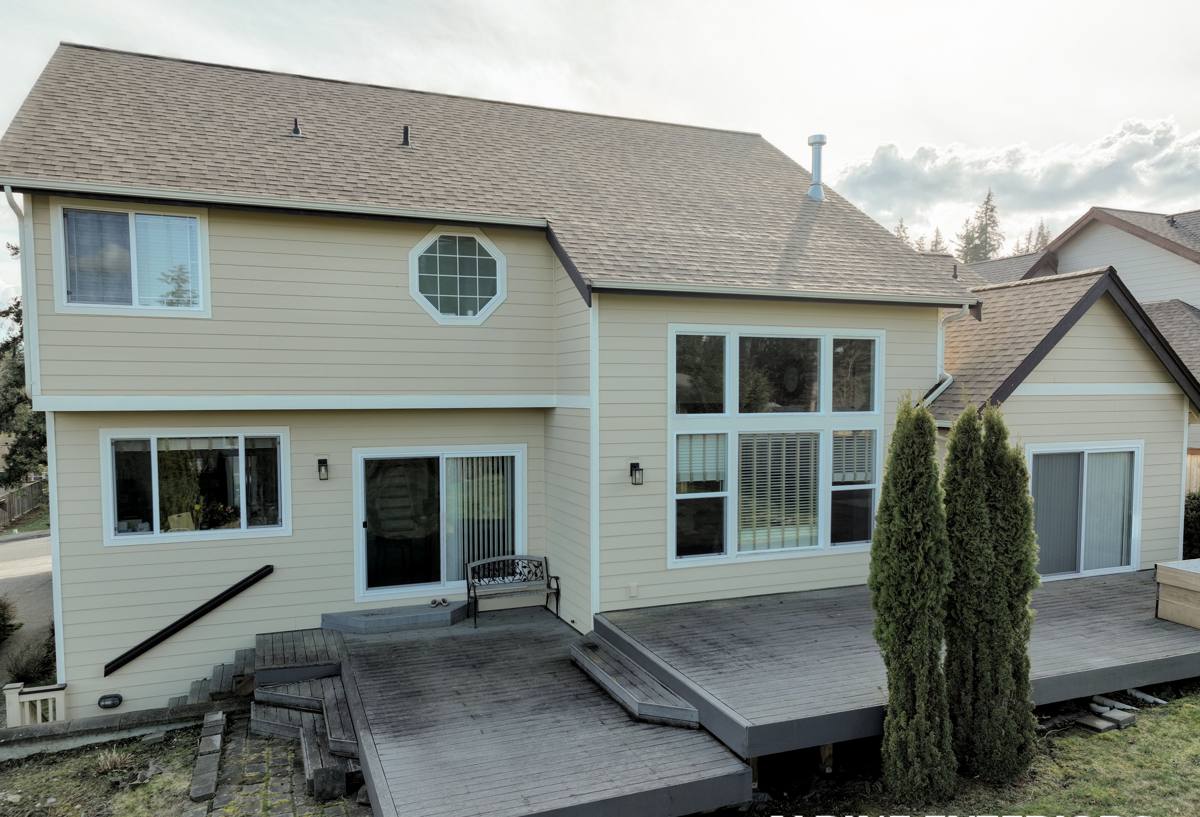
Why Conway's Location Puts Extra Stress on Windows
A few things make window replacement in Conway a slightly different job than it is elsewhere in Skagit County:
- Salt air exposure. Proximity to the bay means airborne salt reaches siding, trim, and window hardware. Over time it accelerates corrosion on lower-grade fasteners, hinges, and locking mechanisms if they aren't rated for coastal-adjacent use.
- Driving rain. Storms coming off the water don't just fall straight down — wind pushes rain sideways into wall assemblies. Flashing details and sill pans matter more here than they would on a home tucked away from open water.
- A long moss and mildew season. Persistent damp conditions for much of the year mean any gap in a window's seal or flashing becomes an invitation for moss, mildew, and slow wood rot around the frame and sill.
- Low-lying, humid ground. The delta's flat terrain and high water table keep ambient humidity elevated, which affects both condensation on interior glass and how quickly untreated wood deteriorates.
None of this means Conway homes need exotic materials. It means the details — flashing, sealants, drainage paths, and hardware — have to be done correctly, every time, because there's less margin for error than in a drier climate.
Signs a Conway Home Needs Window Replacement
Because moisture problems in this area tend to develop slowly, it helps to know what to look for before a window fails outright.
- Soft, spongy, or discolored wood at the sill or lower frame corners
- Persistent fogging or a visible haze between panes (a sign the seal on a double- or triple-pane unit has failed)
- Drafts you can feel near the frame even when the window is fully latched
- Paint that keeps peeling or bubbling on the interior or exterior trim, regardless of how often it's refreshed
- Visible moss or dark staining creeping onto the frame from the exterior sill or corners
- Windows that are difficult to open, close, or lock — often a sign the frame has swollen or warped
- A noticeably colder area of the room near the window in winter, suggesting the insulating gas fill or seal has degraded
Any one of these on its own might just need minor repair. Several showing up on the same window, or across multiple windows on the same wall, usually points to a replacement conversation rather than another round of caulking.
What a Correct Window Replacement Actually Involves
Removal Without Collateral Damage
The old window and its surrounding trim come out carefully so we can inspect the rough opening underneath. This is the point where hidden rot or past water damage — common in older Conway-area homes — gets found and addressed before anything new goes in. Installing a new window over a compromised opening just hides the problem for a few more years.
Flashing and Drainage, Not Just Sealant
In a wind-driven rain climate, the flashing and sill pan do more work than caulk ever will. Proper installation means a sloped sill pan that directs any water that gets past the exterior back outside, along with correctly lapped flashing tape that sheds water downward and outward, not into the wall cavity. Sealant is the last line of defense, not the first.
Setting the Frame Level, Plumb, and Square
An out-of-square frame stresses the sash, wears out hardware early, and can create gaps that widen over time. Shimming and fastening correctly is what keeps a window operating smoothly for its full service life rather than sticking or drafting within a few years.
Insulating the Gap Properly
The space between the new frame and the rough opening gets filled with an appropriate low-expansion insulating material — not stuffed with excess foam that can bow the frame, and not left with voids that create cold spots and condensation points.
Finish Work That Matches the House
Interior and exterior trim gets reinstalled or replaced so the new window looks like it belongs, with paintable or pre-finished materials suited to the ongoing damp exposure this area sees.
Choosing the Right Window Material for Conway Conditions
Material choice matters more here than in drier parts of the county. Here's how the common options hold up against salt air, driving rain, and heavy moss-season humidity:
| Material | Moisture & Salt Air Resistance | Maintenance | Typical Fit for Conway |
|---|---|---|---|
| Vinyl | Very good — won't rot or corrode | Low; occasional cleaning | Strong all-around choice; budget-friendly and low-upkeep |
| Fiberglass | Excellent — dimensionally stable, resists warping | Low | Good for larger openings or homes wanting a slimmer frame profile |
| Wood, unclad | Poor without diligent upkeep | High; regular repainting/sealing | Requires real commitment to maintenance in this climate |
| Wood-clad (aluminum or fiberglass exterior) | Good — exterior shell protects the wood core | Moderate | Popular where a wood interior look is wanted; clad exterior handles the weather |
| Aluminum | Fair — can be prone to condensation and corrosion near salt air unless thermally broken | Moderate | Only recommended here with a proper thermal break and coastal-rated finish |
We don't push a single product on every home. We do steer clients away from unclad wood or standard aluminum in this specific location unless there's a strong design reason, simply because the maintenance burden and corrosion risk are higher so close to the water. That's a judgment based on how these materials perform in this exposure, not a knock on any manufacturer.
Glass Packages Worth Considering
Beyond the frame, the glass package affects comfort and condensation control:
- Double-pane with Low-E coating and argon fill is the standard baseline for this climate and performs well for most homes.
- Triple-pane adds meaningful insulation value and helps reduce interior condensation on the coldest, dampest mornings — worth it for rooms that run cold or face prevailing winds off the water.
- Impact-resistant or laminated glass isn't strictly required here, but some homeowners near open water choose it for added durability against wind-blown debris during winter storms.
Our Process, Start to Finish
- On-site assessment. We look at each window's condition, the rough opening, and any existing moisture or rot issues before recommending anything.
- Straightforward proposal. You get options at different price points, with the trade-offs explained honestly — not just the top-tier upsell.
- Scheduling around the weather. Given how much rain factors into this area, we plan installation days with the forecast in mind and protect open rough openings if conditions shift.
- Installation with full flashing and drainage detailing. No shortcuts on the parts you can't see once trim goes back on.
- Walkthrough and cleanup. We check operation on every window, confirm a clean seal, and leave the site tidy.
What Affects the Cost of a Conway Window Replacement
| Factor | Why It Matters |
|---|---|
| Number and size of openings | More or larger windows means more material and labor |
| Frame material | Vinyl is typically the most affordable; fiberglass and wood-clad cost more upfront |
| Glass package | Triple-pane and specialty coatings add cost but can pay back in comfort and lower condensation |
| Existing rot or structural repair | Older homes near the delta sometimes need sill or framing repair discovered during removal |
| Full-frame vs. insert replacement | Full-frame replacement costs more but is often the right call when flashing or the rough opening needs attention |
Broadly, homeowners in this area should expect a range that depends heavily on the factors above — a single-window repair-style project is a different budget conversation than replacing every window on a home that's showing water damage. We give real numbers during an on-site look rather than a phone estimate, because the condition behind the trim is what actually drives cost.
Why It Matters to Hire a Crew That Already Works This Area
Window replacement done to a generic standard can still fail early in a place like Conway. A crew that regularly works Skagit County's low-lying, water-adjacent neighborhoods knows to treat flashing and drainage as non-negotiable, not optional upgrades, and recognizes early signs of salt-air corrosion or moss-driven rot that a less experienced installer might miss. That familiarity shows up years later as windows that still operate smoothly and seal tight, instead of ones that need attention again in a handful of seasons.
If your Conway home has drafty, foggy, or hard-to-operate windows — or you're just planning ahead before the next wet season sets in — we're happy to take a look and put together a free, no-pressure estimate using the form below.