 Burlington
 Board & Batten Siding for Alger Homes
Alger sits in the stretch of Skagit County between Burlington and Bellingham, close enough to Samish Bay and the Sound that homes here deal with a specific mix of weather most siding never sees in a catalog photo: salt-tinged air drifting off the water, long stretches of driving rain pushed in off the coast, and a moss season that can run most of the year in the shaded, tree-covered lots common to the area. Board and batten is a popular look out here — the vertical lines read well against the timber and rural character of Alger properties — but it's also a siding style that punishes a sloppy install faster than standard lap siding does. Get the layering, spacing, and material wrong, and you're not looking at a cosmetic problem in five years. You're looking at trapped moisture behind the boards.
This page covers what board and batten siding actually needs to hold up in Alger's climate, what a correct installation involves, and how we approach these projects when we're already working in the neighborhood.
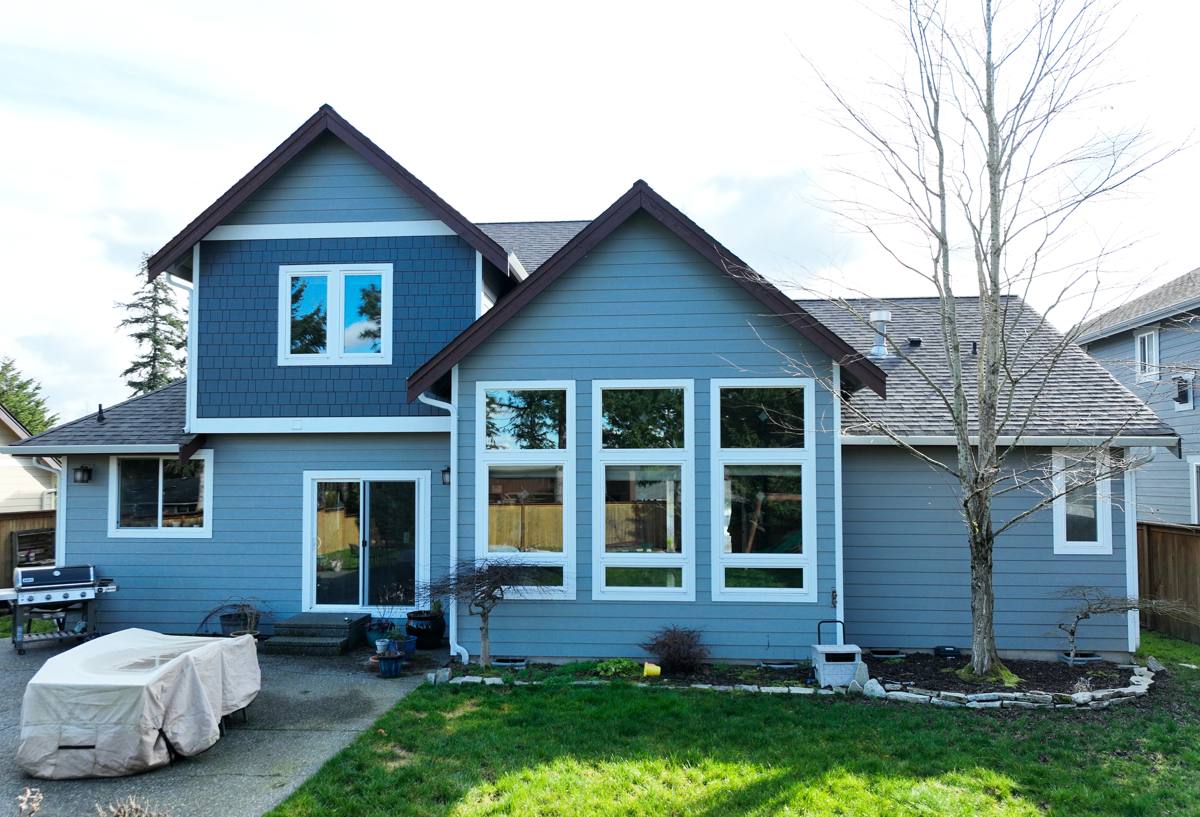
What Alger's Climate Does to Board & Batten Siding
Salt Air and Driving Rain
Properties closer to Samish Bay and the surrounding waterways get a steady, low-grade dose of salt-laden moisture in the air. It doesn't corrode siding the way it does metal fasteners and flashing, but it does accelerate the breakdown of finishes that aren't built for it — chalking, fading, and clear-coat failure show up years earlier on cheaper materials. Combine that with wind-driven rain, which in this part of Skagit County doesn't fall straight down but gets pushed sideways into wall assemblies during fall and winter storms, and you have a wall that's under real, sustained moisture pressure for months at a stretch.
A Long Moss Season
Alger's tree cover and proximity to water keep humidity and shade levels high enough that moss and algae growth is close to a year-round concern rather than a seasonal one. Board and batten's vertical battens create horizontal ledges and shadow lines that hold moisture longer than a flat lap profile does, which means the siding material and finish underneath those battens has to resist biological growth on its own — you can't count on sun exposure to dry it out between rain events the way you might on a south-facing wall in a more open setting.
What a Correct Board & Batten Installation Actually Involves
Board and batten looks simple — vertical panels or boards with battens covering the seams — but the assembly behind that look does most of the actual work. A few things separate a board and batten wall that lasts from one that fails early:
- A drainage plane behind the siding. Water gets past every exterior cladding eventually. A correctly built wall assumes that and gives the moisture a path to drain and dry out rather than sit against the sheathing.
- Proper batten spacing and fastening. Battens need consistent reveal spacing and fasteners driven into framing, not just into the panel — loose battens are one of the most common board and batten failures we see on older installs.
- Sealed and flashed penetrations. Every window, vent, and fixture that interrupts the siding is a potential entry point. Flashing has to be detailed correctly at each one, not just caulked.
- Adequate ground and roofline clearance. Vertical siding that runs too close to grade or lacks proper roof-to-wall flashing pulls moisture up from below or down from above, regardless of how good the panel material is.
- A factory finish that resists the local growth cycle. Field-applied paint or stain on a board and batten wall in this climate is a maintenance commitment; a baked-on factory finish is not.
Why We Only Install James Hardie for Board & Batten Work
Board and batten can be built out of several materials, and we understand why homeowners see options at different price points. Our position is that in Alger's specific combination of salt air, driving rain, and heavy moss pressure, most of those alternatives put more maintenance burden on the homeowner than the upfront savings are worth.
Wood Battens and Boards
Real wood board and batten has genuine appeal, and painted or stained correctly it looks excellent. But wood is organic material sitting directly in a high-moisture, high-shade environment — it needs recoating on a real schedule, and any gap in that maintenance lets moisture in where rot and moss can take hold, especially at the batten edges where end grain is exposed.
Vinyl Board and Batten
Vinyl is low-maintenance in the sense that it doesn't need painting, but it's a thin material that flexes with temperature swings, can crack in cold snaps, and its seams and panel edges give moss and algae plenty of texture to grip. It also can't be painted to refresh the look later — once the color fades or the style dates, replacement is the only option.
LP SmartSide
LP SmartSide is an engineered wood product, and engineered wood is still wood at its core — it's treated to resist moisture better than raw lumber, but it remains vulnerable at cut edges and panel joints if those details aren't sealed and maintained precisely. In a climate with this much sustained moisture exposure, we don't think that's the right trade-off for a board and batten assembly with this many seams.
James Hardie Fiber Cement
Hardie's board and batten systems are fiber cement — a non-combustible, dimensionally stable material engineered specifically for wet, moisture-heavy climates, including the HardiePanel and batten configurations built for Pacific Northwest conditions. The ColorPlus factory finish is baked on rather than field-applied, which means it resists fading and holds up against biological growth far longer than a site-applied coating, and it comes with a strong transferable warranty backing the material itself.
| Material | Moisture Resistance | Maintenance | Finish Longevity |
|---|---|---|---|
| James Hardie fiber cement | Engineered for wet climates | Low — occasional wash | Factory ColorPlus finish, long-rated |
| Wood boards/battens | Vulnerable at end grain, joints | High — regular recoating | Field-applied, shorter lifespan |
| Vinyl board and batten | Moderate; seams collect debris | Low, but not repairable/paintable | Fades over time, not renewable |
| LP SmartSide | Good if sealed, weak at cut edges | Moderate — edge sealing critical | Field or factory, varies by product |
Our Process for a Board & Batten Project in Alger
- On-site assessment. We walk the property, check existing wall condition, moisture history, and roofline/grade clearances before recommending anything.
- Assembly design. We spec the drainage plane, batten layout, and reveal spacing for that specific wall — board and batten isn't one-size-fits-all once you account for wall height and exposure.
- Removal and inspection. When replacing existing siding, we check the sheathing underneath for hidden moisture damage before closing anything back up — this step catches problems that never would have shown from the outside.
- Weather barrier and flashing. House wrap, flashing at every penetration, and drainage detailing go in before a single panel is hung.
- Panel and batten installation. Hardie panels go up first, fastened to framing per manufacturer spec, followed by battens set to consistent spacing and fastened the same way.
- Final detailing and walkthrough. Trim, caulking at appropriate joints only (not as a substitute for flashing), and a walkthrough so you know what to expect from the finish over time.
Cost Factors for Board & Batten Siding in Alger
| Factor | Why It Matters Here |
|---|---|
| Wall height and complexity | Taller walls and more corners mean more battens, cuts, and flashing detail work |
| Existing wall condition | Hidden moisture or rot found during tear-off adds repair scope before new siding goes up |
| Access and site conditions | Wooded, sloped, or tight-access lots common in Alger can affect staging and labor time |
| Panel and batten configuration | Reveal width and batten spacing choices affect material quantities |
| Trim and window detailing | More openings mean more flashing and finish work per square foot |
Maintaining Board & Batten Siding in a Skagit County Climate
Hardie's factory finish and fiber cement composition cut the maintenance burden significantly compared to wood or vinyl, but "low-maintenance" isn't "no-maintenance" in an area with this much moss pressure. A simple annual routine keeps a board and batten wall performing the way it's designed to:
- Rinse the siding down once a year, focusing on shaded sides and under eaves where moss gets a head start
- Keep gutters clear so overflow doesn't run down the wall face repeatedly during heavy rain
- Trim back vegetation and tree limbs that keep wall sections shaded and damp longer than necessary
- Check caulking at trim and penetration points every couple of years and touch up as needed
- Have any impact damage or loose battens looked at promptly — a small gap is an easy fix, a gap left open through a wet winter is not
Why a Crew That Already Works in Alger Matters
Board and batten installation quality comes down to details that don't show up until years later — how the drainage plane was built, how the battens were fastened, how the flashing was detailed at every window. A crew that regularly works properties in and around Alger has already seen how this specific stretch of Skagit County treats a wall over a full wet season, and builds accordingly rather than working from a generic spec sheet. That local pattern recognition is worth more on a board and batten job than on almost any other siding style, because the assembly has more seams, more edges, and more places for a shortcut to eventually show.
If you're considering board and batten siding for a home in Alger, we're happy to walk the property, look at what's there now, and give you a straight assessment of what it would take to do it right. Reach out for a free, no-pressure estimate — there's no obligation, just an honest look at your options.