 Burlington
 Anacortes Roofs Take a Different Kind of Beating
Anacortes sits right where Puget Sound salt air, marine fog, and Skagit County's long wet season all converge on the same roof. That combination is harder on shingles, flashing, and fasteners than the weather most inland Skagit County homes deal with. Salt-laden air speeds up corrosion on exposed metal, driving rain finds its way sideways under laps and flashing that would stay dry in a calmer climate, and the shade and moisture that come with the region's tree cover keep moss and moisture-loving growth active for most of the year. None of that means an Anacortes roof is doomed — it means repairs have to be done with those specific stresses in mind, not with a generic patch-and-go approach.
When we go out on a roof repair call in Anacortes, we're not just looking at the spot where water showed up inside the house. We're checking the whole system — decking, flashing, vents, valleys, and fastener condition — because in this climate, one visible leak is often a sign that several smaller problems are developing at once.
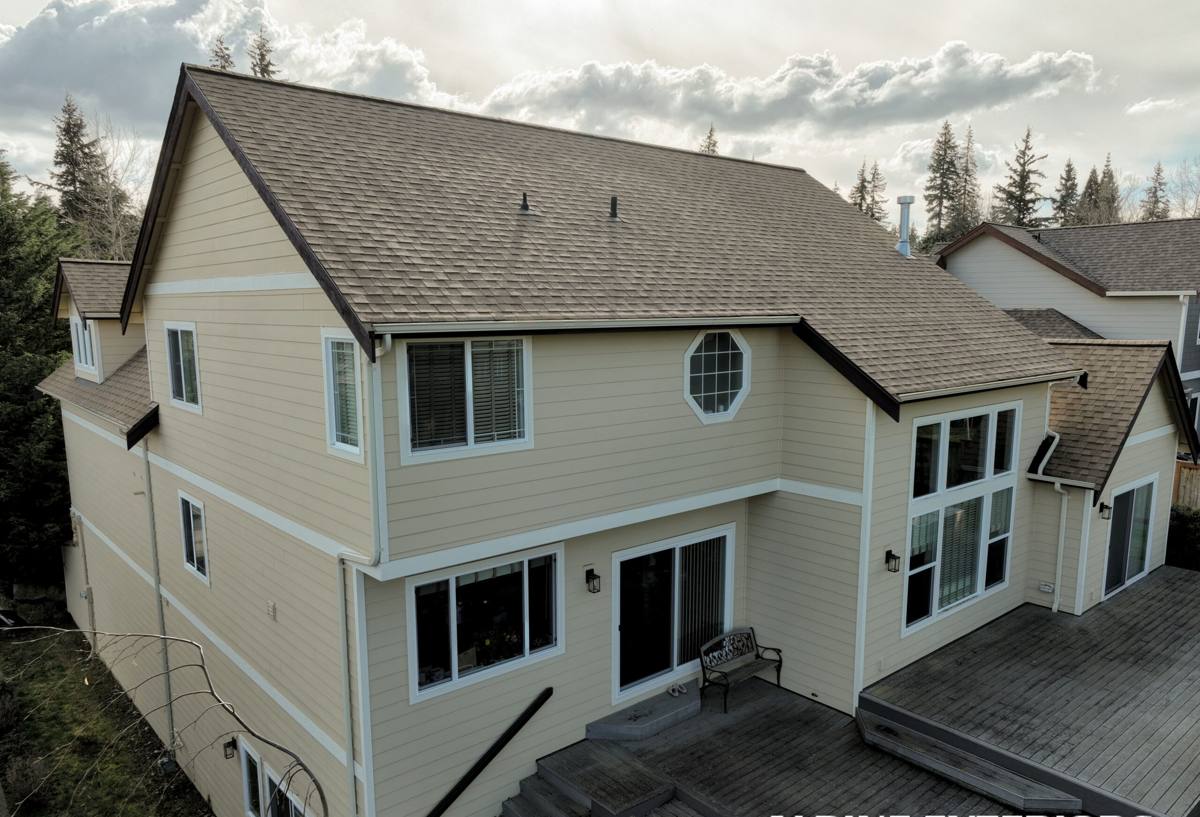
The Repair Issues We See Most Often Here
Moss and Organic Growth Damage
Moss doesn't just look bad — it holds moisture against the shingle surface far longer than open air would, and it works its way under shingle tabs and around fasteners over time. On roofs with any shade or north-facing exposure, which describes a lot of Anacortes lots, moss can establish itself within a couple of seasons if it isn't kept in check. By the time it's thick enough to see from the ground, it's often already lifted shingle edges or trapped enough moisture to start rotting the decking underneath.
Flashing and Penetration Leaks
Chimneys, vent pipes, skylights, and roof-to-wall transitions are where most Anacortes roof leaks actually originate — not in the open field of shingles. Metal flashing exposed to salt air corrodes faster than it would further inland, and sealant that was fine when it was installed dries out and cracks sooner in this climate. A flashing leak can go unnoticed for a long time because the water often travels along the decking before it drips somewhere visible.
Wind-Driven Rain Intrusion
Storms coming off the Sound bring rain at an angle, not just straight down. That kind of wind-driven rain can push water under shingle laps, ridge caps, and poorly sealed edges that would shed a normal vertical rain without issue. Roofs that look fine in dry weather can still be letting water in during a windstorm, which is why we ask about when a leak actually shows up — it tells us a lot about where to look.
Fastener and Metal Corrosion
Nails, screws, and metal flashing that aren't rated for coastal exposure corrode faster here. Corroded fasteners back out or lose their grip, which loosens shingles and opens gaps that wouldn't exist with the right hardware. This is a detail that's easy to skip on a quick patch job and hard to notice until shingles start lifting.
What an Honest Roof Repair Actually Involves
Finding the Real Source, Not Just the Symptom
Water travels. A stain on a bedroom ceiling might trace back to a flashing gap ten feet away, higher up the roof plane. We trace leaks back to their actual entry point before we touch anything, because sealing the spot where water is showing up inside — without finding where it's getting in outside — just hides the problem for a while.
Checking What's Underneath
Any time we open up a repair area, we check the decking and underlayment condition, not just the shingles. In a climate with this much sustained moisture, a leak that's been active for a season or more can soften decking or promote rot that isn't visible from the surface. A repair that skips this step can look complete and still fail within a year because the structure underneath wasn't sound.
Matching Materials and Technique
A patch that doesn't match the existing shingle course, doesn't tie into the flashing correctly, or uses the wrong fastener for coastal exposure creates a new weak point even if it stops the immediate leak. Correct technique means the repair sheds water the same way the surrounding roof does — proper shingle overlap, flashing that's woven or stepped correctly, and sealant used as a backup, not as the primary defense.
Repair or Replace? How We Help You Decide
Not every roof problem calls for a full replacement, and not every leak is fixable with a simple patch. The right call depends on the age of the roof, how widespread the damage is, and what we find once we're actually up there.
| Factor | Leans Toward Repair | Leans Toward Replacement |
|---|---|---|
| Roof age | Under roughly 15 years, or well-maintained | Nearing or past typical shingle lifespan |
| Extent of damage | Isolated to one flashing point, vent, or section | Multiple areas failing or widespread moss/moisture damage |
| Decking condition | Solid, dry decking under the damaged area | Soft, rotted, or repeatedly wet decking |
| Leak history | First occurrence or newly discovered | Recurring leaks in different spots over time |
| Cost outlook | Cost of repair is a fraction of replacement cost | Repeated repairs are adding up close to replacement cost |
We'll tell you plainly which side of that table your roof falls on. A straightforward flashing or vent repair is typically a modest cost — often in the low hundreds of dollars. Repairs involving moss remediation, rotted decking, or larger sections of damaged roofing cost more and can run into the low thousands depending on scope. If a roof is genuinely past the point where repair makes financial sense, we'll say so instead of stringing along a series of patches.
How Our Repair Process Works
- Inspection and diagnosis — we walk the roof (weather permitting) and trace the leak to its actual source, checking flashing, vents, valleys, and decking condition along the way.
- Honest assessment — we explain what we found, what's causing it, and whether a repair or a larger fix makes sense, in plain terms.
- Written scope and estimate — you get a clear description of the work and the cost before anything starts.
- The repair itself — removing and replacing damaged materials, correcting flashing details, addressing any decking issues we found, and matching the surrounding roofing where possible.
- Cleanup and check — debris cleared, work area checked, and a final look to confirm the fix addresses what we found, not just what was visible.
Materials We Use for This Climate
For Anacortes and the surrounding coastal areas, we lean toward materials and fasteners rated for higher moisture and salt exposure rather than whatever is cheapest at the moment. That means corrosion-resistant flashing and fasteners, underlayment suited to prolonged wet conditions, and shingle products with a track record in marine climates. This isn't about pushing a premium product — it's about not putting a repair back together with materials that will corrode or fail again in a few seasons in this specific environment. When a repair calls for sealant, we use it as a supplement to correct flashing work, not as a substitute for it, because sealant alone degrades faster in sun and salt air than most homeowners expect.
Moss Season and Preventive Maintenance
Because moss and moisture-related wear are such a constant here, a lot of what would otherwise become an emergency repair call can be avoided with basic seasonal upkeep. We recommend homeowners keep an eye on the following between our visits:
- Clear moss and debris from valleys and low-slope sections before it builds up thick enough to hold water
- Keep gutters and downspouts clear so water isn't backing up under the lowest shingle course
- Trim back overhanging branches that keep sections of the roof shaded and slow to dry
- Check attic spaces after heavy storms for any sign of moisture, staining, or musty odor
- Have flashing around chimneys, skylights, and vents looked at every couple of years, since these fail before the shingle field usually does
- Address small leaks promptly — a repair caught early is almost always cheaper than one that's had a season to spread into the decking
Moss removal itself needs to be done carefully. Aggressive scraping or pressure washing can strip granules off shingles and shorten their life just as much as the moss would have. We treat moss removal as part of a repair visit, not a separate pressure-washing job.
Why It Matters That We Already Work in Anacortes
A roofer who mainly works drier, inland areas of Skagit County can still do competent work, but they may not have a feel for how fast moss re-establishes here, how corrosion-prone standard fasteners are this close to saltwater, or how wind-driven rain off the Sound behaves differently than a straight downpour. Working Anacortes regularly means we've seen these patterns repeat across different roofs and roof ages, and we bring that pattern recognition into every diagnosis instead of treating each leak as a one-off mystery. It also means we're a known, local, reachable crew if a repair needs a follow-up visit — not a company that did one job in the area and moved on.
What to Expect When You Call Us
We're straightforward about what we find and what it costs to fix. If a repair is simple, we'll say so and keep the job small. If we find bigger issues — rotted decking, a roof near the end of its usable life, or damage that's spread further than the visible leak — we'll explain why and lay out the options rather than upsell a repair the roof doesn't need or downplay a problem that does.
If you've got a leak, a soft spot, visible moss buildup, or just want a roof looked at before the next round of fall storms, we're happy to come take a look and give you a straight answer. Reach out for a free, no-pressure estimate using the form below.