 Burlington
 Guemes Island Roofs Work Harder Than Most
Guemes Island sits out in Skagit County's salt water, and that location shapes everything about how a roof ages there. Homes get a steady mix of salt-laden air off the water, wind-driven rain that finds its way under poorly lapped shingles, and a moss season that runs long and heavy thanks to the shade and moisture typical of Puget Sound properties. None of that is unusual for this part of Washington, but it adds up faster on an island than it does a few miles inland, and it means a roof that would coast along fine in a drier, more sheltered spot can start failing early out here if it wasn't built for these conditions in the first place.
We're not describing a roof that's doomed — we're describing a roof that needs the right materials, the right ventilation, and the right detailing at every edge, valley, and penetration. Get those right and an asphalt shingle roof on Guemes Island will do exactly what it's supposed to do for its full service life. Skip them, or have them done by a crew that's never worked island properties before, and you'll be dealing with granule loss, moss intrusion, and leaks well ahead of schedule.
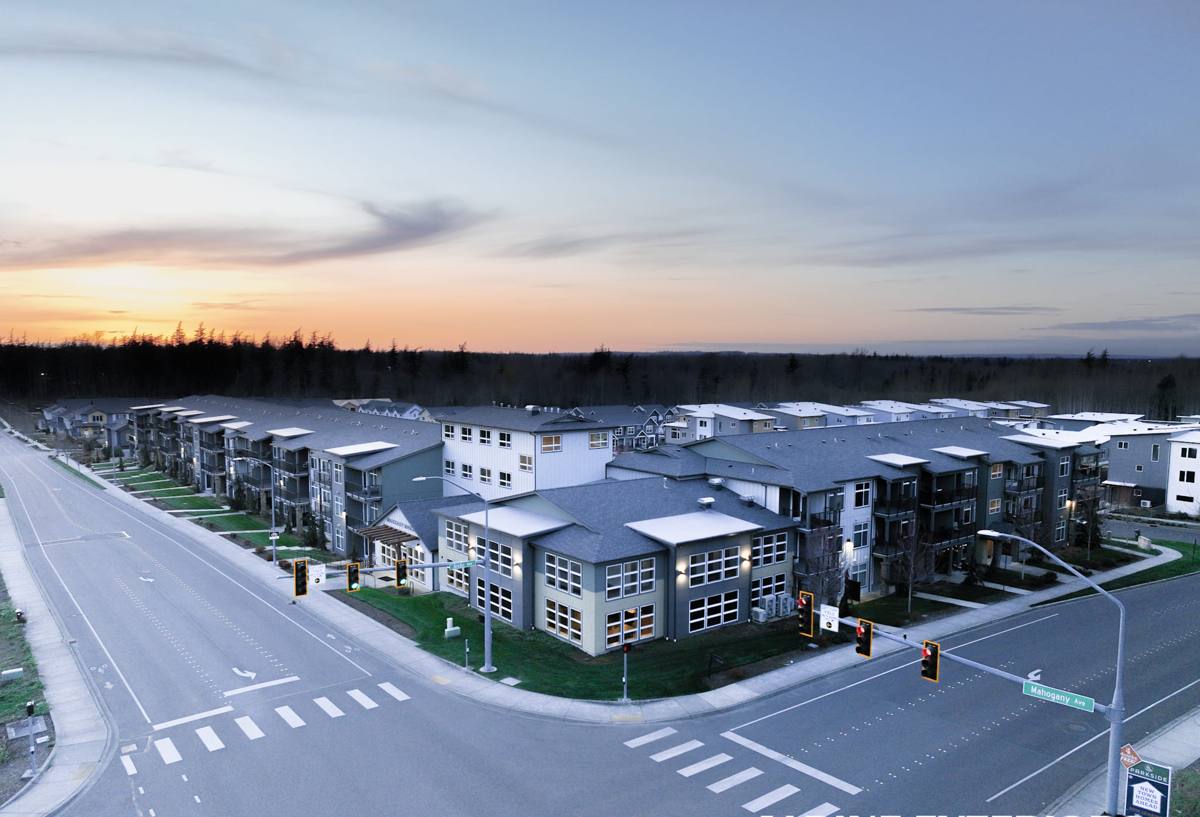
What Salt Air, Rain, and Moss Actually Do to a Roof
Salt Air
Airborne salt doesn't rot asphalt shingles the way it corrodes bare metal, but it does accelerate wear on exposed metal components — flashing, drip edge, roofing nails, and vent stacks. Cheaper or improperly coated metal will show pitting and rust well before the shingles themselves are due for replacement. That's why we pay close attention to the metal, not just the shingle, on every island job.
Driving Rain
Wind off the water pushes rain sideways, not straight down. A roof that relies only on gravity to shed water — thin underlayment, minimal nail counts, loosely lapped courses — will let water track backward under the shingles during a real storm. Correct fastening patterns and a properly lapped, storm-rated underlayment are not optional extras here; they're the baseline.
Moss and Algae
Shaded, north-facing slopes and roofs under tree cover stay damp far longer than sun-exposed sections. Moss takes hold in that moisture, works its way under shingle tabs, and lifts them — which is when leaks start. Algae staining is mostly cosmetic, but it's a sign that a roof is holding moisture longer than it should, and it's worth addressing with the right shingle choice and airflow rather than ignoring it.
What a Correctly Built Shingle Roof Needs Out Here
- Ventilation that actually balances — intake at the eaves and exhaust at the ridge, sized to the attic, so moisture doesn't get trapped and condense on the underside of the deck.
- Ice-and-water shield at vulnerable areas — eaves, valleys, and around every penetration, not just where code minimums require it.
- Synthetic underlayment rated for high wind and moisture exposure, lapped correctly with every seam sealed or properly shingled over.
- Corrosion-resistant flashing and fasteners — this matters more here than almost anywhere else in the county.
- Algae-resistant shingle granules on any section with shade or north exposure.
- Correct nail count and placement per the shingle manufacturer's high-wind installation instructions, not the minimum nail pattern.
Shingle Options for Island Homes
Most homeowners on Guemes Island end up choosing between standard three-tab shingles and architectural (laminated) shingles. Both are legitimate products; the right call depends on budget, roof exposure, and how long you want the roof to last before its next replacement.
| Factor | 3-Tab Shingles | Architectural Shingles |
|---|---|---|
| Typical wind rating | Lower, generally adequate for sheltered lots | Higher, better suited to open, wind-exposed sites |
| Algae resistance option | Available on some product lines | Widely available, often standard |
| Expected service life | Shorter | Longer |
| Upfront cost | Lower | Moderate to higher |
| Appearance | Flat, uniform | Dimensional, heavier look |
For most Guemes Island properties — especially anything with real exposure to the water or wind — we lean toward architectural shingles with algae-resistant granules. The extra upfront cost is modest compared to the difference in wind performance and how long the roof stays looking clean before moss and algae start to show. That said, a well-detailed three-tab roof on a sheltered, tree-covered lot is still a sound, honest choice, and we'll tell you plainly if that's the better fit for your situation instead of upselling a product you don't need.
How Our Process Works
1. On-Site Inspection
We walk the roof and the attic, not just look at it from the ground. We check deck condition, existing ventilation, flashing condition, and where moss or algae has already taken hold so we know which sections need extra attention.
2. Written Scope and Straight Numbers
You get a written scope covering tear-off, deck repair allowance if needed, underlayment type, shingle product, flashing, ventilation work, and cleanup — before any work starts, so there are no surprises mid-job.
3. Tear-Off and Deck Check
Old roofing comes off down to the deck. We check for soft spots, rot, or delamination and replace any bad sheathing before anything new goes down — covering over a bad deck is how roofs fail early.
4. Underlayment and Flashing
Ice-and-water shield goes at eaves, valleys, and penetrations. Synthetic underlayment covers the rest, correctly lapped. New flashing goes in at every wall intersection, chimney, and vent — we don't reuse old flashing on a full replacement.
5. Shingle Installation
Shingles go on to the manufacturer's high-wind nailing pattern, with careful attention to valleys and hip/ridge lines, which are the most common places a rushed install fails first.
6. Ventilation Balancing
We confirm intake and exhaust airflow is balanced for the attic space, adding or correcting vents where the existing setup falls short.
7. Final Walkthrough and Cleanup
We walk the finished roof with you, cover warranty paperwork, and do a full magnetic sweep of the yard for stray nails before we consider the job done.
Living With an Island Roof: Maintenance That Matters
A correctly installed roof still needs basic upkeep, and on Guemes Island that upkeep is more about moss and gutter management than anything else.
- Clear gutters and downspouts at least twice a year — clogged gutters back water up under the shingle edge.
- Keep overhanging branches trimmed back to cut down on shade and debris buildup, which slows drying after rain.
- Have moss physically removed rather than just treated, especially on north-facing slopes, before it lifts shingle tabs.
- Check flashing and sealant around chimneys and vents annually — this is where salt-air corrosion shows up first.
- After any major windstorm, do a visual check from the ground for lifted or missing shingles.
Working on the Island: Access and Scheduling
Getting a full roofing crew, tear-off equipment, and a dumpster or trailer onto Guemes Island takes more planning than a mainland Burlington job — ferry schedules and load limits affect when materials and crews can move. We build that into the schedule up front: materials get staged and ferry trips get planned before the crew shows up, so the job runs on the timeline we quote instead of losing days to logistics figured out on the fly. A crew that hasn't worked the island before is often learning that on your job, at your expense in lost time.
Signs Your Roof Needs Attention
| What You See | What It Usually Means |
|---|---|
| Granules collecting in gutters | Normal in small amounts; heavy loss signals aging shingles |
| Dark streaking on north-facing slopes | Algae growth — cosmetic now, worth addressing before it spreads |
| Moss patches, especially near valleys | Moisture retention that can lift shingles and cause leaks |
| Curling or cupping shingle edges | Shingles reaching end of service life or ventilation issue |
| Ceiling stains after wind-driven rain | Possible flashing or underlayment failure — inspect soon |
What Drives the Cost
Every roof is different, but on Guemes Island the same handful of factors tend to move the price more than anything else: roof size and pitch, how much deck repair is needed once the old roofing comes off, the shingle product you choose, the complexity of valleys and penetrations, and the access/logistics of getting materials and crew onto the island. We give you honest, itemized numbers after the inspection rather than a ballpark over the phone — a roof with hidden deck rot or a tricky valley layout costs more to do right, and we'd rather you know that before we start than find out mid-job.
Why Hire a Crew That Already Works Guemes Island
A roofer who only works mainland Burlington and Skagit County subdivisions hasn't necessarily dealt with what salt air does to fasteners over a few years, or planned a tear-off around ferry logistics, or seen how fast moss takes over a shaded island roofline compared to an open lot. Those aren't exotic problems, but they're specific ones, and getting them right the first time is a lot cheaper than fixing a roof that was built like every other roof on the mainland. We work Guemes Island regularly, which means the detailing choices on your roof — the underlayment spec, the flashing metal, the shingle granule package — are chosen because we've seen what holds up out here, not guessed at.
If you're weighing a repair against a full replacement, or just want an honest look at what your current roof needs, we're happy to come out for a free, no-pressure estimate. Use the form below to get started.