 Burlington
 Why Big Lake Homes Wear Siding Differently
Big Lake sits back from the open water of the Salish Sea, but it doesn't sit outside its weather. The same marine air that moves up the Skagit Valley from Padilla Bay and the Sound pushes past Burlington and settles over the lake, carrying moisture and a faint salt load with it. Add the shade and humidity that come from living around a lake ringed with mature evergreens, and you get a microclimate that is almost always damp somewhere on the property — a north wall that never fully dries, a stretch of siding under a stand of firs that stays green longer than it should, trim that's always a shade darker than the rest of the house because it holds water.
None of that is unusual for Skagit County. It's just concentrated. A house on a bare lot in town sees rain and wind; a house near Big Lake sees that same rain and wind plus reduced airflow, more standing shade, and higher ambient humidity for more of the year. Siding that would hold up fine on an exposed, sun-exposed wall in a drier part of the state doesn't get the same easy ride here. That's the starting point for any honest conversation about replacing siding on a Big Lake home — the material and the installation both have to answer to conditions most siding products were never really tested against.
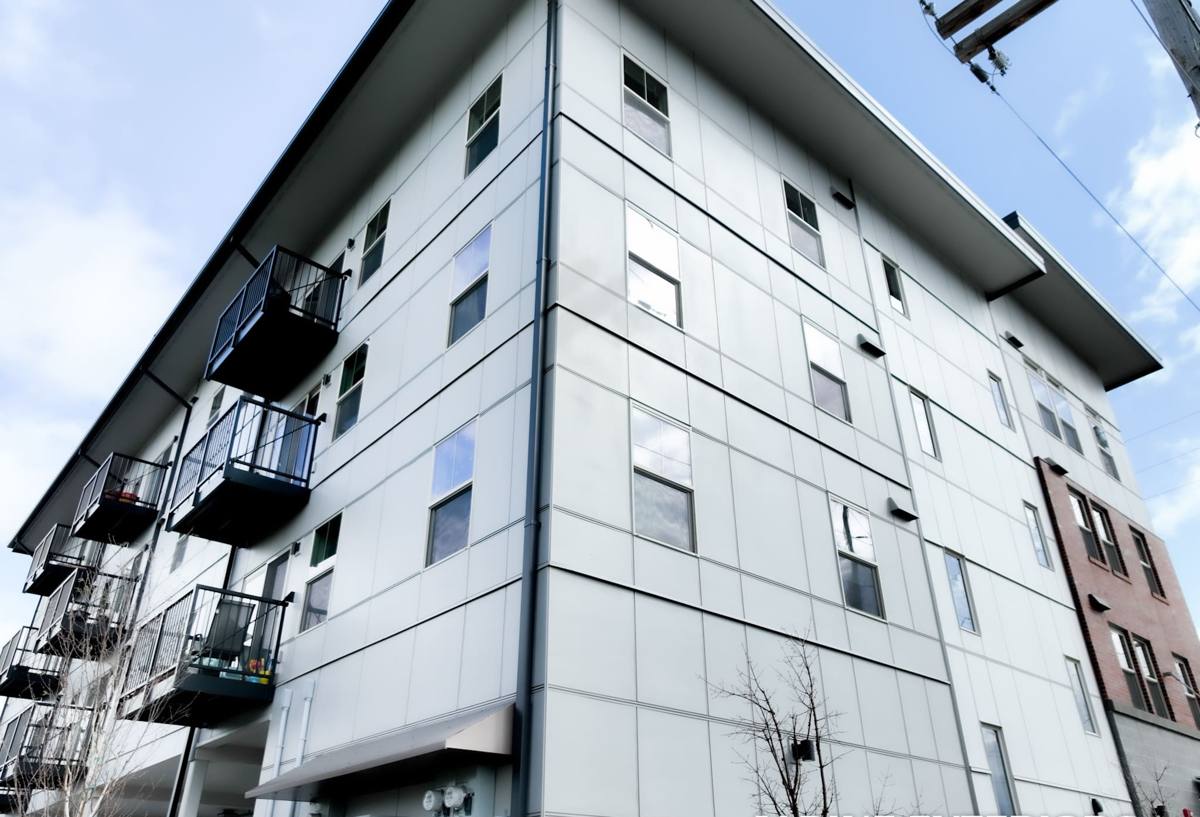
What Driving Rain and a Long Moss Season Actually Do
Moisture that doesn't leave
Driving rain — wind-driven, hitting walls at an angle instead of falling straight down — pushes water into laps, seams, and fastener penetrations that a calm rain would never reach. Over a wet Skagit Valley winter, that water finds every weak point in a siding system: a gap where flashing was skipped, a butt joint that wasn't sealed correctly, a nail driven too tight or too loose. On a lake lot with less direct sun and more shade, that water also has fewer chances to dry out between storms.
Moss and algae as a symptom, not just a cosmetic problem
Homeowners around Big Lake are used to moss on the roof, the deck, the north side of the fence — and on siding. Moss and algae growth isn't just an appearance issue. Where it takes hold, it holds moisture against the wall surface longer, which accelerates whatever damage is already happening underneath. A siding product that absorbs water readily, or a wall system with a compromised weather barrier, will show trouble faster in a shaded, damp spot than the same product would on an open, sun-facing elevation across town.
What this means for a replacement decision
The practical upshot: a Big Lake home isn't just choosing new siding for looks. It's choosing a product and an installation detail that can take sustained dampness, resist moss and algae without constant intervention, and keep water out of the wall assembly even where the sun rarely reaches. That's a different bar than "looks good, holds paint."
Signs a Big Lake Home Needs Replacement, Not Just Repair
Repair makes sense when the damage is isolated and the rest of the siding is sound. Replacement becomes the right call once the problems are spread out or point to something happening behind the surface. Walk the exterior — especially the shaded and lake-facing sides — and look for:
- Soft or spongy spots when you press on the siding, especially near the bottom courses and around window and door trim
- Persistent moss, algae, or dark staining that comes back within weeks of being cleaned off
- Visible warping, buckling, or panels pulling away from the wall
- Paint that's failing across large sections rather than one weathered spot
- Cracking or splitting at butt joints and corners
- Rot or discoloration visible at the bottom edge of siding boards, particularly near grade or under low-hanging tree cover
- Interior signs — musty smell, peeling interior paint, or damp drywall on exterior walls
If more than one or two of these show up, especially on the same wall, that's usually not a spot-repair situation. It's a sign the water management behind the siding has already failed in more than one place.
What a Correct Siding Replacement Actually Involves
Full tear-off, not a layer on top of a layer
We remove the existing siding down to the sheathing rather than installing over it. Covering up old siding hides problems instead of fixing them, and in a climate like this, whatever caused the first round of damage is usually still active underneath.
Inspecting and repairing what's behind the siding
Once the wall is open, we check the sheathing and framing for rot or water damage and repair or replace anything compromised before anything new goes up. This step matters more here than in drier parts of the state — it's common to find damage further along than the exterior surface suggested.
Weather-resistive barrier and flashing done right
A correctly lapped weather-resistive barrier, proper flashing at every window, door, and penetration, and a drainage gap that lets any water that does get behind the cladding find its way back out — these details matter more in driving rain than the siding material itself. Most siding failures we find started as a flashing or barrier shortcut, not a defect in the product.
Fastening and gapping to spec
Fiber cement has to be fastened and gapped according to the manufacturer's published requirements — fastener spacing, minimum clearance from grade and roof lines, expansion gaps at joints. Skip these and you invite the exact moisture and movement problems the product is designed to resist.
Why We Install Only James Hardie Fiber Cement
We don't offer vinyl, LP SmartSide, Cemplank, Allura, or bare cedar. That's a deliberate standard, not a lack of options. Vinyl expands and contracts with temperature swings and can crack in cold snaps; it also doesn't hold up structurally the way fiber cement does over decades of driving rain. Engineered wood products like LP SmartSide use wood strand cores that, however well-treated, remain more moisture-sensitive at cut edges and seams than fiber cement. Bare cedar looks great new but demands an ongoing maintenance commitment — refinishing, sealing, moss treatment — that most homeowners underestimate, and it's directly in the path of the moss growth this area is known for.
James Hardie fiber cement is cement, sand, and cellulose fiber — non-combustible, dimensionally stable, and engineered specifically for wet climates through its HZ5 product line, which is built for exactly the freeze-thaw and moisture cycling that shows up in the Pacific Northwest. The factory-applied ColorPlus finish is baked on under controlled conditions and backed by a finish warranty separate from the product warranty, which matters in a region where field-applied paint takes a beating from repeated wet-dry cycles. It also resists moss and algae better than wood-based products because it doesn't provide the same organic material for growth to take hold in.
Material Comparison for a Rain-and-Shade Climate
| Factor | James Hardie Fiber Cement | Vinyl | LP SmartSide / Wood-Based | Bare Cedar |
|---|---|---|---|---|
| Moisture tolerance | High — cement-based, engineered HZ5 line | Doesn't absorb, but seams and gaps can trap water | Moderate — treated, but edges are moisture-sensitive | Low without ongoing maintenance |
| Moss/algae resistance | Strong | Moderate — surface growth still occurs | Moderate | Weak — organic surface invites growth |
| Maintenance burden | Low — factory finish, occasional wash | Low but brittle over time | Moderate — periodic sealing/paint | High — regular refinishing needed |
| Fire resistance | Non-combustible | Melts/deforms under heat | Combustible (wood-based) | Combustible |
| Typical lifespan when installed to spec | Multiple decades | 15-25 years | 15-30 years | Highly variable, maintenance-dependent |
Our Process, Start to Finish
- On-site assessment of the current siding, trim, and any visible water or moss damage
- Written estimate covering material, labor, tear-off, disposal, and any sheathing repair contingencies
- Scheduling that accounts for Skagit Valley weather windows so tear-off and dry-in happen without leaving a wall exposed longer than necessary
- Full tear-off and inspection of sheathing and framing
- Repair of any damaged structure found underneath
- Installation of weather-resistive barrier, flashing, and Hardie siding to manufacturer spec
- Final walkthrough and cleanup
Why a Crew That Already Works Big Lake Matters
A contractor who works this specific area regularly already knows what a lake-adjacent lot in Skagit County throws at a wall — the shade patterns, the humidity that lingers longer than it does a few miles into town, the moss that comes back if flashing and drainage aren't handled correctly the first time. That's not something you pick up from a single job. It shows up in where we pay extra attention on the inspection, how we sequence tear-off around wet weather, and how we detail flashing on the shaded elevations that see the least direct sun and the most sustained dampness.
It also matters for the parts of the job that aren't glamorous — hauling old siding, sequencing work around narrow access on wooded lots, coordinating around trees close to the house. None of that shows up in a brochure, but it's the difference between a job that goes smoothly and one that runs into surprises halfway through.
If you're seeing moss that keeps coming back, soft spots, or siding that just looks tired around your Big Lake property, we'll come take a look and give you a straightforward, no-pressure estimate — no obligation, just an honest read on what your home actually needs.