 Burlington
 Blanchard's Climate Puts Real Demands on Siding
Blanchard sits in a stretch of Skagit County where the weather doesn't play fair with exterior building materials. The community's proximity to saltwater carries fine salt spray inland on wind, which settles on painted surfaces, trim, and metal fasteners and slowly works against anything not built to shrug it off. Add in the Pacific storm track that pushes rain sideways through much of the fall, winter, and spring, and you've got wind-driven moisture that doesn't just fall on siding — it gets forced into laps, seams, and any gap a builder left unsealed.
Then there's the tree cover. Many lots in and around Blanchard sit under fir, cedar, and maple canopy, which is part of what makes the area appealing to live in, but it also means siding on north- and west-facing walls can stay damp for days after a storm passes. That's exactly the environment moss and algae need to take hold, and once established, they hold moisture against the siding surface even longer, feeding a cycle that accelerates wear on materials that aren't built to resist it.
None of this is unique to one street or one lot — it's the general character of the area, and it's why siding decisions here can't be made off a spec sheet written for a drier climate.
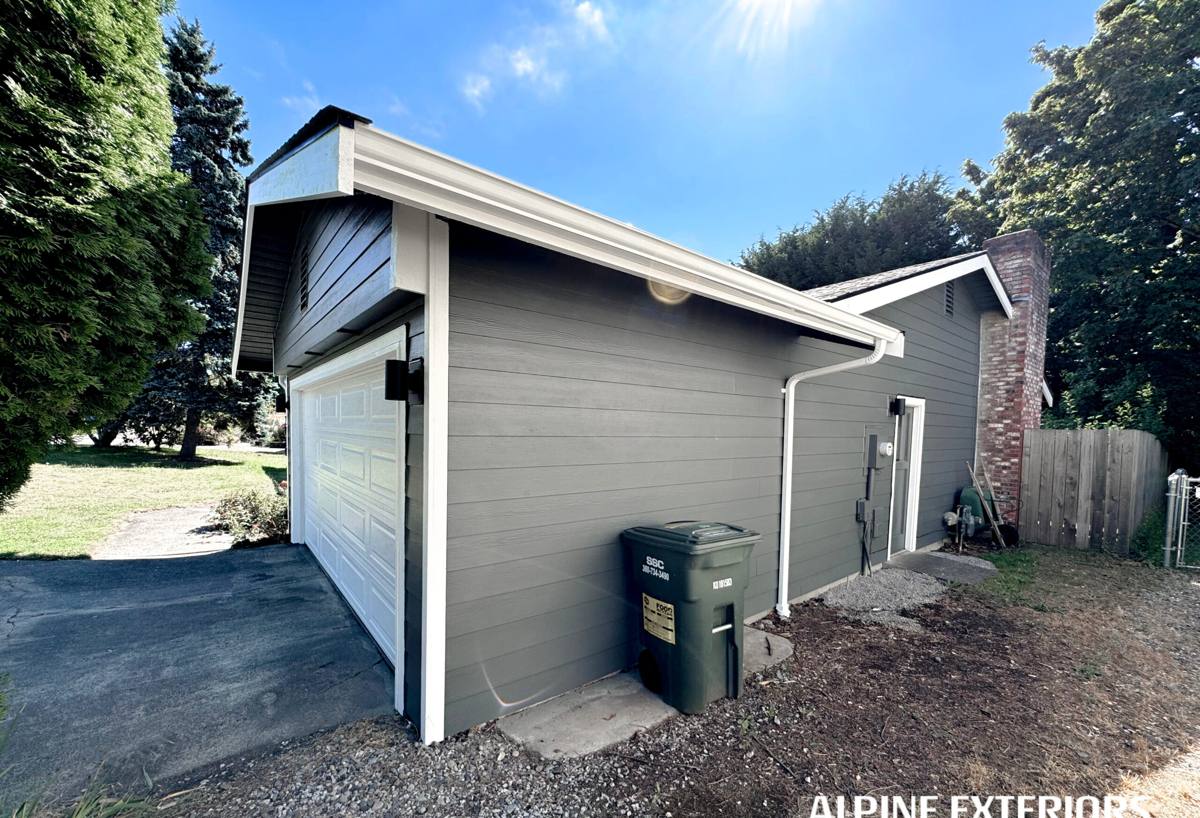
What That Means for a Blanchard Home's Siding
A siding system that holds up in Blanchard needs to do a few things at once: shed wind-driven rain rather than absorb it, resist corrosion from salt-laden air at the fastener and trim level, and present a surface that doesn't give moss and mildew an easy foothold. It also needs a finish that stays consistent through years of damp weather rather than chalking, peeling, or needing repainting every few years — because repainting siding on a home surrounded by trees and exposed to the elements is not a job most homeowners want to repeat often.
Dimensional stability matters too. Materials that swell and shrink with moisture cycles open up gaps at joints and fastener points over time, and those gaps are exactly where wind-driven rain gets in. A material that stays put through wet-dry cycles keeps its seams tight for the long haul.
Signs a Blanchard Home's Siding Is Falling Behind
- Soft or spongy spots near the bottom courses, corners, or below windows
- Paint that's peeling, bubbling, or chalking faster than it should
- Moss or algae staining that comes back within a season of being cleaned
- Gaps opening up at trim boards, corner boards, or butt joints
- Rust streaks below fasteners or trim fixings
- Boards that are cupping, warping, or separating from the wall
- A noticeable jump in heating bills that points to air leaking through the wall assembly
What a Correct Siding Installation Actually Involves
Siding is a system, not just a face material. The board or panel on the outside only performs as well as everything installed behind and around it. In a climate like Blanchard's, the details most homeowners never see are usually what separates a siding job that lasts twenty-plus years from one that starts causing problems in five.
Weather-Resistive Barrier and Flashing
Every wall needs a continuous weather-resistive barrier behind the siding, lapped correctly so water is always directed outward and down, never trapped behind a seam. Flashing at windows, doors, decks, and any wall penetration has to be integrated with that barrier in the right order — not caulked over as an afterthought. Given how much wind-driven rain this area sees, flashing mistakes are one of the most common causes of hidden rot behind otherwise good-looking siding.
Drainage and Ventilation Behind the Siding
Even the best barrier will occasionally let some moisture through a seam or fastener hole. What happens next matters: a properly furred or vented gap behind the siding lets that moisture drain and dry out instead of sitting against the sheathing. On shaded, damp lots like many in Blanchard, that drying capacity is what keeps minor moisture intrusion from turning into a rot problem.
Fastening and Clearances
Fastener type, spacing, and depth all follow manufacturer specification, not guesswork — and in a salt-air environment, corrosion-resistant fasteners aren't optional. Siding also needs proper clearance from grade, roof lines, decks, and horizontal surfaces so it isn't sitting in standing water or catching prolonged splash-back.
Trim and Joint Detailing
Butt joints, corners, and trim-to-siding transitions are where wind-driven rain finds its way in if they're not detailed correctly. Factory-mitered corners, proper joint flashing, and quality sealant used only where it belongs (not as a substitute for correct flashing) all factor into how the finished wall performs over time.
Why We Install Only James Hardie Fiber Cement
We standardized on James Hardie fiber cement siding and don't install vinyl, LP SmartSide, Cemplank, Allura, or primed spruce or cedar. That's a deliberate call, not a brand preference, and it comes down to how these materials actually perform over years of exposure to salt air, driving rain, and heavy shade — the exact conditions Blanchard homes deal with.
Fiber cement is non-combustible and dimensionally stable, so it doesn't expand and contract with moisture the way wood-based products do, which keeps joints and fastener points tighter for longer. Hardie's ColorPlus finish is baked on at the factory in a controlled process, rather than field-applied on site, which gives it more consistent coverage and better resistance to fading and moisture damage than a job-site paint job can match — a real advantage on a home that's going to spend years under tree cover and salt-laden wind. Hardie also backs its siding with a substantial limited warranty on the material and a separate warranty on the ColorPlus finish, both of which are transferable if the home sells.
That doesn't mean the alternatives are worthless products — vinyl is inexpensive and low-maintenance in mild conditions, cedar has real aesthetic appeal, and engineered wood products have their place. But we've made our professional call based on what holds up best, with the fewest maintenance surprises, in this specific climate — and that's Hardie.
How Hardie Compares in This Climate
| Factor | Vinyl | Untreated/Primed Wood | James Hardie Fiber Cement |
|---|---|---|---|
| Moisture/rot resistance | Doesn't rot, but can warp or crack in temperature swings | Vulnerable to rot without diligent maintenance | Engineered to resist moisture damage; won't rot |
| Moss & mildew resistance | Can trap moisture behind panels | Absorbs moisture, feeds growth | Dense surface resists moisture uptake |
| Finish durability | Color molded in, but can chalk and fade | Requires repainting on a recurring cycle | Factory-baked ColorPlus finish, long finish warranty |
| Fire performance | Combustible | Combustible | Non-combustible |
| Typical warranty | Varies by manufacturer | None on the material itself | Long-term limited warranty, transferable |
Our Installation Process for Blanchard Homes
- On-site assessment. We walk every exposure of the home, checking for existing rot, past water intrusion, and how sun, shade, and wind hit each wall.
- Tear-off and sheathing repair. Old siding comes off, and any damaged sheathing or framing found underneath gets repaired before anything new goes up — no covering up existing damage.
- Weather-resistive barrier and flashing. A continuous barrier goes on first, with flashing integrated at every window, door, and penetration.
- Drainage plane installation. A furred or vented gap is built in behind the siding so any moisture that gets past the surface can dry out instead of sitting against the wall.
- Hardie installation to manufacturer spec. Panels or lap siding go up with correct fastener type, spacing, and clearances from grade and other surfaces.
- Trim, caulking, and finish check. Joints and transitions get detailed correctly, and factory finish touch-up is handled where needed — no full-house field painting required.
- Final walk-through. We go over the finished job with the homeowner before calling it done.
What Affects Your Estimate
A few things typically move the price on a Blanchard siding project: how much of the existing wall assembly needs repair once old siding comes off, the amount of trim and corner detail on the home, wall height and access, and whether the home needs new flashing at windows and decks versus simply reintegrating existing openings. We'll walk the property and give you a straight answer on what we find, not a number pulled from a phone call.
Why a Crew That Already Works Blanchard Matters
We work across Skagit County, including Burlington and communities like Blanchard, so we're familiar with how wind and rain behave differently on shaded, tree-lined lots versus open ones, which walls typically take the worst weather, and where salt-influenced air tends to accelerate wear on fasteners and trim. That local pattern recognition shows up in how we flash a window, where we pay extra attention to drainage, and which details we won't skip even if they add time to the job.
It also matters for permitting and code compliance specific to the county, and for something more practical: if a warranty question or punch-list item comes up after the job is done, we're not driving in from out of the area to handle it.
- Familiarity with local wind and rain exposure patterns, not generic climate assumptions
- Experience with shaded, wooded lots and the moss/mildew issues they create
- Knowledge of Skagit County permitting and code requirements
- Faster, easier follow-up on warranty or service questions because we're already local
If your Blanchard home's siding is showing its age — or you're planning ahead before it becomes a bigger problem — we're happy to take a look and give you a straightforward, no-pressure estimate. Use the form below to get started.