 Burlington
 Clear Lake's Siding Problem Isn't Really About Looks
Homes around Clear Lake sit in a pocket of Skagit County that gets hit from two directions: marine air moving in off the Salish Sea corridor, and the steady, soaking rain that Western Washington is known for. Add tree cover along the lake and low-lying yards that hold shade most of the day, and you get siding conditions that are tougher than what a lot of manufacturers' warranty language assumes. Wood-based products swell, wick moisture at the seams, and grow moss faster than owners can pressure-wash it off. Vinyl chalks, warps in sun-exposed sections, and gives moss a slightly rough surface to grab onto. None of that is a workmanship failure — it's just what those materials do in this specific climate over enough winters.
That's the backdrop for every siding decision a Clear Lake homeowner makes. The material has to shed water aggressively, resist the kind of prolonged dampness that feeds algae and moss, and hold its finish without repainting every five to seven years. That short list is why this company installs James Hardie fiber cement exclusively, and why a Clear Lake job gets planned differently than a dry-side install would.
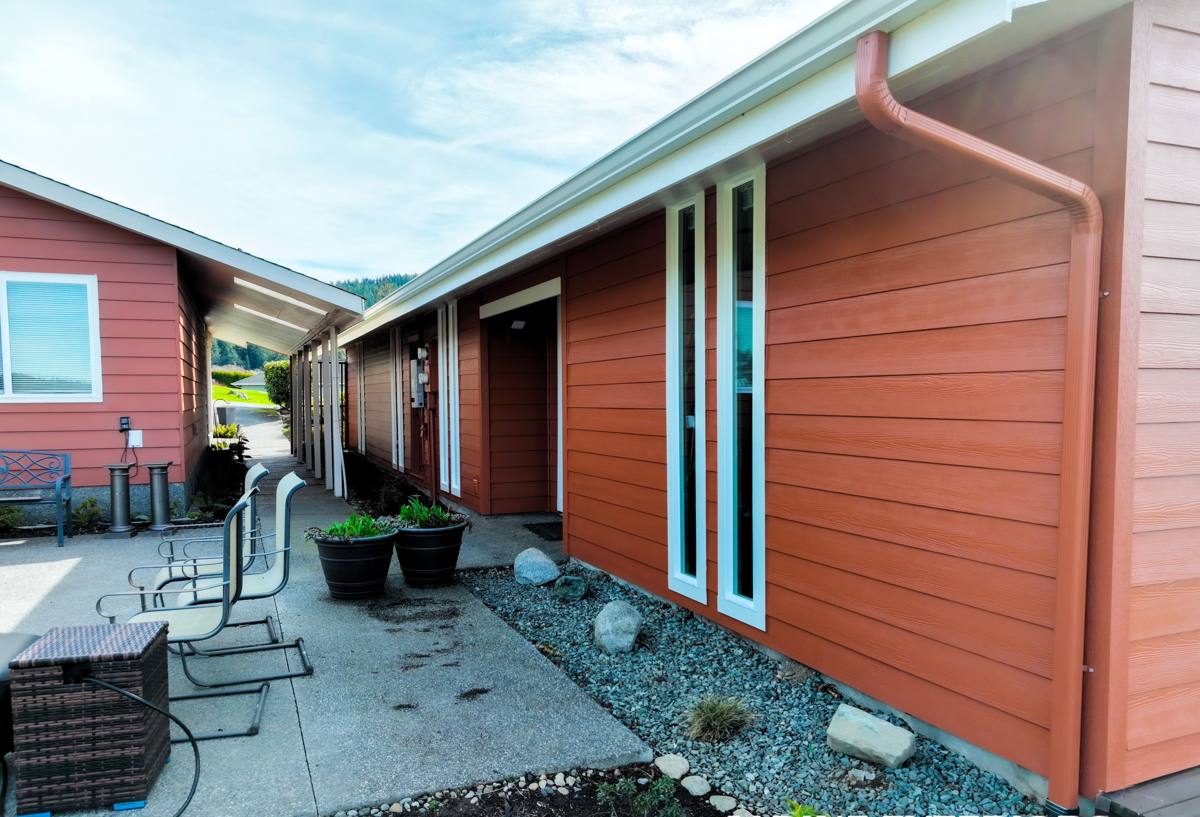
Why We Only Install James Hardie
We get asked why we don't offer LP SmartSide, vinyl, Cemplank, Allura, or primed wood alongside Hardie. The honest answer is that each of those products asks a homeowner to accept a trade-off we don't think makes sense in Skagit County's climate.
- LP SmartSide is a wood-strand product with a resin-treated face. It performs reasonably in drier climates, but any wood-based substrate is more sensitive to sustained moisture exposure than fiber cement, and sustained moisture is exactly what this area delivers for half the year.
- Vinyl siding is inexpensive and low-maintenance in the sense that it doesn't need painting, but it's a thin, flexible material that can't carry a factory-baked finish the way fiber cement can, and it doesn't hold up as well to impact or long-term UV in this region.
- Cemplank and Allura are also fiber cement, and they're not bad products. Our issue isn't the raw material — it's that James Hardie backs its installations with a stronger transferable warranty structure, a wider factory-finish color system, and HZ product engineering built specifically around regional moisture zones, which the others don't match feature-for-feature.
- Primed spruce and cedar look great on day one. They also require the most maintenance of anything on this list — recaulking, repainting, and monitoring for rot — in a climate that punishes exposed wood harder than most.
Standardizing on one product means our crews install it the same correct way every time, we know its behavior in Skagit County conditions cold, and we can stand behind the warranty without hedging.
What Correct James Hardie Installation Actually Involves
Substrate and Weather Barrier
Fiber cement is only as good as what's behind it. Before any board goes up, we check the sheathing for existing moisture damage — common on older Clear Lake homes where the previous siding wasn't managing water well — and install a code-compliant weather-resistive barrier with properly lapped seams. Skipping or shortcutting this step is the single most common cause of siding failures we see on this type of re-side.
Flashing and Water Management
Every window, door, and roof-to-wall transition needs flashing that directs water out and away, not just a bead of caulk covering a gap. Given how much rain this area gets, we treat flashing detail as the difference between a job that lasts and one that doesn't, regardless of how good the siding material itself is.
Fastening and Clearances
James Hardie specifies exact nailing patterns, fastener types, and minimum clearances from grade, roofing, and other transitions. Sitting too close to soil or a walkway lets moisture wick into the board's cut edge — one of the few places fiber cement is vulnerable if it isn't sealed and gapped correctly during install.
Caulking and Touch-Up
Joints get filled with a paintable, high-quality sealant rated for the product, and any field-cut edges are treated with Hardie's edge sealer before installation, not after. This matters more in a lake-adjacent, high-moisture setting than it would somewhere drier.
HZ5 Engineering: Built for This Exact Climate
James Hardie makes region-specific "HZ" (HardieZone) products, and Skagit County falls into the HZ5 zone — the engineering tier built for areas with significant moisture exposure and freeze-thaw cycling. HZ5 boards are formulated to resist moisture absorption and cracking better than a generic, one-size-fits-all fiber cement product would. For a Clear Lake home dealing with lake-effect humidity and consistent rain, that's not a marketing detail — it's the actual reason the product holds its shape and finish season after season instead of needing constant attention.
ColorPlus Factory Finish vs. Field-Painted Siding
One of the biggest practical differences between Hardie and the alternatives is how the color gets applied. ColorPlus finish is baked on at the factory in a controlled environment, which produces a more consistent, better-adhered coat than anything applied on-site in variable weather.
| Factor | ColorPlus Factory Finish | Field-Applied Paint |
|---|---|---|
| Application environment | Controlled factory conditions | Weather-dependent job site |
| Coat consistency | Uniform, multi-coat baked finish | Varies by crew, temperature, humidity |
| Typical repaint interval | 15 years or longer with proper care | 5-8 years in this climate |
| Warranty coverage | Backed by a separate finish warranty | Typically painter's labor warranty only |
| Moss/mildew resistance of finish | Higher, tighter surface bond | Lower, more surface texture to hold spores |
In a moss-heavy environment like Clear Lake, a tighter factory bond means less surface for spores to establish on, and fewer repaint cycles means fewer chances for a homeowner to defer maintenance and let a small issue turn into a bigger one.
Our Process for a Clear Lake Job
- On-site assessment. We walk the exterior, check existing siding and sheathing condition, note drainage patterns around the foundation, and identify problem areas like shaded, moss-prone walls.
- Product and color selection. We help you choose the right Hardie plank profile, texture, and ColorPlus color for your home and HOA or neighborhood expectations, if any apply.
- Written scope and timeline. You get a clear plan covering tear-off, barrier and flashing work, installation sequence, and cleanup — no vague verbal promises.
- Installation to manufacturer spec. Crews follow James Hardie's fastening, clearance, and flashing requirements exactly, which is also what keeps the manufacturer's warranty valid.
- Final walkthrough. We inspect the finished work with you before calling the job complete, and go over basic care so the finish lasts as long as it's designed to.
What Drives Cost on a Clear Lake Siding Job
| Cost Factor | Why It Matters Here |
|---|---|
| Existing sheathing condition | Moisture-damaged sheathing found during tear-off adds repair scope before new siding can go on |
| Home size and wall complexity | More corners, dormers, and trim details mean more cutting, flashing, and labor time |
| Siding profile and texture | Lap width, texture, and trim details affect material cost and install time |
| Access and site conditions | Tree cover, slope, and lake-adjacent lots can affect staging and scaffolding needs |
| Tear-off scope | Full removal of old siding versus a simpler re-side changes labor and disposal costs |
We don't publish blanket per-square-foot numbers because these factors genuinely change the estimate from one Clear Lake property to the next — which is exactly why the walkthrough comes before any number does.
Why a Crew That Already Works Clear Lake Matters
A contractor who's worked this specific area already knows which walls take the worst weather exposure, how the local moss season behaves against different siding textures, and what drainage issues tend to show up on lake-adjacent lots. That's not something you can fully substitute with general fiber-cement experience from a drier part of the state. It shows up in small decisions — where extra flashing attention goes, which side of the house gets the closer look during inspection — that add up to a longer-lasting install.
Questions Worth Asking Any Contractor Bidding This Job
- Are you a certified James Hardie installer, and can you explain the HZ5 spec for this region?
- What weather-resistive barrier and flashing details will you use around windows and doors?
- Will you inspect and repair sheathing before installing new siding, and is that itemized separately?
- What's the manufacturer's warranty coverage, and does your installation method keep it valid?
- Do you have experience with homes specifically in the Clear Lake / Burlington area?
If your Clear Lake home's siding is showing moss buildup, peeling paint, soft spots, or you're just planning ahead for a re-side, we're happy to walk the property and give you a straight, no-pressure estimate — fill out the form below to get started.