 Burlington
 Windows Built for Edison's Particular Kind of Weather
Edison sits close enough to Samish Bay and the tidal flats that homes here take on a different kind of weather load than houses ten miles inland in Burlington or Mount Vernon. The air carries salt. The rain comes in sideways more often than it falls straight down. And the shaded, damp pockets around older farmhouses and wooded lots grow moss on anything that holds moisture for more than a few days. Windows are one of the first places all three of those forces show up — as pitted or streaked hardware, as water staining below the sill, or as swollen wood trim that never quite dries out between storms.
None of that means Edison homes need exotic products. It means the details of the installation — flashing, sealant choice, frame material, and how the window ties into the existing wall assembly — have to be done with this specific exposure in mind. A window that performs fine in a sheltered inland neighborhood can underperform here if it's installed the same way.
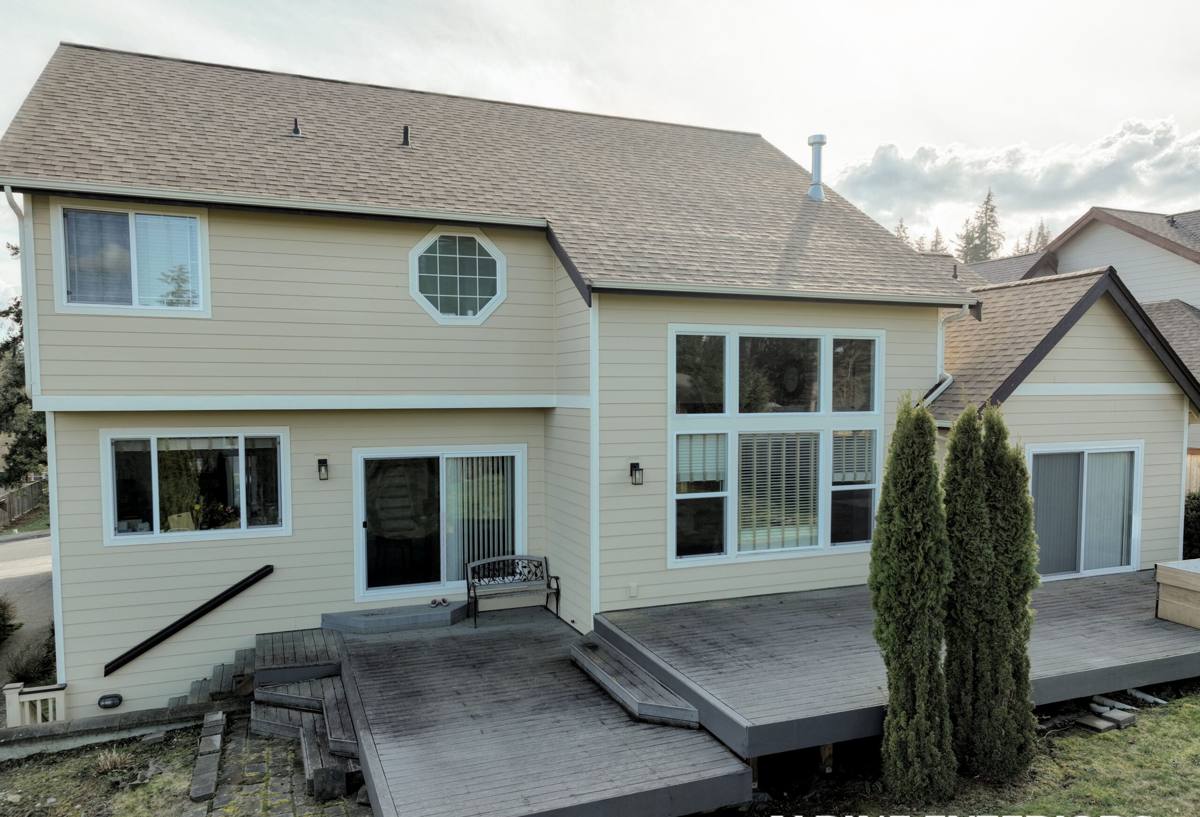
What "Correct" Actually Means for This Job
A lot of window problems we get called out to fix in the Edison area aren't product failures — they're installation shortcuts. The window itself is usually fine. The flashing, the sealant bead, or the way the rough opening was prepped is where things went wrong. Correct installation here means:
- Proper weather-resistant barrier integration, so the window ties into the house wrap or building paper with a shingle-lap sequence — not just caulked on top of it
- Sill pan flashing under every window, so any water that does get past the glazing has somewhere to drain instead of soaking into the framing
- Corrosion-resistant fasteners and hardware rated for coastal or near-coastal exposure, since standard zinc-plated screws pit and streak faster this close to the bay
- Sealant chosen for UV and moisture performance, not just whatever's cheapest at the yard — a bead that skins over and cracks in year two is a callback waiting to happen
- Shimming and squaring that accounts for older, sometimes slightly out-of-plumb framing common in Edison's older homes
Skip any one of those steps and the window can look fine for a year or two before a leak shows up — usually in the wall cavity, where it's expensive to find.
Choosing a Window Type for Edison's Exposure
There's no single "best" window material for every home — it depends on your house's age, your budget, and how exposed the specific wall is to wind-driven rain off the bay. Here's how the common options actually compare for this climate:
| Frame Material | Salt Air Performance | Moisture Behavior | Maintenance Load |
|---|---|---|---|
| Vinyl | Good — won't corrode or rust | Doesn't absorb water; seams need periodic resealing | Low — occasional cleaning |
| Fiberglass | Very good — dimensionally stable, resists pitting | Excellent; expands/contracts less than vinyl in temperature swings | Low |
| Aluminum-clad wood | Fair — cladding protects wood but seams and fasteners need attention | Good on exterior face; interior wood still needs protection from condensation | Moderate |
| Bare wood | Requires diligent upkeep near salt air | Prone to swelling, rot, and moss growth if paint/finish isn't maintained | High — regular repainting and sealing |
We're honest with Edison homeowners about this: bare wood windows can look great and suit an older farmhouse aesthetic, but they demand a maintenance schedule most people underestimate once salt air and shade-grown moss are in the mix. If you want that traditional wood look, aluminum-clad or fiberglass options with a wood interior often give you the appearance without the same upkeep burden. That's a trade-off we'll walk through honestly rather than just upsell whatever's in stock.
Glass Packages Worth Considering
Standard double-pane, low-E glass is adequate for most Edison homes, but a few upgrades are worth discussing depending on your exposure:
- Argon-filled double pane: the common baseline — decent insulation, reasonable cost
- Triple pane: better sound and thermal performance, useful if you're near a road or want to cut down on the drum of heavy rain
- Impact-resistant laminated glass: not required by code here, but some homeowners near open exposure to the bay like the added durability against wind-blown debris
Our Process, Start to Finish
1. On-Site Assessment
We look at each window opening individually — not just the model number you want replaced. Older Edison homes often have settling, non-standard rough openings, or existing water damage that needs to be addressed before a new window goes in. We check the sill, the framing, and the condition of the existing flashing or wall wrap.
2. Honest Scope and Estimate
You get a written estimate that separates the window units themselves from labor, flashing/trim work, and any framing repair. If we find rot or water damage once we open up an opening, we tell you before we proceed — no surprise change orders after the fact.
3. Removal and Prep
Old windows come out carefully to protect interior finishes. We inspect the opening for hidden moisture damage at this stage, since it's the only point where the wall cavity is fully visible.
4. Flashing and Installation
This is where the coastal-specific details matter most: sill pan flashing, proper shingle-lap integration with the weather barrier, and correct shimming for a square, plumb fit. The window is set, fastened with corrosion-resistant hardware, and sealed with a sealant rated for this exposure.
5. Trim, Finish, and Walkthrough
Interior and exterior trim gets finished to match the home, and we walk the job with you before calling it done — checking operation, seal, and finish on every unit installed.
Problems We See Most Often on Edison Homes
A few patterns show up repeatedly on service calls in this area, and they're worth knowing about even if you're not ready to replace windows yet:
- Moss and algae buildup on north- and shade-facing sills — cosmetic at first, but it holds moisture against wood trim and accelerates rot if left alone
- Hardware corrosion — hinges, cranks, and locks that pit or seize up faster than the glass unit itself wears out
- Sealant failure at the perimeter — UV exposure and constant damp/dry cycling break down cheaper caulk faster here than in a drier climate
- Condensation between panes — a sign the seal on an older insulated glass unit has failed and moisture is getting trapped, which means the unit needs replacing, not just recaulking
- Water staining below the sill on the interior — usually points to flashing that was never installed correctly in the first place
Maintenance Checklist for Coastal-Exposed Windows
Whether your windows are new or original to the house, a little seasonal attention goes a long way in Skagit County's climate:
- Rinse salt residue off exterior glass and frames a few times a year, especially after storms with onshore wind
- Scrub moss and algae off sills and tracks before it builds up a thick layer — a stiff brush and mild cleaner is usually enough
- Check weep holes (the small drainage openings at the bottom of the frame) and clear out debris so water can escape
- Inspect exterior caulk lines annually for cracking or separation and re-seal before winter rains set in
- Lubricate hardware — hinges, cranks, locks — with a moisture-displacing lubricant once or twice a year
- Watch for condensation between panes, which signals a failed seal rather than a cleaning problem
Cost Factors to Expect
Every Edison home is different, so we don't quote sight-unseen, but the factors that actually move the price are consistent:
| Factor | Why It Matters |
|---|---|
| Frame material | Vinyl is typically the most budget-friendly; fiberglass and clad-wood cost more upfront but often less in long-term upkeep |
| Number and size of openings | Larger or custom-shaped windows require more material and labor |
| Condition of existing framing | Rot or water damage found during removal adds repair scope before the new window can go in |
| Glass package | Triple pane or impact-resistant glass adds cost over standard double pane |
| Access and site conditions | Second-story openings or tight access can add labor time |
Why Local Experience in Edison Matters
Edison is a small community, and its housing stock — older farmhouses, remodeled cottages, a mix of ages and construction styles — isn't uniform. A crew that's worked in this specific area knows what to expect when they pull the trim off an opening: the kind of framing common to the era, the wall assemblies typical of homes built before modern weather barriers were standard, and how much moss and salt exposure a given wall has likely absorbed over the years. That familiarity shortens the assessment phase and reduces surprises during the job.
It also means the crew showing up already understands Skagit County's building requirements and inspection expectations, so permitting and sign-off go smoothly instead of becoming a second project on top of the window installation itself.
Get a Straight Answer on Your Windows
If you're dealing with drafty, fogged, or hard-to-operate windows on an Edison-area home, we're glad to take a look and give you an honest read on what's actually needed — whether that's full replacement, targeted repair, or just better maintenance for now. Reach out for a free, no-pressure estimate using the form below.