 Burlington
 Building Decks for Blanchard's Marine Climate
Blanchard sits close enough to Samish Bay and the Chuckanut foothills that its weather behaves differently than inland Skagit Valley. Homes here deal with a steady dose of salt-laden air, wind-driven rain that comes in sideways off the water, and a shoulder season every fall and winter where moss and algae get a real foothold on anything that stays damp. A deck built to a generic spec sheet does not hold up well under that combination. A deck built with Blanchard's conditions in mind — correct fasteners, correct drainage, correct material choices — does.
We build decks throughout the Burlington area, and Blanchard is one of the communities we work in regularly. That matters more than it sounds like it should. A crew that has already framed, decked, and railed projects in this specific stretch of Skagit County knows which details actually cause callbacks out here, and builds around them the first time.
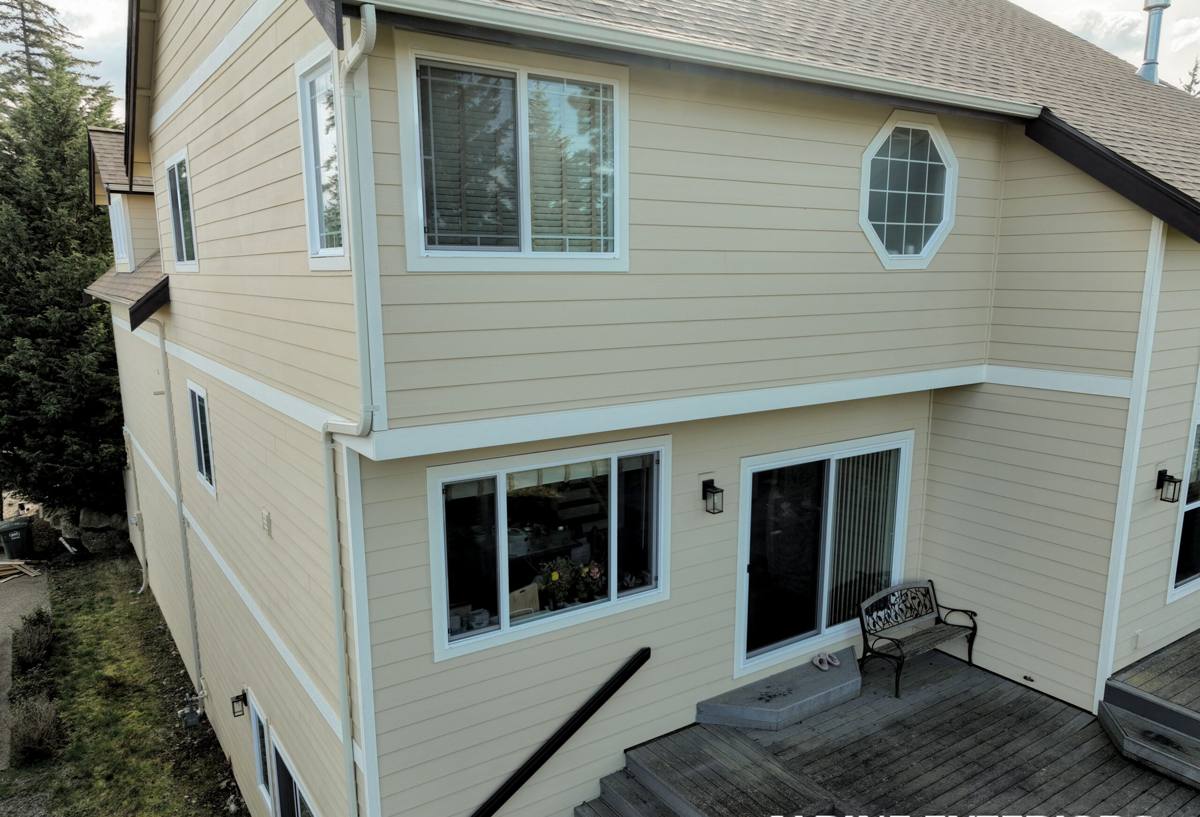
What a Blanchard Deck Is Actually Up Against
Salt Air and Corrosion
Proximity to the bay means airborne salt settles on exposed metal — fasteners, joist hangers, railing hardware, screws — and accelerates corrosion compared to a deck built further inland. Standard electro-galvanized fasteners can start showing rust streaks and pitting years before they should, which weakens connections long before the visible decking looks worn.
Driving Rain and Wind Exposure
Rain that comes in at an angle finds every gap in flashing, every unsealed ledger connection, and every spot where water can pool instead of shed. On an elevated deck attached to the house, a poorly flashed ledger board is one of the more common sources of hidden rot we find when we're called out to repair or replace an older structure.
Moss, Algae, and Extended Wet Seasons
Western Skagit County's wet season runs long, and shaded or north-facing decks in particular stay damp for days at a stretch. Moss and algae take hold on any surface that doesn't drain and dry reasonably fast, and once established they hold moisture against the decking surface, which speeds up wear on wood and creates a genuinely slippery walking surface.
What a Properly Built Deck Needs to Address
None of the issues above are unusual or unsolvable — they're just things a deck needs to be designed around rather than ignored. In practice that comes down to a handful of decisions made before the first board goes down.
- Footings set below frost depth and sized for the actual soil conditions on the lot, not a generic minimum
- A ledger board connection that's properly flashed and sealed where it meets the house, since this is the single most common point of hidden water intrusion
- Joist hangers, screws, and structural hardware rated for the corrosion exposure of a near-marine environment, not standard interior-grade fasteners
- Decking spaced correctly for drainage and airflow underneath, so the structure can actually dry between rain events
- A surface material chosen with this climate's moss and moisture load in mind, not just upfront cost
- Railing and stair details that meet current code for height and baluster spacing
Framing and Structure: Getting the Bones Right
The structure underneath a deck is the part nobody sees once it's finished, which is exactly why it's where corners get cut on lower-quality builds. Joist spacing, beam sizing, and post footing depth all need to match the actual span and load of the deck being built — not the minimum a builder can get away with. In a wet climate, we also pay close attention to keeping structural wood off the ground and out of standing water, using post bases that hold framing lumber above grade rather than burying it in concrete or dirt where it will hold moisture.
Ledger attachment deserves its own mention because it's where most structural deck failures actually start. The ledger board bolts directly to the house framing and carries a significant share of the deck's total load, and it sits at the exact seam where wall and deck meet — the highest-risk spot for water to work its way behind the siding. Proper flashing here, installed in the correct order relative to the house's weather-resistive barrier, is not optional trim work; it's a structural and moisture-control detail that determines whether the connection lasts.
Choosing the Right Decking Material
There's no single "best" decking material — there's a best material for a given budget, maintenance appetite, and how much sun or shade the deck actually gets. In a moss-prone climate like Blanchard's, that tradeoff matters more than it does in a drier region.
| Material | Upfront Cost | Maintenance | How It Handles This Climate |
|---|---|---|---|
| Pressure-treated wood | Lowest | Annual cleaning, periodic staining/sealing | Affordable and repairable, but needs consistent upkeep to resist moss and moisture damage |
| Cedar | Moderate | Regular cleaning and finish maintenance | Naturally more rot-resistant than treated lumber but still needs sealing to shed water well |
| Composite decking | Higher | Periodic washing, no staining/sealing | Resists rot and doesn't absorb moisture, though moss can still grow on the surface film in shaded, damp spots |
| PVC/capped composite | Highest | Occasional washing | Best moisture resistance of the group; performs well under sustained wet, shaded conditions |
We'll walk through this tradeoff honestly during an estimate rather than steering everyone toward the highest-margin option. A well-built wood deck that gets cleaned and sealed on schedule can last a long time; a composite or PVC deck trades a higher upfront cost for a lot less annual maintenance. What matters most is matching the material to how much sun exposure the specific site actually gets and how much upkeep the homeowner realistically wants to do.
Hardware and Fasteners That Actually Hold Up
This is the detail that separates a deck that looks fine for five years from one that stays structurally sound for decades in a salt-air environment. We use fasteners, joist hangers, and structural connectors rated for the corrosion exposure this area sees — not the standard-grade hardware that's fine further inland but starts failing early here. Mixing incompatible metals (certain fastener coatings against certain lumber treatments, for example) can also accelerate corrosion, so hardware compatibility is something we account for during planning, not something left to whatever's in stock.
Railings and Guardrails
Railing posts and connections take constant weather exposure and also need to meet current guardrail height and baluster-spacing code requirements. We build these to hold up structurally and to pass inspection without a callback.
Managing Moss and Drainage Long-Term
A deck built with good drainage and airflow underneath will fight moss far better than one that traps moisture. Beyond the build itself, a bit of routine upkeep keeps a deck performing the way it should through Skagit County's wet stretch.
- Sweep debris off the deck regularly, especially in fall when leaves and needles collect in corners and against the house
- Keep gutters and downspouts near the deck clear so runoff isn't dumping extra water onto the surface
- Wash the deck surface at least once a year to break up moss and algae before it establishes
- Check and re-seal wood decking on the manufacturer's recommended schedule, typically every one to three years
- Inspect railing posts and stair connections annually for looseness or corrosion at the hardware
- Trim back overhanging vegetation that keeps sections of the deck shaded and damp
Permits and Code Considerations
Most deck projects that attach to the house or sit above a certain height require a permit and inspection, and guardrail height, baluster spacing, and footing depth all need to meet current building code. Requirements can vary by jurisdiction within Skagit County, so we handle the permitting details as part of the project rather than leaving a homeowner to sort that out. Getting this right the first time also matters at resale — an unpermitted deck can become a real headache during a home sale inspection.
How Our Process Works
We keep the process straightforward from first contact to finished deck.
- An on-site visit to look at the actual lot — grade, sun exposure, drainage, and how the deck will attach to the house
- A written estimate that lays out material options and honest tradeoffs, not just a single number
- Permitting handled before work begins, where required
- Construction from the ground up — footings, framing, ledger flashing, decking, then railings and stairs
- A final walkthrough so the homeowner knows exactly what maintenance the new deck needs and when
Why a Local Blanchard Crew Matters
A deck built by a crew unfamiliar with this specific stretch of Skagit County can still look fine on the day it's finished. The difference shows up two or three winters later, in how the ledger flashing held up under driving rain, whether the hardware is already showing rust, and how much moss has taken hold on a shaded section that never got designed for drainage. We work in Burlington and the surrounding communities, including Blanchard, often enough to know which details matter here and to build to them from the start, rather than learning it the hard way on someone's project.
If you're planning a new deck or replacing one that's showing its age, we're happy to come take a look and put together a free, no-pressure estimate — just fill out the form below.