 Burlington
 Why Lyman Homes Need Windows Built for This Valley
Lyman sits tucked along the Skagit River, shaded by tree cover and hemmed in by hills that hold onto fog and moisture longer than the open flatland around Burlington does. That setting is part of what makes Lyman a nice place to live, but it's hard on window assemblies. Homes here deal with long stretches of damp air, driving rain that comes sideways off Pacific storm systems, and a moss and mildew season that can run most of the year on north-facing walls and shaded trim. Add in the temperature swings between humid river-valley mornings and warmer afternoons, and you've got conditions that will find every weak seam in a window frame over time.
An energy-efficient window for a Lyman home isn't just about the glass package. It's about the whole assembly — frame material, flashing, sealant, and installation detail — working together so the window keeps water out, holds its seal through wet-dry cycles, and doesn't waste energy while it's doing it. We approach window replacement in this area with that whole-assembly mindset, because a window that's efficient on paper but poorly detailed in the field will fail here faster than it would in a drier part of Skagit County.
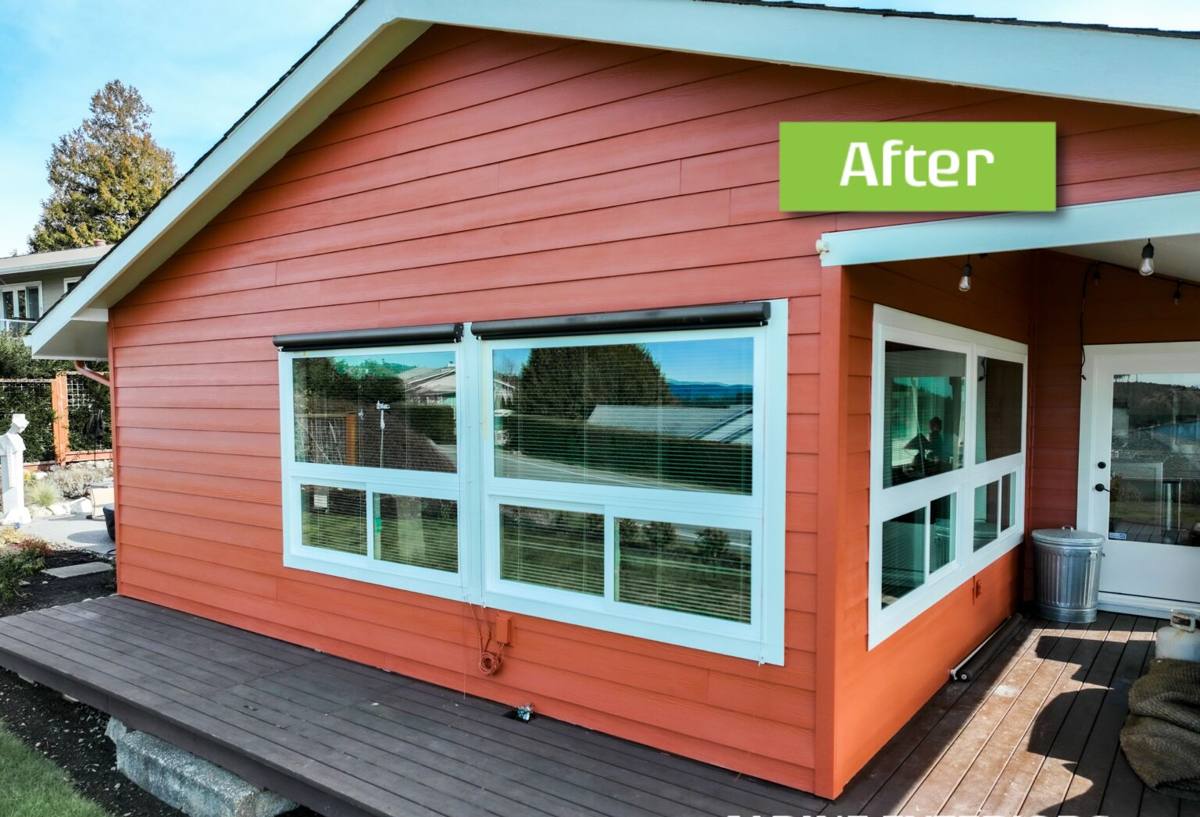
What "Energy-Efficient" Actually Means for a Skagit County Window
U-Factor Matters More Than Marketing Terms
In the Pacific Northwest's marine climate, the number that matters most for comfort and heating costs is U-factor — how well the window resists heat loss. Lower is better. For our climate zone, double-pane windows with a low-E coating and an insulated (often argon-filled) gap perform well and are the standard we recommend for most Lyman homes. Triple-pane glass is available and offers a modest additional efficiency gain, but it adds weight, cost, and installation demands that aren't always worth it unless a home has unusual noise or exposure issues.
Condensation Resistance and Moisture Control
Because Lyman runs damp for so much of the year, condensation resistance deserves as much attention as U-factor. A window with a poor thermal break will sweat on the interior during cold, humid mornings — and that moisture, over years, feeds mold and rot at the sill. Look for a documented condensation resistance rating, not just an energy label, when comparing window options for a home in this kind of setting.
Common Window Problems We See in Lyman
Repeat issues we run into on service calls and replacement jobs in and around Lyman:
- Wood sills and jambs softened by years of trapped moisture behind failed caulk or flashing
- Moss and algae staining on north- and west-facing frames and trim, especially under tree cover
- Foggy or failed insulated glass units where the seal gave out from constant humidity cycling
- Drafts around older aluminum-frame windows that were never a great fit for this climate to begin with
- Interior condensation and sill staining from single-pane or poorly sealed older units
None of these are unusual for the area — they're what you'd expect from a valley climate acting on aging window installations. The fix isn't always full replacement; sometimes it's re-flashing and resealing a window that's structurally sound. We'll tell you honestly which situation you're in before recommending a full swap.
What a Correct Installation Involves
Flashing and Water Management Come First
The window itself is only part of the system. Around Lyman, where driving rain is a regular event, the flashing detail around the rough opening is what actually keeps water out of the wall assembly over the long run. That means proper head flashing, correctly lapped weather-resistive barrier, sill pan flashing to catch and direct any water that gets past the outer seal, and sealant placed so water sheds down and out rather than pooling at the sill. Skipping or rushing this step is the single biggest cause of rot and callback repairs we see on window jobs in this region — far more than the window brand itself.
Air Sealing and Insulation at the Frame
A window can have an excellent U-factor rating and still leak air and heat if the gap between the window frame and the rough opening isn't properly insulated and sealed. We use low-expansion foam or backer rod and sealant appropriate to the gap size — not stuffed fiberglass, which settles and stops insulating — so the efficiency numbers on the glass actually translate to comfort inside the house.
Interior and Exterior Trim
Trim work matters for both looks and performance. Exterior trim needs to be back-primed and caulked at the right joints, not sealed everywhere, so any incidental moisture has a path to escape rather than getting trapped behind the trim — a common cause of hidden rot in humid climates like this one.
Window Materials and Frame Types
Frame material affects how a window holds up to Skagit Valley moisture over time, not just how it looks. Here's how the common options compare for a Lyman home:
| Frame Material | Moisture Performance | Maintenance | Typical Fit for Lyman |
|---|---|---|---|
| Vinyl | Won't rot; handles humidity well | Low — occasional cleaning | Strong all-around choice; our most common recommendation |
| Fiberglass | Excellent — very stable in wet/dry cycling | Low | Good upgrade for exposed elevations or higher-end remodels |
| Wood (clad exterior) | Vulnerable if cladding or seals fail | Higher — needs monitoring at joints | Best for homes prioritizing an interior wood look, with realistic maintenance expectations |
| Aluminum | Poor thermal performance; prone to condensation | Low, but efficiency trade-off is significant | Not something we recommend for this climate as a primary window |
We install vinyl and fiberglass windows most often in this area because they hold up to sustained moisture exposure without the ongoing upkeep that wood-frame windows demand. If you want the look of wood, clad options give you that appearance with a more durable exterior face — we'll walk through the trade-offs honestly rather than push a single product line.
Our Process From Estimate to Cleanup
- On-site visit to assess your current windows, rough openings, and any water damage or rot found during removal
- Straightforward written estimate covering window units, flashing and sealing work, trim, and disposal of old materials
- Scheduling that accounts for weather — we avoid opening up walls during active rain when possible, given how much driving rain this area gets
- Removal, proper flashing and sill pan installation, window setting, air sealing, and trim work by the same crew start to finish
- Final walkthrough so you can see and test every window before we call the job done
- Cleanup of the work area and haul-away of old windows and packaging
Cost Factors to Understand Before You Get Quotes
Window replacement pricing varies a lot based on specifics, but these are the factors that actually move the number:
- Number of windows and whether it's a full-home replacement or a targeted few
- Frame material chosen (vinyl, fiberglass, or clad wood)
- Whether the rough opening needs repair due to existing rot or water damage — common on older Lyman homes
- Window size and configuration (standard slider or double-hung vs. custom shapes and large picture windows)
- Access and second-story work, which affects labor time and equipment needs
- Trim and siding tie-in work required to properly finish the exterior around the new window
Be cautious of any quote that doesn't account for the condition of the rough opening — on homes in a damp valley setting like Lyman's, hidden sill or framing damage is common enough that it should be part of the conversation before, not after, the contract is signed.
Why a Crew That Already Works Lyman Matters
Window performance in Skagit County isn't uniform — a detail that's optional in a drier part of the county can be essential in a shaded river-valley setting like Lyman. A crew that regularly works this specific area already knows which elevations take the worst of the driving rain, how much moss and moisture pressure to expect on north-facing walls, and what flashing details actually hold up here versus what merely meets a generic code minimum. That local pattern recognition is what keeps a window installation performing five, ten, and twenty years out, not just on install day.
We're a Burlington-based siding and exterior contractor, and windows are part of the same building envelope we work on every day — which means we think about how your new windows tie into your siding, trim, and flashing as one connected system, not as an isolated swap.
If you're weighing window replacement or repair for a Lyman home, we're happy to take a look and give you a straightforward, no-pressure estimate — just fill out the form below.