 Burlington
 Roof Repair on Fir Island: A Delta That Doesn't Dry Out
Fir Island sits low in the Skagit River delta, surrounded by tidal sloughs, open farmland, and the wide flat approach to Skagit Bay. That geography is part of what makes the area distinctive, and it's also exactly what makes roofs here wear differently than roofs ten miles inland. Salt-laden air moves off the bay with almost nothing to slow it down. Wind crosses open delta ground and hits rooflines at angles a more sheltered, tree-lined neighborhood in Burlington rarely sees. And the same low, damp valley floor that makes this farmland productive also keeps roof surfaces wet longer than they'd stay in a drier, higher-elevation part of Skagit County. None of that means a Fir Island roof is doomed to fail early. It means the repair work has to be matched to those specific conditions, not to a generic assumption about what "Pacific Northwest weather" does to a roof.
Salt Air and Corrosion
Proximity to Skagit Bay means fasteners, flashing, and exposed metal components on a Fir Island roof face more corrosion pressure than the same materials would see further inland. A repair that uses standard-grade fasteners or flashing on a home this close to open water can look fine for a season or two and then start showing rust streaks, pitting, or failed seals well ahead of schedule. Corrosion-resistant hardware costs a little more up front and matters a lot over the life of the repair.
Wind-Driven Rain Across Open Ground
Delta farmland doesn't offer the wind-breaking that a denser, tree-covered neighborhood provides. Storm winds crossing Fir Island's open fields hit rooflines with more direct force, driving rain sideways into ridge caps, valleys, and any flashing that isn't lapped and sealed correctly. A leak that would stay contained on a more sheltered roof can find its way further into the deck and attic space here simply because the wind is pushing harder.
A Moss Season With No Real Off-Switch
Shaded roof planes, north-facing slopes, and any surface that stays damp between storms grow moss readily in this climate, and the growing season runs long because the valley rarely gets an extended dry stretch to interrupt it. Moss holds moisture against roofing material, works into shingle edges and seams, and can lift or loosen roofing over time if it isn't kept in check. On Fir Island specifically, the combination of low elevation, surrounding water, and limited sun exposure on some rooflines makes moss a near-constant maintenance factor rather than an occasional seasonal chore.
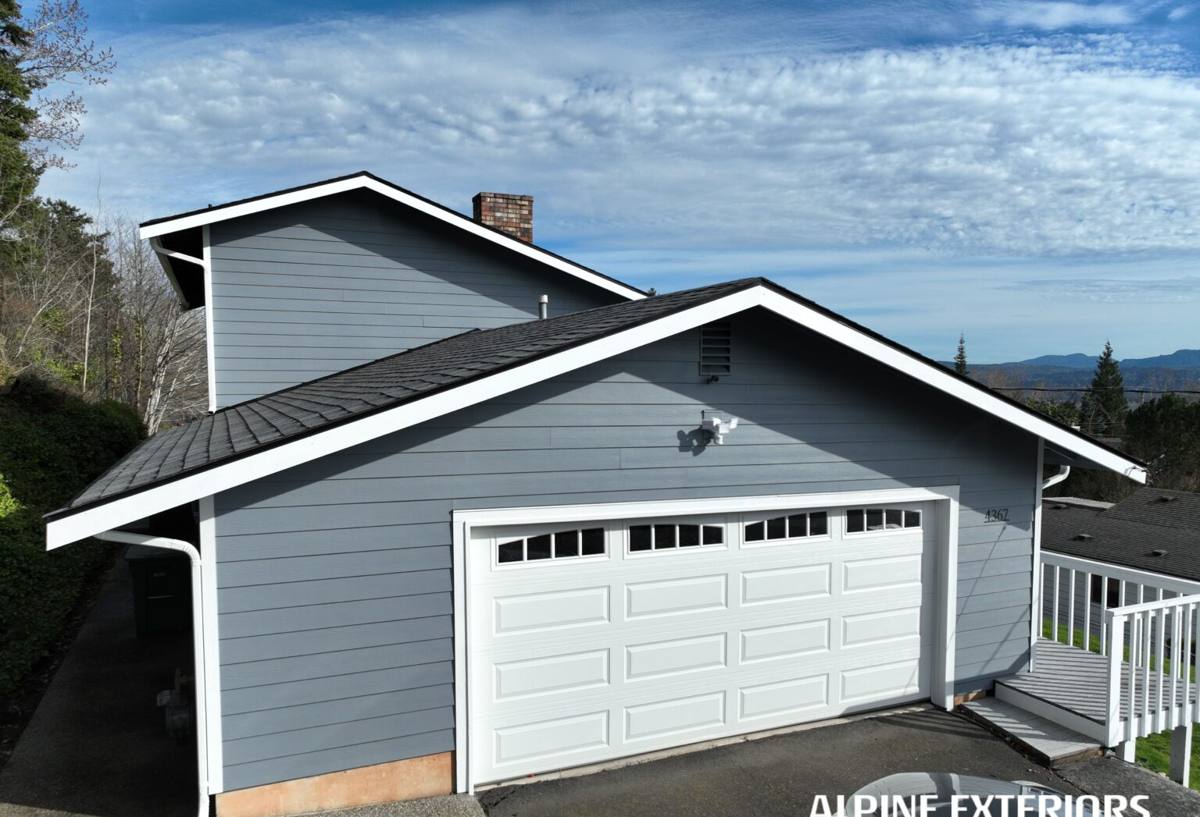
The Roof Repair Issues We See Most Often on Fir Island
Repair calls on Fir Island tend to cluster around a handful of recurring problems, most of them tied directly to the delta's exposure and moisture load rather than to age alone:
- Lifted or missing shingles after a windstorm, especially along ridgelines and roof edges with direct exposure to open fields
- Flashing failure at chimneys, vent pipes, and roof valleys where wind-driven rain finds the smallest gap
- Moss buildup on shaded slopes that has started lifting shingle edges or holding water against the surface
- Corroded or failed fasteners and metal flashing components showing rust well before the roofing material itself is worn out
- Granule loss and thinning on older asphalt shingles from repeated wet-dry cycling
- Soft spots or staining on the roof deck where a slow leak has gone unnoticed for a season or more
- Gutter and downspout backups from moss and debris that push water up under the eave line instead of away from the house
Most of these show up gradually. A shingle that's just started to lift or a flashing seam that's just starting to separate is a straightforward repair. Left through another wet season, the same problem often turns into deck damage, interior staining, or a repair that's grown into something closer to a partial re-roof.
What a Correct Roof Repair Actually Involves
A roof repair on Fir Island isn't just swapping out a damaged shingle or squeezing a bead of sealant into a gap. Done right, it means understanding why that section failed in the first place and fixing the underlying cause, not just the visible symptom. A patch over a flashing problem that isn't actually corrected will fail again, usually in the same spot, usually during the next hard storm off the bay.
- Identify the actual source of the leak or damage, not just the point where water is showing up inside
- Replace flashing rather than re-sealing it, when the metal itself has corroded or the lap is wrong
- Match repair materials to the existing roof where possible, and use corrosion-resistant fasteners and flashing everywhere on this side of the county
- Check and clear moss from surrounding areas of the roof, not just the damaged section, so growth doesn't undermine the repair from the side
- Inspect the roof deck underneath the damaged area for soft spots or rot before closing the repair back up
- Confirm attic ventilation isn't trapping moisture near the repaired section
- Walk the full roof, not just the reported problem area, since one visible failure on an older roof often means a second one is close behind
Repair or Replace: How We Help You Decide
Not every call to a roof on Fir Island ends in a full replacement, and we don't default to recommending one. The right call depends on the roof's age, how much of the surface is affected, whether the deck underneath has moisture damage, and how many repairs the roof has already had.
| Situation | Usual Recommendation | Why |
|---|---|---|
| Localized flashing failure on a roof under 15 years old | Repair | Isolated cause, roofing material still has useful life left |
| Wind damage to a small section after a single storm | Repair | Surrounding roofing is sound; targeted fix addresses the actual damage |
| Widespread moss and granule loss across multiple slopes | Case-by-case | Depends on how much service life is genuinely left once moss is cleared |
| Roof nearing or past its rated lifespan with repeated repairs | Replace | Repeated patching on an aging roof rarely holds up through another wet season |
| Soft or rotted deck found under a leak | Replace (affected section or full roof) | Structural repair is required before new roofing can be installed correctly |
We'll explain what we find on the roof and why we're recommending what we're recommending, in plain terms, before any work starts.
Roofing Materials and How They Take a Repair
What's already on the roof shapes what a good repair looks like. Some materials patch cleanly and blend in; others are harder to match once a section has weathered for years.
| Material | Repair Behavior | Moss/Salt Resistance |
|---|---|---|
| Architectural asphalt shingle | Repairs blend well if matching stock is available; color can fade unevenly on older roofs | Good with moss-resistant granules; needs corrosion-resistant fasteners this close to the bay |
| Standing seam metal | Repairs require matching panel profile and finish; not a simple patch job | Very good; smooth surface sheds moss and handles salt exposure well when properly coated |
| Cedar shake | Individual shakes can be replaced, but surrounding wood should be checked for hidden rot | Needs regular moss treatment and airflow underneath to manage moisture |
| Composite/synthetic shingle | Repair quality varies by product; some blend well, others are discontinued and hard to match | Generally resists moisture well; check manufacturer specs for coastal-exposure suitability |
When exact-match material isn't available for an older roof, we'll walk you through the realistic options — a slightly visible patch now, or a broader section replacement that keeps the roofline looking consistent.
Our Roof Repair Process
- Inspection. We walk the full roof, not just the reported problem area, checking flashing, ventilation, moss coverage, and the deck itself where access allows.
- Diagnosis. We identify the actual cause of the damage or leak, which is often upstream of where water is showing up inside the house.
- Written estimate. You get a clear scope of work and a straightforward explanation of what's being repaired and why, before anything is scheduled.
- Repair work. Flashing, decking, and roofing material are addressed to the standard the delta climate calls for — corrosion-resistant hardware, properly lapped flashing, and material matched as closely as possible to the existing roof.
- Final check. We confirm the repair is sealed and sound, and flag anything else on the roof worth watching so it doesn't turn into a surprise next wet season.
Why a Crew That Already Works Fir Island Matters
A roof repair crew that regularly works this specific part of Skagit County has already seen how salt air, open-ground wind, and a long moss season play out on real roofs here, year after year. That experience shows up in practical decisions: which fastener grade actually holds up this close to Skagit Bay, how much extra attention a north-facing slope on a shaded lot needs compared to an open, sun-exposed roof two properties over, and which flashing details are worth the extra time so a repair doesn't come back as a callback the following winter. It also means a crew that understands Fir Island's low-lying, exposed geography is different from a more sheltered neighborhood closer to town, and doesn't treat every roof in the county the same way.
Beyond the Roof: The Rest of the Exterior
A roof rarely fails in isolation from the rest of the house. Leaks at a roof-to-wall transition often show up as siding or trim damage nearby, and the same wind-driven rain and moss pressure that wears on a roof wears on siding, windows, and trim too. We handle siding, window, and deck work in addition to roofing, and we install James Hardie fiber cement siding as our standard — chosen specifically for how it holds up against sustained coastal moisture, compared to organic siding materials that demand more upkeep in a climate like this one. If a roof repair uncovers moisture damage at a nearby wall or trim detail, we can address it as part of the same visit instead of sending you to track down a second contractor.
Get a Free, No-Pressure Estimate
If your Fir Island roof has a leak, storm damage, or moss buildup that's gone on long enough to worry about, we're glad to take a look and give you an honest read on what it actually needs. Reach out using the form below to schedule a free estimate — no pressure, no upsell script.