 Burlington
 Why Guemes Island Roofs Wear Out Faster Than Inland Homes
Guemes Island sits right in the path of Puget Sound weather with none of the buffering that inland Skagit County properties get from tree lines, hills, or distance from open water. A roof out here deals with three things at once, all year: salt-laden air off the water, driving rain that comes in sideways instead of straight down, and a moss season that can run eight months or longer in a wet year. Any one of those is manageable. Together, they shorten the useful life of a roof that wasn't built or installed with them in mind.
Salt air accelerates corrosion on exposed metal — nail heads, flashing, valleys, vent stacks — well before the shingles themselves give out. Wind-driven rain finds every gap in flashing and underlayment that a calmer climate would never expose. And moss doesn't just sit there looking bad; it lifts shingle edges, holds moisture against the roof deck, and works its way into seams over a few seasons. A roof installed without accounting for all three tends to show granule loss, soft spots, and leaks years ahead of its rated lifespan.
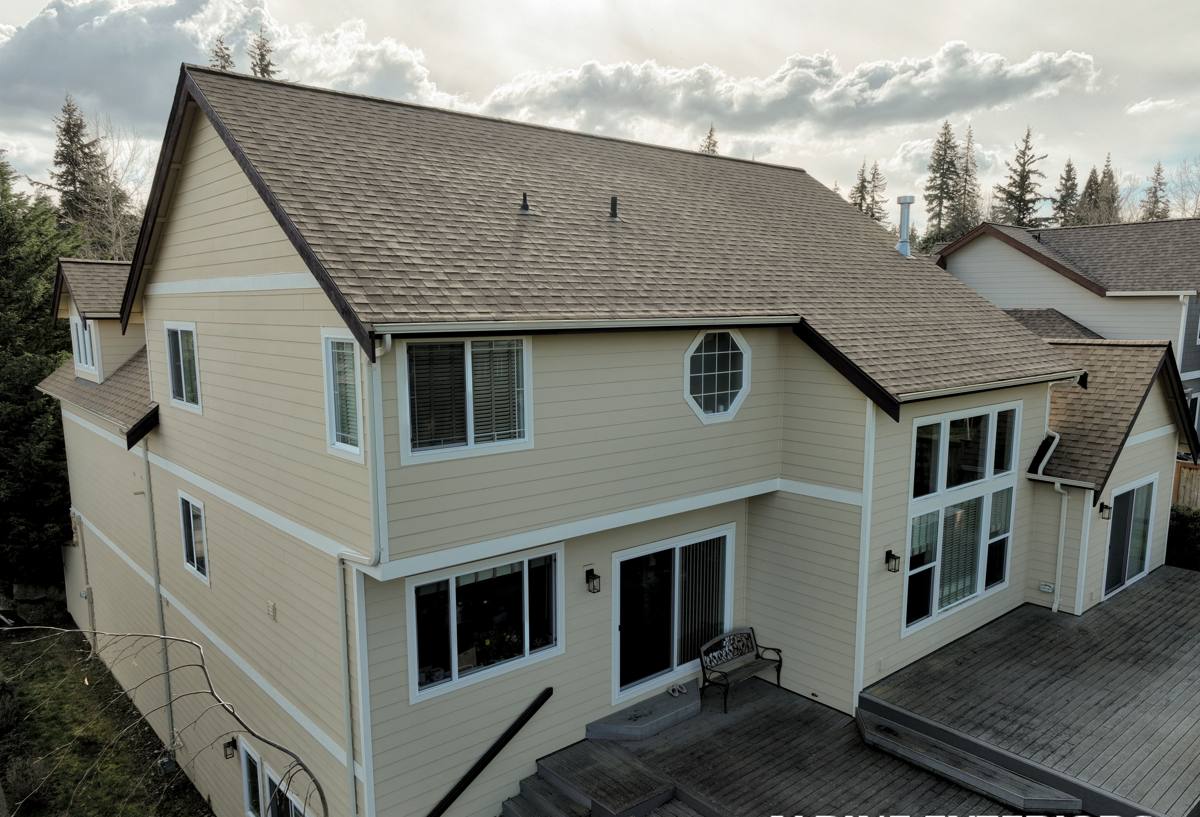
Signs a Guemes Island Roof Needs Full Replacement, Not Another Repair
Not every roof problem on the island calls for a full tear-off. But there's a point where patching stops making financial sense and starts covering up bigger issues underneath. Some signs worth taking seriously:
- Granules collecting in gutters or at downspout outlets — a sign the shingle surface is breaking down, not just dirty
- Moss growth that comes back within a season or two of cleaning, even after treatment
- Soft or spongy spots when walked on, which usually mean the deck underneath has taken on moisture
- Daylight visible through the attic or sheathing, or staining on interior ceilings near exterior walls
- Curling, cracking, or missing shingles concentrated on the side of the roof that faces prevailing wind and rain
- A roof original to the house that's past 20-25 years old for asphalt composition, especially if it's never had ventilation upgrades
If you're seeing two or more of these, it's worth a real inspection rather than another round of spot repairs. A roof that's failing in multiple places at once is usually failing at the underlayment or deck level, and shingle patches won't fix that.
What a Correct Installation Actually Involves Out Here
A roof that's going to hold up on Guemes Island needs more attention to a few specific details than the same job would in a more sheltered part of Skagit County. This isn't about upgrading everything to a premium tier — it's about not skipping steps that matter more here than elsewhere.
Underlayment and Water Barrier
Synthetic underlayment with good tear resistance is the baseline. On top of that, self-adhering ice-and-water shield belongs at eaves, valleys, and around every penetration — not just where code requires it, but anywhere wind-driven rain is likely to push water uphill under the shingle line. This one detail is probably the single biggest difference between a roof that leaks in year three and one that doesn't leak in year twenty.
Flashing
Flashing around chimneys, skylights, dormers, and sidewalls has to be installed in the correct order relative to the underlayment and siding — step flashing woven correctly, not just caulked on top and hoped for. In a salt-air environment, we also pay attention to what the flashing is made of; some metals corrode faster than others this close to open water, and cheap flashing is a common failure point on older installs.
Ventilation
Balanced intake and exhaust ventilation keeps moisture from condensing inside the attic, which matters even more here because the outside air itself carries more moisture much of the year. Poor ventilation traps heat and humidity under the deck, which softens sheathing and shortens shingle life from underneath — often before any surface problem is visible.
Fasteners
Corrosion-resistant nails and fasteners are worth the modest upcharge anywhere on the island. Standard fasteners can start showing rust streaks and losing holding strength years before the roofing material itself is due for replacement.
Material Options: What Actually Holds Up Here
There's no single "best" roofing material for every Guemes Island home — it depends on the house, the budget, and how exposed the roof is to wind and salt spray. Here's how the common options compare for this specific environment.
| Material | How It Handles Salt Air & Rain | Moss Resistance | Typical Lifespan Here |
|---|---|---|---|
| Architectural asphalt shingle | Good, with proper flashing and corrosion-resistant fasteners | Moderate — benefits from algae-resistant granules and periodic cleaning | 20-25 years with correct install |
| Standing seam metal | Very good when using coatings and fasteners rated for coastal exposure | Good — smooth surface sheds moss more easily | 40+ years, higher upfront cost |
| Cedar shake | Requires more maintenance in wet climates; absorbs and holds moisture | Poor without regular treatment — moss and rot are common concerns | Highly maintenance-dependent |
| Synthetic/composite shingle | Good — doesn't absorb water the way wood does | Good to moderate depending on product | 30-50 years depending on product line |
We install what fits the home and the homeowner's priorities, but we're upfront when a material choice is going to create a higher maintenance burden in this climate. Cedar shake, for example, can look great, but its moisture behavior and moss susceptibility mean it needs more upkeep here than it would in a drier part of the state — that's a trade-off worth knowing before you commit, not after.
Our Installation Process
- On-site inspection and estimate. We look at the existing roof, deck condition, ventilation, and any problem areas before quoting anything.
- Material selection. We walk through the honest trade-offs for your specific roof — pitch, exposure, budget — rather than pushing one product.
- Scheduling around weather and ferry logistics. Roofing on Guemes Island means planning material delivery and crew scheduling around ferry sailings and weather windows, so timelines get set realistically up front, not adjusted mid-job.
- Tear-off and deck inspection. Old roofing comes off down to the deck so we can check for soft spots or rot before anything new goes on — this is where problems that caused the original failure usually get found.
- Underlayment, flashing, and ventilation install. This is the stage that determines whether the roof performs in this climate, done to the details described above.
- Roofing material installation. Installed to manufacturer specification, which is also what keeps the material warranty valid.
- Final walkthrough. We go over the finished roof with the homeowner, including care and moss-prevention notes specific to the site's exposure.
Moss Prevention Isn't Optional Here — It's Part of the Job
On the island, moss isn't a cosmetic issue you deal with someday — it's an ongoing maintenance factor tied directly to how long the roof lasts. A few things reduce the problem at the source rather than just treating symptoms after the fact:
- Zinc or copper strips installed near the ridge, which release trace metals that discourage moss growth as rain washes over them
- Keeping overhanging branches trimmed back so roof surfaces get more sun and airflow, especially on north-facing slopes
- Algae-resistant shingle products where the roofline is heavily shaded or faces prevailing damp wind
- Periodic soft-washing rather than pressure washing, which can strip granules and shorten shingle life
None of this replaces a correctly installed roof, but building moss resistance into the install — rather than treating it as an afterthought — saves real money over the life of the roof.
Working on Guemes Island: Access and Scheduling
Getting a full roofing crew, equipment, and enough material to the island takes more coordination than a mainland job in Burlington or elsewhere in Skagit County. Ferry schedules, load limits, and weather windows all factor into how a project gets planned. A crew that already works on the island knows how to batch material deliveries, plan around sailings, and avoid the scheduling surprises that catch out-of-area contractors off guard — which usually means fewer delays and a more predictable timeline for the homeowner, not a rushed job to make up for lost time.
What a New Roof Typically Costs — and What Moves the Number
Every roof is different, and we won't quote a number without seeing the actual job, but these are the main factors that move the price up or down:
| Factor | Effect on Cost |
|---|---|
| Roof size and number of planes/valleys | More cuts and seams mean more labor and material |
| Current roof condition / deck repair needed | Rotted or soft decking adds material and labor to replace before roofing can go on |
| Material choice | Asphalt is the most budget-friendly; metal and premium composites cost more upfront but less over time |
| Pitch and accessibility | Steep or hard-to-access roofs take longer and require more safety setup |
| Ventilation and flashing upgrades | Bringing older ventilation up to standard adds cost but reduces long-term moisture problems |
| Island logistics | Ferry-dependent delivery and scheduling can add modestly to labor time compared to mainland jobs |
As a general range, a straightforward asphalt shingle replacement on an average-size island home typically falls in the mid-to-upper five figures, with metal or premium materials running higher. The only way to get a real number is a site visit — anything quoted without seeing the roof and deck condition is a guess.
Questions Worth Asking Any Roofing Contractor Before You Hire
- Do you carry current liability insurance and workers' comp, and can you provide proof?
- Are you licensed to work in Washington, and is that license in good standing?
- What underlayment and ice-and-water shield do you use, and where specifically do you install it?
- How do you handle deck repair if rot or soft spots are found during tear-off?
- What's the manufacturer's warranty on the material, and does your installation keep that warranty valid?
- Have you worked on Guemes Island before, and how do you plan around ferry access?
A contractor who answers these clearly and specifically, without vague reassurances, is usually one who does the work correctly and has nothing to hide about their process.
Get a Straight Answer on Your Roof
If your roof is showing wear, or you just want an honest read on how many years it has left, we're glad to take a look. We offer free, no-pressure estimates for Guemes Island homeowners — no obligation, just a clear assessment of the roof's condition and what it would take to fix it right. Use the form below to get started.