 Burlington
 Why La Conner Homes Need a Different Siding Approach
La Conner sits low and close to the water on the Swinomish Channel, and that changes what siding has to survive here compared to a house a few miles inland in Burlington or Mount Vernon. Homes in and around La Conner deal with salt-laden air off the channel, wind-driven rain that gets pushed sideways into walls instead of falling straight down, and a moss and algae season that runs long even by Skagit County standards. Wood-based siding products soften under that combination. Vinyl chalks, warps, and gaps at the seams where wind-driven moisture wants to get in. Fiber cement, installed correctly, is one of the few claddings that shrugs off all three at once.
We install James Hardie fiber cement siding exclusively, and La Conner is one of the areas where that decision matters most. This page covers what a correct fiber cement job looks like on a La Conner home, what the local climate actually does to siding over time, and how our process is built around that reality rather than a generic install checklist.
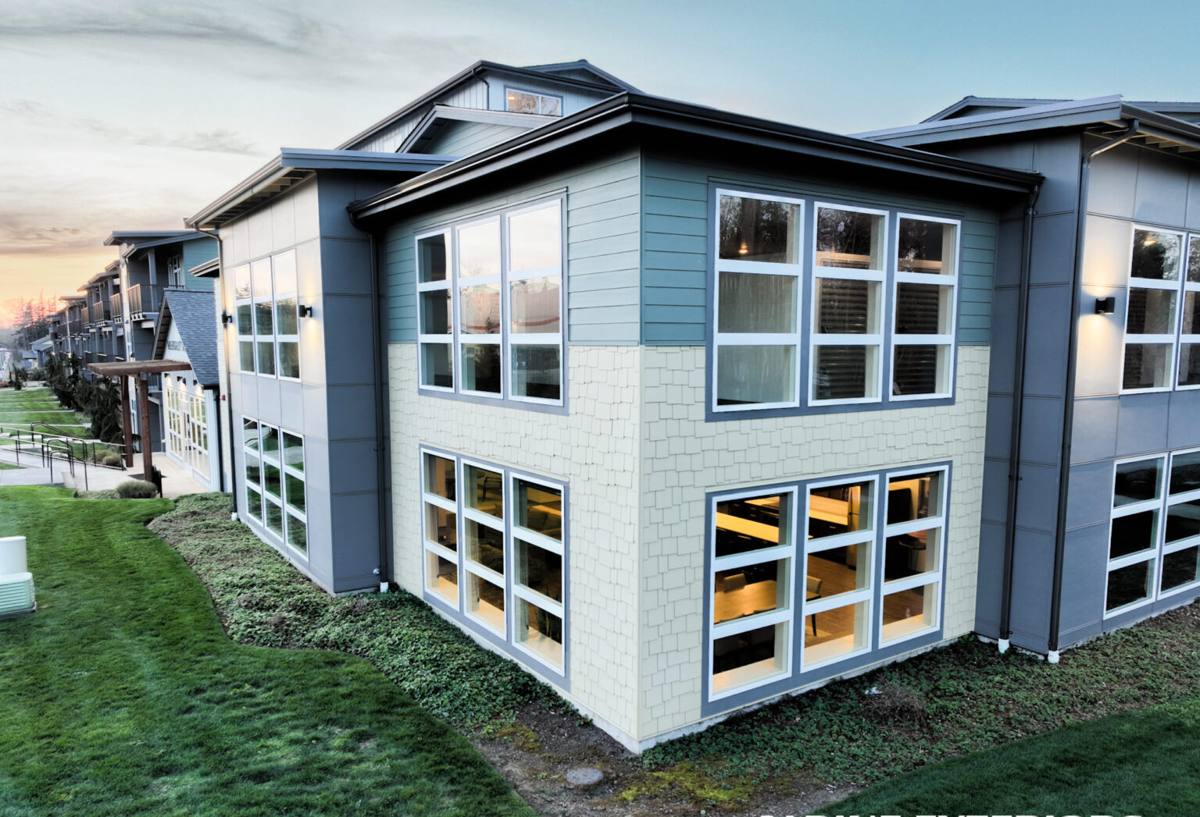
What Salt Air, Driving Rain, and Moss Actually Do to Siding
Salt Air
Airborne salt from the channel settles on exterior surfaces and accelerates corrosion of fasteners, flashing, and any metal trim that isn't rated for a marine-influenced environment. It also breaks down cheaper paint films faster than an inland location would see, which is why homes closer to the water tend to need repainting more often — unless the siding itself carries a factory finish engineered to resist that breakdown.
Driving Rain
Wind off the water doesn't let rain fall straight down the wall — it drives it sideways and up under laps, trim, and penetrations. That's a water-management problem as much as a materials problem. The siding material matters, but so does what's behind it: the weather-resistive barrier, the flashing details, and the gaps left for drainage.
Long Moss Season
Skagit County's shaded, damp stretches from fall through spring give moss and algae months to establish themselves on any surface that stays wet and doesn't dry out between rain events. North-facing walls, areas under overhangs, and anything close to landscaping or tree cover are the first to show green streaking and soft, spongy growth if the siding material or the paint film can't resist it.
Why Fiber Cement Fits This Climate
Fiber cement is a cement, sand, and cellulose fiber composite. It doesn't rot, it isn't food for insects, and it holds its shape through wet-dry cycles the way wood-based products can't. James Hardie's HZ5 product line is engineered specifically for wetter, harsher climates like ours — it's built to resist moisture-related damage in a region that gets more rain days than most of the country. Combined with a factory-applied ColorPlus finish, which is baked on under controlled conditions rather than field-painted, the color and the protective coating hold up better against both salt exposure and UV than a job-site paint job ever will.
None of that means fiber cement is immune to problems — it means the material itself isn't the weak point. The weak point, on almost every failed fiber cement job we've inspected, is installation: wrong fasteners, missed clearances, caulking used where a drainage gap should be. That's the part we control.
What a Correct Fiber Cement Install Involves in La Conner
- Weather-resistive barrier installed and lapped correctly before a single board goes up, with no shortcuts around windows and doors
- Flashing at every horizontal trim piece, window head, and penetration — the details that actually stop wind-driven rain from getting behind the cladding
- Minimum clearance maintained between siding and grade, decks, roofs, and other hard surfaces so water has somewhere to go and boards can dry out
- Corrosion-resistant, manufacturer-approved fasteners — not a generic nail gun load that will start rusting and staining within a few seasons of salt exposure
- Proper joint treatment at butt seams, with gaps sized and sealed per Hardie's published specifications rather than caulked shut and hoped for the best
- Field-cut edges primed or sealed so the cut end doesn't become the one spot on the house that soaks up moisture
Every one of those steps is spelled out in James Hardie's installation manual, and every one of them is also the kind of step that's easy to skip when a crew is moving fast. On a house exposed to channel wind and salt air, skipping any of them shortens the life of the job significantly — you end up with streaking, staining, or moisture damage years before you should.
Moss and Algae Resistance in Practice
ColorPlus finishes are formulated to resist the kind of biological growth that shows up on shaded, damp walls through a Skagit County winter. That helps, but it isn't a substitute for good water management — a wall that stays wet because of a bad flashing detail will grow moss no matter what the finish is rated for. The two have to work together: correct installation keeps the wall dry enough for the finish's resistance to actually do its job.
Our Process for a La Conner Fiber Cement Project
| Step | What Happens |
|---|---|
| Site walk and assessment | We look at wind exposure, drainage, existing moisture or moss damage, and any trouble spots specific to the property's position relative to the water |
| Product and color selection | Choosing the right Hardie panel or lap profile and ColorPlus color for the home, factoring in sun exposure and how the color will read against salt-air weathering over time |
| Removal and prep | Old siding removed, sheathing inspected for hidden rot or moisture damage before anything new goes on — this step catches problems a rushed tear-off would miss |
| Weather barrier and flashing | Full weather-resistive barrier installation with correct lapping and flashing at every penetration and trim transition |
| Installation to Hardie spec | Fastening, clearances, and joint treatment done to manufacturer specification, not shortcuts |
| Final inspection and walkthrough | We check clearances, caulking, and trim details before calling the job finished, and walk the homeowner through what was done |
Cost Factors for a La Conner Fiber Cement Project
Every home is different, but a few factors tend to move the price of a fiber cement job in this area more than others:
| Factor | Why It Matters Here |
|---|---|
| Home size and wall complexity | More corners, dormers, and trim transitions mean more flashing detail work, which takes time to do right |
| Condition of existing sheathing | Homes closer to the water sometimes have hidden moisture damage under old siding that needs repair before new siding goes on |
| Siding profile chosen | Lap siding, panel siding, and shingle-style Hardie products differ in material and labor cost |
| Trim and accessory work | Corner boards, window trim, and fascia detailing add material and labor beyond the field siding itself |
| Access and site conditions | Waterfront lots, tight setbacks, or limited equipment access can affect labor time |
We give homeowners a real number after seeing the house, not a phone-quote estimate — too many of these factors are specific to the property to guess at responsibly.
Why It Matters That We Already Work This Area
A crew that mostly works inland doesn't think about salt exposure, wind direction off the water, or how long a north wall stays damp in a La Conner winter. Those aren't things you learn from a manufacturer's manual alone — they're things you learn from doing the work in this specific environment and seeing what holds up and what doesn't a few years later. We've installed fiber cement siding across Skagit County, including homes exposed to the same channel weather La Conner sees, and we build our flashing and clearance details around that experience rather than a one-size-fits-all approach.
We also only install one product system — James Hardie — which means our crews aren't switching between different manufacturers' fastening schedules, clearance requirements, and joint details from one job to the next. That consistency is part of how we keep installation quality high on every house, including the ones closest to the water where mistakes show up fastest.
Signs Your Current Siding Is Losing the Fight
- Green or black streaking that comes back within months of being cleaned
- Soft or spongy spots, especially near the bottom of walls or under windows
- Visible gaps, warping, or buckling at seams and corners
- Paint that's chalking, peeling, or fading unevenly across different sides of the house
- Rust staining running down from fasteners or trim
- Rising heating bills that suggest moisture or air infiltration behind the siding
Any of these on a La Conner home is worth a look before it turns into a sheathing or framing repair, which costs far more than the siding replacement itself would have.
What to Expect From an Estimate
We walk the exterior with you, point out anything we see — moisture damage, drainage issues, trim condition — and talk through product and color options that make sense for the house and its exposure. There's no pressure and no obligation. If you're in La Conner and dealing with siding that's showing its age, or you're planning ahead for a project, reach out for a free estimate and we'll give you a straight assessment of what the house needs.