 Burlington
 Why Samish Island Roofs Wear Differently Than Inland Homes
Samish Island sits out in the weather in a way most Skagit County homes don't. The same salt-laden air that makes the water views worth it also settles into fasteners, flashing, and shingle granules year after year. Add in driving rain that comes sideways off Samish Bay and Padilla Bay during winter storms, plus a moss season that can run eight months out of the year under the shade of Douglas fir and cedar canopy, and you've got a roofing environment that's tougher on materials than a typical Burlington or Mount Vernon rooftop just a few miles inland.
None of that means a roof on Samish Island is impossible to get right — it means the installation has to account for those conditions from the first layer up, not just the shingle you see from the road. A roof built to a generic spec sheet will underperform out here. A roof built for this exact environment holds up.
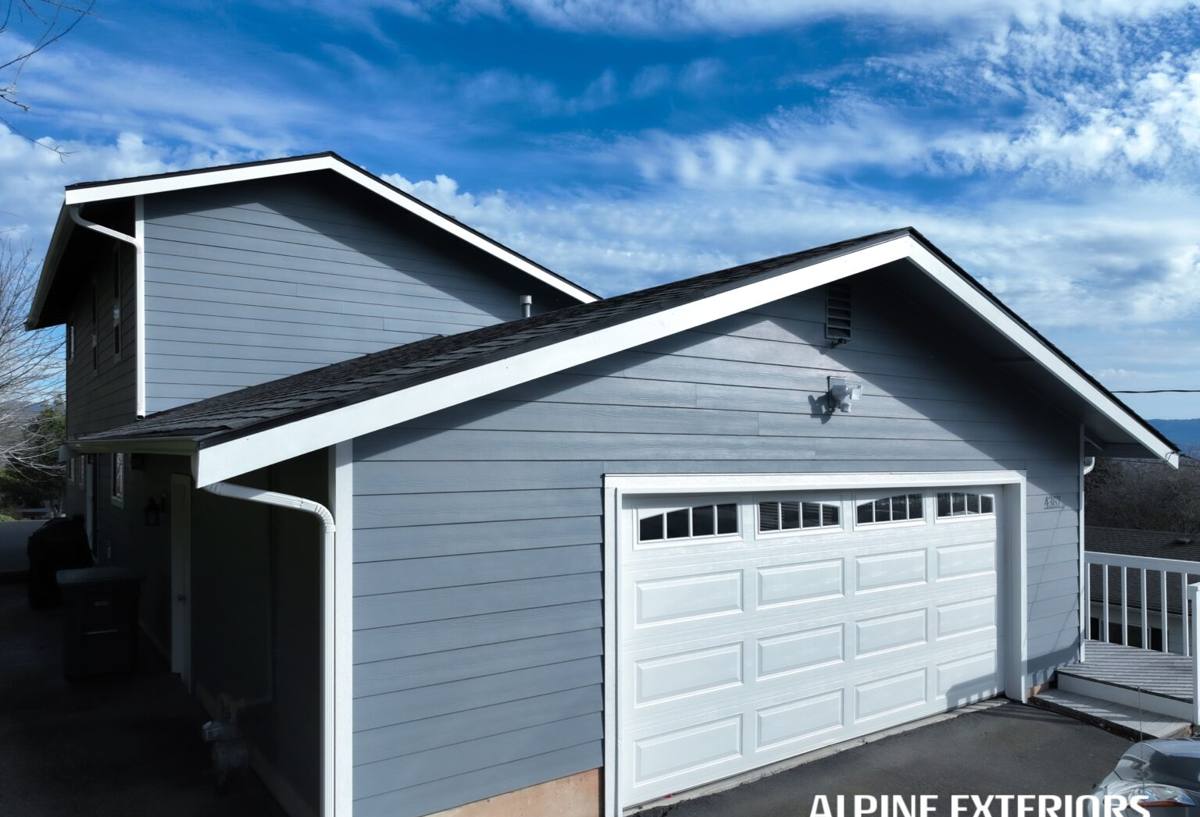
What Salt Air, Rain, and Moss Actually Do to a Roof
Salt Air
Airborne salt is corrosive to exposed metal — nail heads, flashing, vent caps, and gutter hardware all take the hit over time. Standard electro-galvanized fasteners can start showing rust streaks on a coastal roof years before they would inland. This is a material selection issue as much as an installation one.
Driving Rain
Wind-driven rain doesn't just fall on a roof, it gets pushed sideways and upward under shingle edges, around chimneys, and into any gap in the flashing. A roof that's fine in a light, straight-down rain can leak under a Samish Island winter storm if the underlayment and flashing details weren't built for wind-driven moisture specifically.
Moss and Shade
Tree cover keeps roofs damp longer after rain, and moss thrives in that moisture. Left unchecked, moss holds water against the roof surface, lifts shingle edges, and works its way under the shingle mat — which is where real damage starts, not just the cosmetic green tint homeowners notice first.
What a Correctly Installed Roof Needs Out Here
- Corrosion-resistant fasteners and flashing rated for coastal/salt-air exposure, not standard inland-grade hardware
- A synthetic underlayment with strong water-shedding performance, fully lapped and sealed at every seam
- Ice-and-water shield style membrane at eaves, valleys, and around every roof penetration — the spots wind-driven rain finds first
- Balanced intake and exhaust ventilation so moisture doesn't get trapped in the attic and condense back into the roof deck
- Shingle or panel products with documented algae and moss resistance, not just a warranty that mentions it in passing
- Properly flashed valleys, chimneys, and skylights — this is where the majority of coastal leak calls actually originate
- Drip edge and gutter apron detailing that manages wind-driven water instead of just standard vertical runoff
Choosing the Right Roofing Material for a Water-Adjacent Home
There's no single "best" roofing material for every home — it depends on the roof's exposure, the home's structure, and your budget. Here's how the common options actually perform under Samish Island conditions:
| Material | Salt Air Durability | Moss Resistance | Typical Lifespan | Notes |
|---|---|---|---|---|
| Architectural asphalt shingle | Good, with coastal-rated fasteners | Good with algae-resistant granules | 25-30 years | Most common choice, wide style range, cost-effective |
| Standing seam metal | Very good with proper coatings | Excellent — sheds moss naturally | 40-50+ years | Higher upfront cost, low long-term maintenance |
| Cedar shake | Fair — needs regular treatment | Poor without diligent upkeep | 20-30 years with maintenance | Traditional PNW look, highest maintenance burden in a moss-heavy setting |
| Composite/synthetic shake | Very good | Good | 40-50 years | Cedar appearance without the moisture sensitivity |
We don't push one product on every home. On a heavily shaded lot with a lot of tree cover, we'll often steer the conversation toward metal or composite because they hold up to moss with far less ongoing maintenance. On a more open, sun-exposed lot, a quality architectural shingle with algae-resistant granules is often the more practical and budget-friendly call. Cedar shake still has a place aesthetically, but we're upfront that it demands more upkeep in this environment — that's a maintenance and moisture-behavior trade-off, not a knock on the product itself.
Our Installation Process
1. On-Site Assessment
We walk the roof and attic before quoting anything. That includes checking current ventilation, deck condition, flashing points, and how much moss or algae buildup already exists — all of it factors into what the new roof needs to solve for.
2. Tear-Off and Deck Inspection
Old roofing comes off down to the deck. Any soft, rotted, or water-damaged sheathing gets identified and replaced before anything new goes down — installing a new roof over a compromised deck just hides the problem.
3. Underlayment and Water Protection
Synthetic underlayment goes down across the full roof, with self-adhering water-and-ice membrane at eaves, valleys, chimneys, skylights, and any other penetration — the areas wind-driven rain targets first.
4. Flashing and Edge Detail
New flashing at every valley, wall intersection, and roof penetration, plus properly installed drip edge and gutter apron. This step is where most long-term leak problems on coastal homes get prevented or created.
5. Roofing Material Installation
Shingles, panels, or shakes installed to manufacturer spec with corrosion-resistant fasteners appropriate for salt-air exposure — not a generic fastener swapped in to save cost.
6. Ventilation Check and Final Walkthrough
We confirm intake and exhaust ventilation are balanced, clean up the site, and walk the finished roof with you before calling the job done.
Ventilation: The Part Homeowners Don't See but Feel First
A roof that looks great from the driveway can still be failing from the inside if ventilation is off. On Samish Island, where humidity and shade already keep moisture around longer, a poorly ventilated attic traps warm, moist air against the underside of the roof deck. Over a few seasons that shows up as premature shingle aging from the inside out, and sometimes mold or rot in the attic that has nothing to do with the roof surface itself. Balanced intake (usually at the soffits) and exhaust (ridge or roof vents) keeps air moving so moisture doesn't have a chance to sit. We check this on every install and every re-roof — it's one of the most overlooked parts of a roofing job, and one of the most consequential.
What Drives the Cost of a New Roof Here
| Factor | Why It Matters on Samish Island |
|---|---|
| Roof pitch and access | Steeper or harder-to-access roofs common on waterfront and hillside lots take longer and require more safety setup |
| Deck condition | Moisture exposure over the years sometimes means more sheathing replacement than an inland roof |
| Material choice | Asphalt, metal, and composite carry different material and labor costs, and different long-term maintenance costs |
| Number of penetrations | Chimneys, skylights, and vent stacks each need individual flashing work |
| Tree cover and debris | Heavier tree canopy can mean more prep work and moss remediation before install |
| Ventilation upgrades | Older homes often need added intake or exhaust vents brought up to a proper balance |
We're not going to quote a number here that means nothing without seeing your actual roof — pitch, square footage, material, and condition all move the price. What we can tell you is that a coastal-rated roofing job with proper flashing and ventilation costs more upfront than a stripped-down inland-spec install, and it's worth it in fewer callbacks and a longer service life.
Why It Matters That We Already Work This Area
A crew that mostly roofs inland Skagit County subdivisions and only occasionally gets a Samish Island call is going to treat this like a standard job — because to them, it is. We roof out here regularly enough that coastal-rated fasteners, moss-resistant material selection, and wind-driven-rain flashing detail are just part of how we bid and build every job in this area, not an upsell or an afterthought. We also know the practical realities of working on the island — ferry-adjacent scheduling considerations, tree-heavy lots, and homes that see more weather exposure than their inland neighbors a few miles away in Burlington.
Staying Ahead of Moss Between Roofs
A new roof isn't a one-and-done fix if the same conditions that aged the old one are still in play. A few habits go a long way toward protecting the investment:
- Keep overhanging branches trimmed back to let more sun and airflow reach the roof surface
- Have gutters cleared at least twice a year — clogged gutters back water up under the shingle edge
- Schedule a moss treatment or gentle roof cleaning before it becomes a heavy growth, not after
- Have flashing and attic ventilation checked periodically, not just when a leak already shows up inside
- Address any granule loss or lifted shingle edges promptly — small issues on a coastal roof don't stay small for long
If you're planning a new roof for a Samish Island home, we're happy to walk the property, look at what your current roof is telling us, and put together a straightforward estimate — no pressure, no pushy sales pitch, just an honest look at what your home actually needs. The form below is the easiest way to get that conversation started.