 Burlington
 Why Oak Harbor Roofs Take More Punishment Than Most
Homes in and around Oak Harbor deal with a combination of conditions that a lot of roofing material simply isn't built for. You've got salt-laden air moving in off the water, long stretches of driving rain that don't let up for days, and a moss season that can run most of the year in shaded, north-facing areas. Any one of those on its own is manageable. Together, they wear down a roof faster than the same product would age in a drier inland climate.
Salt air accelerates corrosion on fasteners, flashing, and any exposed metal that isn't rated for coastal exposure. Driving rain finds every weak seam, nail pop, and undersized flashing detail and turns it into a leak point over time, especially when wind pushes water sideways under shingle laps. And moss doesn't just look bad — it holds moisture against the roof surface, works into seams, and can lift shingle edges as it grows. A roof that's a good fit for Spokane or Yakima isn't necessarily a good fit for Oak Harbor.
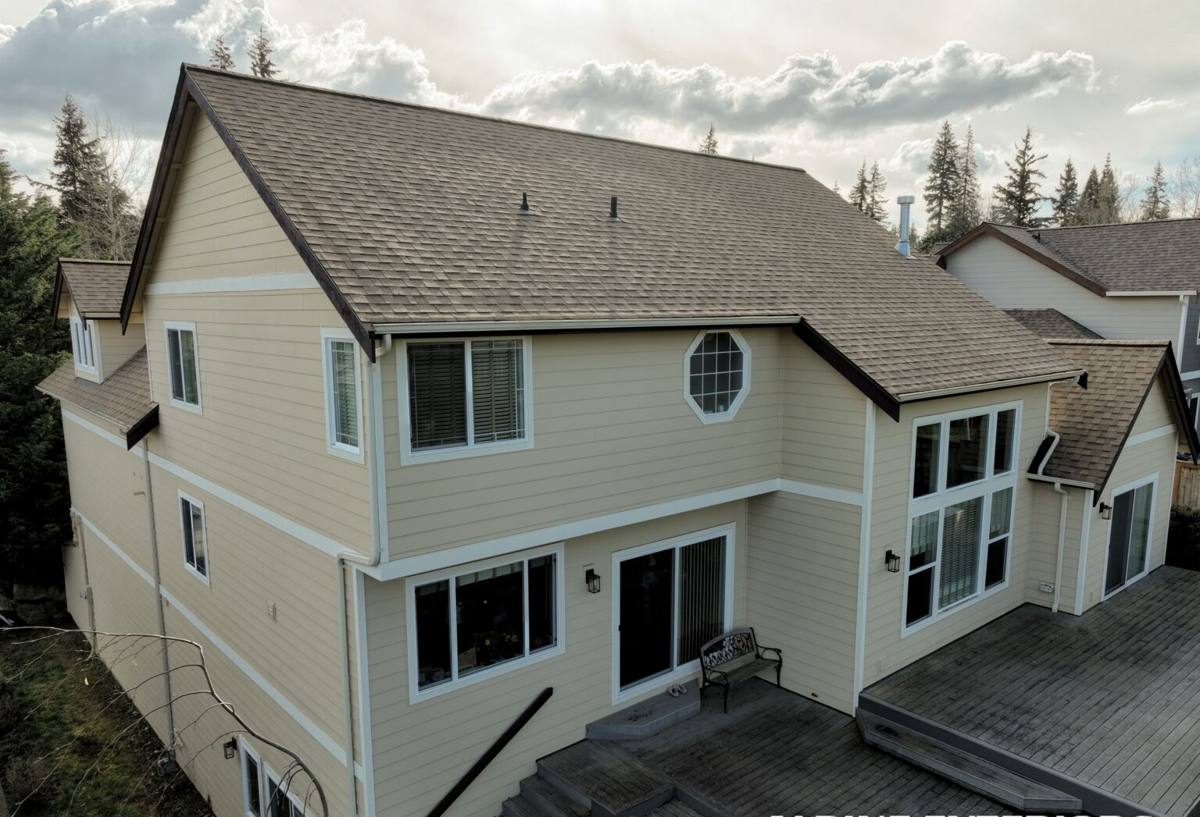
Why Metal Roofing Fits This Climate Well
Metal roofing isn't the right choice for every home or every budget, but for houses exposed to the coastal conditions common in this part of Skagit County, it solves several problems at once:
- Shedding water fast — steep pitch or not, a properly lapped and sealed metal roof moves water off quickly instead of letting it sit and soak in like moss-covered shingles can.
- Resisting moss growth — moss still lands on metal, but without a porous, granulated surface to root into, it's far easier to knock loose and far less likely to lift the roof surface.
- Handling wind-driven rain — fewer seams and exposed edges than shingle roofing means fewer places for wind to force water underneath.
- Long service life — a correctly installed metal roof in this climate can outlast two or three shingle roofs, which matters when you're weighing upfront cost against how often you'll be back on the roof.
None of that means metal is maintenance-free or automatically better in every case. It means that when the goal is a roof that holds up against salt air, sustained rain, and moss pressure with the least ongoing hassle, metal earns its cost.
What a Correct Metal Roof Installation Actually Involves
Metal roofing is unforgiving of shortcuts in a way that asphalt shingles sometimes aren't. A shingle roof with a minor flashing mistake might leak slowly for years before anyone notices. A metal roof with the same mistake tends to show a problem faster, because there's no granulated surface absorbing and slowly releasing moisture. That's actually a point in its favor for a careful installer — mistakes get caught — but it also means the installation has to be right the first time.
Underlayment and Deck Prep
Before any panel goes down, the deck needs to be sound, and the underlayment needs to be matched to the panel type and roof pitch. In a wet coastal climate, we lean toward high-temp synthetic or self-adhered underlayment at eaves, valleys, and penetrations rather than the minimum the panel manufacturer allows, because that's where driving rain concentrates.
Fasteners and Corrosion Resistance
This is the detail that gets skipped most often and causes the most callbacks. Fasteners have to be rated to resist the corrosive effect of salt air, and they need to be compatible with the panel metal itself — mixing incompatible metals at a fastener or flashing joint sets up galvanic corrosion that can eat through a panel from the inside out over a few years, well before the panel itself would have failed on its own.
Flashing at Valleys, Walls, and Penetrations
Valleys, chimney flashing, wall step flashing, and any roof penetration are where most metal roof leaks actually originate — not the flat panel field. Getting these details right takes more time than a rushed crew wants to spend, which is exactly why it's worth asking a contractor to walk through their flashing approach before you sign anything.
Ventilation
A metal roof over a poorly ventilated attic can trap moisture underneath the deck, leading to condensation issues that have nothing to do with the roof surface itself and everything to do with airflow. Ridge and soffit ventilation sized correctly for the attic volume is part of doing the job right, not an optional add-on.
Choosing the Right Panel Type for Your Home
Not all metal roofing is the same product wearing different colors. The panel style you choose affects cost, appearance, and how the roof performs over time in this climate.
| Panel Type | Typical Use | Coastal Performance Notes |
|---|---|---|
| Standing seam | Most residential coastal installs | Concealed fasteners mean fewer penetration points for wind-driven rain and salt corrosion to work into over time. |
| Exposed fastener panel | Budget-conscious projects, outbuildings | Lower upfront cost, but exposed fasteners need periodic inspection and eventual re-tightening or replacement as gaskets age. |
| Stone-coated steel | Homeowners wanting a shingle or tile look | Combines steel's durability with a textured surface; requires attention to underlying flashing since the coating adds a layer of complexity at edges. |
For most homes near the water where long-term, low-maintenance performance matters more than upfront savings, standing seam is the panel we recommend most often. We'll walk through the honest trade-offs for your specific roof rather than pushing one option across the board.
Salt Air and Coating Choices
Proximity to salt water changes what "durable" metal roofing means. A steel or aluminum panel with a standard paint finish can hold up fine in an inland setting and still chalk, fade, or corrode at seams faster near the coast. This is where coating quality matters more than most homeowners expect going in.
Higher-grade paint systems (the kind rated specifically for coastal exposure) cost more per square than basic finishes, but they resist chalking, fading, and edge corrosion far longer in salt air. We'll be upfront with you about which coating tier makes sense for a given budget and how much of a difference it actually makes at your specific distance from the water — a home a few blocks from the water faces a different exposure level than one further inland, even within the same neighborhood.
Moss, Moisture, and Long-Term Roof Health
Moss season in this part of Washington isn't a once-a-year nuisance — on shaded roof faces, it's closer to a year-round condition. Metal roofing resists moss rooting into the surface the way it does on shingles, but moss spores still land, and organic debris still collects in valleys, around penetrations, and along eave edges where water slows down.
Left alone, that debris holds moisture against the panel finish and can shorten the life of the coating well before the metal itself is at risk. Periodic clearing of debris, especially heading into the wetter months, keeps a metal roof performing the way it's supposed to for its full service life instead of degrading early in the spots where organic matter sits.
Our Process, Start to Finish
We keep the process straightforward because most of the value in a metal roof comes from getting the unglamorous details right, not from anything flashy in the sales pitch:
- On-site assessment — we look at your existing roof deck, current ventilation, flashing conditions, and how exposed the home is to wind and salt air before recommending anything.
- Honest scope and options — we'll lay out panel type, coating tier, and ventilation needs specific to your roof, with real cost ranges, not a one-size-fits-all quote.
- Deck and underlayment prep — any deck repairs happen before a single panel goes down, along with underlayment matched to your roof's exposure.
- Installation — panels, fasteners, and flashing installed to manufacturer spec and adjusted for coastal conditions where the spec is a bare minimum rather than a best practice.
- Final walkthrough — we go over the finished roof with you, including what maintenance (if any) it needs and what to watch for over the following seasons.
Maintenance Checklist for Metal Roofs in This Climate
A metal roof installed correctly needs far less attention than a shingle roof, but "far less" isn't "none." A simple seasonal routine keeps small issues from becoming expensive ones:
- Clear debris from valleys and around penetrations once or twice a year, more often under overhanging trees.
- Check exposed fasteners (if your roof has them) for loosening or gasket wear every couple of years.
- Look at flashing around chimneys, vents, and walls after any major windstorm.
- Keep gutters clear so water isn't backing up against eave flashing during heavy rain.
- Watch for any dulling or staining at seams, which can be an early sign a coating is wearing thin in a high-salt-exposure spot.
Why It Matters to Hire a Crew That Already Works This Area
Metal roofing installed by a crew that mostly works drier, inland climates tends to follow the manufacturer's minimum spec and call it done. That's not necessarily wrong, but it's not enough for a roof that has to hold up against sustained coastal rain, salt air, and heavy moss pressure year after year. A crew that regularly works Oak Harbor and the surrounding Skagit County coastline already knows where the minimum spec falls short — which flashing details need extra attention, which fastener grades actually hold up, and which coating tiers are worth the added cost for a given home's exposure.
That local experience shows up less in the sales conversation and more in the parts of the roof you don't think about until they fail: the valley behind a chimney, the fastener grade under a ridge cap, the underlayment choice at an eave that catches wind-driven rain. Getting those right the first time is the difference between a metal roof that quietly does its job for decades and one that needs rework within a few years.
Get a Straight Answer on What Your Roof Needs
If you're weighing metal roofing for a home in Oak Harbor, we're happy to take a look and give you an honest read on what your roof actually needs — no pressure, no inflated scope. Use the form below to request a free estimate, and we'll walk the roof, talk through your options, and give you real numbers to work with.