 Burlington
 Storm Damage Roof Repair for Samish Island
Samish Island sits out on its own peninsula in Samish Bay, connected to the mainland by a causeway, which means the homes out there catch weather that Burlington proper simply doesn't see the same way. Wind off the water, salt-laden air, and rain that comes in sideways instead of straight down all put extra stress on a roof system. When a storm rolls through and takes shingles, flashing, or decking with it, the repair needs to account for that exposure — not just patch the visible damage and hope it holds through the next blow.
We've worked roofs on Samish Island and the surrounding waterfront pockets of Skagit County long enough to know which failure points show up out there again and again. This page covers what storm damage actually looks like on an island roof, what a correct repair involves, and how we handle the job from the first call to final cleanup.
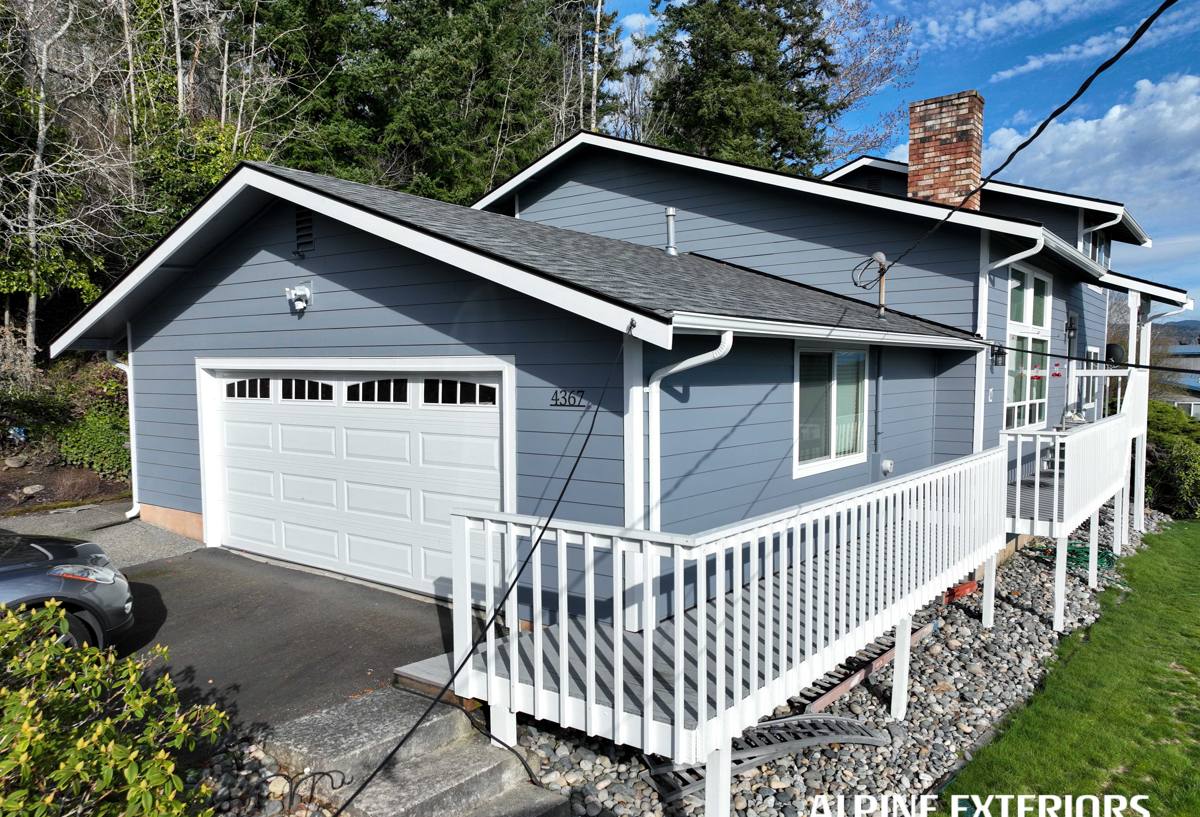
Why Samish Island Roofs Take a Different Kind of Beating
Three things work against a roof out on the island, and they compound each other over a Pacific Northwest winter.
Salt Air
Being surrounded by Samish Bay means fasteners, flashing, and any exposed metal on the roof are exposed to a low but steady dose of salt in the air. Over years, that accelerates corrosion on nails, drip edge, and vent flashing faster than you'd see on an inland Burlington roof. A storm that pulls a few shingles loose on a well-maintained roof can do a lot more damage on a roof where the fasteners underneath were already weakened by corrosion.
Driving Rain and Wind Exposure
An unobstructed shoreline location means wind doesn't slow down before it hits the house. Driving rain gets pushed up under shingle tabs and around flashing laps that would shed water fine in a calmer wind. Once wind-driven rain finds a gap, it doesn't just wet the surface — it tracks along the decking and can travel a surprising distance from the actual entry point before it shows up as a stain on a ceiling.
A Long Moss Season
Skagit County's wet, mild winters give moss a long growing window, and shaded, north-facing roof sections on Samish Island properties often stay damp for weeks at a time. Moss holds moisture against the shingle surface, works its way under tabs, and lifts them slightly — which is exactly the kind of pre-existing weak point a storm will exploit. A roof with moss problems going into a storm is a roof more likely to lose shingles or develop leaks from that same storm.
What Counts as Storm Damage
Not every roof problem after a windstorm is dramatic. Some of the most common issues we find on post-storm inspections out on the island are easy to miss from the ground:
- Wind-lifted or creased shingles — tabs that got pushed up and didn't seal back down, even if none blew off entirely
- Missing or torn shingles — the obvious one, usually on the windward side or near roof edges and corners where wind uplift is strongest
- Flashing failures — around chimneys, skylights, and roof-to-wall transitions, where wind and rain can work a lap loose
- Granule loss — shingles that survived but got sandblasted by wind-driven debris, shortening their remaining service life
- Limb and debris impact — punctures or cracked shingles from branches, especially under or near mature trees
- Gutter and fascia damage — often the first thing to fail in high wind, and a contributor to water intrusion if left unrepaired
Some of these are urgent — active leaks, exposed decking — and some can wait a few weeks for a scheduled repair. Part of our job on the initial inspection is telling you honestly which is which.
What a Correct Storm Repair Actually Involves
A storm repair done right isn't just nailing down whatever's loose and moving on. It starts with a full inspection, not just a look at the obvious damage, because wind and rain rarely stop at the spot you can see from the yard.
Inspection First
We check the whole roof plane, not just the damaged section — adjacent shingles that got stressed by the same wind event often have loosened seals even if they're still in place. We also check flashing, vents, and any penetrations near the damage, since those are common secondary failure points.
Emergency Protection When Needed
If decking is exposed or a leak is active, the first move is a tarp or temporary cover to stop water intrusion while we plan the actual repair. This matters most on Samish Island because a delay of even a few days during an active weather pattern can turn a shingle repair into a decking replacement.
Matching Materials
Where possible, we match the existing shingle color and profile so the repair doesn't stand out as a patch. On older roofs where the exact product is discontinued, we'll walk you through the closest reasonable match and where we plan to place it for the least visual impact.
Decking and Underlayment Check
Any spot where water got underneath the shingle layer gets checked for soft or delaminated decking. Replacing shingles over damaged decking just hides a problem that will resurface — usually as a leak — so we replace compromised sheathing before closing the roof back up.
Flashing and Fastener Upgrades
Given the salt air out on the island, we typically upgrade to corrosion-resistant fasteners and flashing in the repaired area rather than matching original hardware that may already be part of why the damage happened.
Our Process, Start to Finish
- Call or request an estimate. Tell us what you're seeing — missing shingles, a leak, visible debris — and whether it's urgent.
- Inspection. We come out, assess the full roof (not just the damaged spot), and photograph what we find for your records and any insurance claim.
- Written scope and estimate. You get a clear breakdown of what needs to happen and why, with pricing before any work starts.
- Temporary protection, if needed. Tarping happens fast if there's an active leak risk.
- Repair. Matching materials, corrected flashing, decking replacement where needed.
- Cleanup and walkthrough. Debris and old material hauled off, and we walk the finished repair with you before we call it done.
Repair vs. Replacement: How We Decide
Storm damage doesn't automatically mean a full new roof, but sometimes it's the tipping point on a roof that was already near the end of its life. Here's roughly how we think through it:
| Factor | Leans Toward Repair | Leans Toward Replacement |
|---|---|---|
| Extent of damage | Isolated to one section or slope | Spread across multiple slopes |
| Roof age | Under 12-15 years, shingles otherwise sound | Nearing or past expected shingle lifespan |
| Decking condition | Solid, dry sheathing under damaged area | Widespread soft spots or rot found during inspection |
| Moss/algae history | Minor, manageable with treatment | Long-term moss damage under multiple shingle courses |
| Material availability | Existing shingle still available or close match exists | Discontinued product, patch would be visually obvious |
We'll give you our honest read on which side of this table your roof falls on — we're not going to sell a full replacement when a targeted repair will hold up, and we're not going to patch a roof that's genuinely due.
Typical Cost Factors
Every storm repair is different, but the price generally comes down to a handful of variables. We won't quote a number without seeing the roof, but this gives you a sense of what drives the cost up or down:
| Factor | Why It Matters |
|---|---|
| Size of affected area | More shingles and flashing to replace |
| Roof pitch and accessibility | Steeper or harder-to-reach areas take more time and safety setup |
| Decking replacement needed | Rotted sheathing adds material and labor beyond the shingle layer |
| Material match | Discontinued or specialty shingles can cost more to source |
| Flashing complexity | Chimneys, skylights, and multiple roof planes add detail work |
Storm Damage and Insurance
Many storm repairs are covered under a homeowner's policy, but coverage depends on your specific policy and the cause of damage — that's between you and your insurer, and we're not going to promise an outcome we don't control. What we can do is document the damage thoroughly with photos and a written scope at the time of inspection, which gives you solid documentation to work with if you file a claim. We're happy to walk an adjuster through what we found if that's useful.
Reducing Storm Damage Risk Before the Next One Hits
A lot of storm damage is preventable, or at least reducible, with basic maintenance that matters more on an exposed island property than it does inland. A quick seasonal check can catch small problems before a storm turns them into big ones:
- Clear moss buildup before it works under shingle tabs, especially on shaded north-facing slopes
- Trim tree limbs that overhang the roof or could reach it in high wind
- Check that gutters are clear so wind-driven rain has somewhere to go
- Look at flashing around chimneys and vents for early signs of lifting or corrosion
- Address any granule loss or cracked shingles while it's a small repair, not after the next storm makes it a big one
Why a Crew That Already Works Samish Island Matters
Access out to the island is limited to the causeway, and weather that closes it or makes it unsafe to travel is exactly the kind of weather that causes roof damage in the first place — so a contractor who already knows the area and doesn't treat it as an inconvenient drive matters more than it sounds like it should. We're also familiar with Skagit County permitting requirements when a repair crosses into replacement territory, and we know which materials and fastening approaches actually hold up against salt air and marine wind exposure versus which ones look fine on paper and fail early out here. That local track record is the difference between a repair that's built for Burlington's average conditions and one that's built for what Samish Island specifically throws at a roof.
Get a Free, No-Pressure Estimate
If a recent storm left you with missing shingles, a new leak, or just some peace of mind you're looking for, we're glad to come take a look. The estimate is free, there's no pressure to move forward, and you'll get a straight answer about what actually needs to happen — nothing more, nothing less. Use the form below to get started.