 Burlington
 Why Sedro-Woolley Roofs Take a Different Kind of Beating
Sedro-Woolley sits at the edge of the Skagit Valley, close enough to the Sound to catch salt-laden air on a windy day and close enough to the foothills to sit under cloud cover for weeks at a stretch. That combination is hard on a roof. You get driving rain that comes in sideways off passing fronts, long stretches of damp shade under conifers, and a moss season that can run from October clear through April. A roof here isn't just shedding water once a storm and drying out — it's staying wet, cool, and shaded for days at a time, which is exactly the environment moss, moisture-driven wood rot, and slow granule loss thrive in.
Metal roofing handles that environment better than most materials, but only if it's specified and installed with this climate in mind. A metal roof panel that's correct for a dry inland town isn't automatically correct for a house two miles from a creek bottom in Skagit County. The details — fastener choice, underlayment, panel coating, and how the edges and penetrations are flashed — matter more here than almost anywhere else in Western Washington.
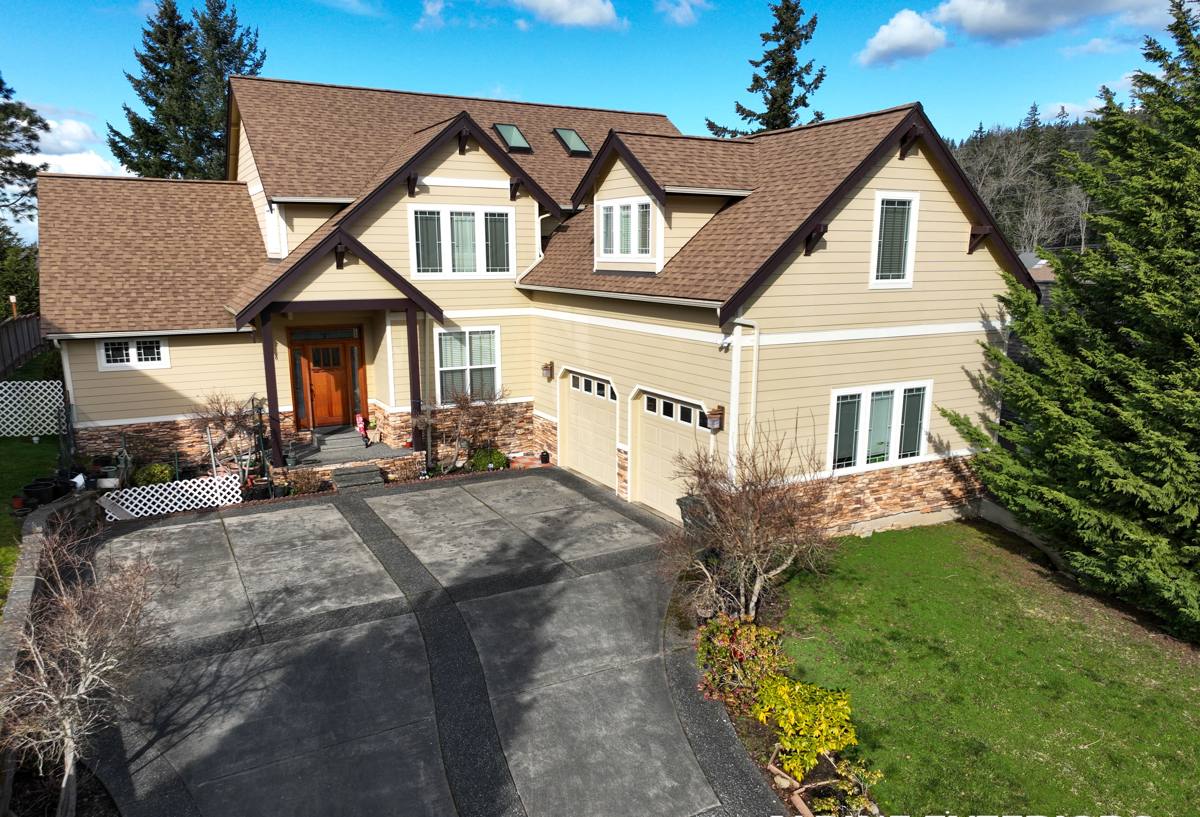
What Local Homes Actually Need From a Metal Roof
Moss and Moisture Resistance
Metal sheds moss far better than composition shingle because there's no rough granule surface for spores to grip and no organic mat underneath to hold water against the roof deck. That said, metal isn't moss-proof on its own — valleys, low-slope sections, and areas under overhanging trees still need attention. A correct install accounts for slope and drainage so water and debris don't pool anywhere long enough to give moss a foothold.
Standing Up to Wind-Driven Rain
When rain comes in at an angle instead of straight down, the weak points on any roof are the laps, the flashing, and the fastener penetrations. Metal roofing done right relies on properly lapped panels, sealed and mechanically sound seams, and flashing that's built to handle water moving sideways, not just downhill. This is where a lot of the difference between a roof that lasts and one that leaks in year three actually lives.
Coastal Air and Corrosion
Sedro-Woolley isn't oceanfront, but it's close enough to tidal water and the Sound that salt-tinged air reaches it, especially on windy days. Over years, that air can accelerate corrosion on fasteners, cut edges, and lower-grade coatings. The fix isn't complicated — it's using fastener and panel combinations rated for coastal or near-coastal exposure and making sure cut edges get properly treated instead of left bare.
What a Correct Metal Roofing Job Involves
A metal roof is only as good as the layers underneath it and the details around its edges. On every job we do, that means:
- A roof deck inspection before anything goes down — soft spots, old rot, or trapped moisture get addressed, not covered up
- A synthetic or high-temp underlayment suited for the panel type and the Pacific Northwest's long wet season, not a minimal builder-grade layer
- Proper fastener selection and spacing matched to the panel profile and local wind exposure, using fasteners rated to resist corrosion in a damp, salt-influenced climate
- Flashing details at every valley, wall intersection, chimney, and vent that are built to shed wind-driven rain, not just vertical rainfall
- Ridge and eave detailing that allows the roof to ventilate properly so moisture doesn't get trapped against the underside of the panels
- A finished roofline with clean, consistent panel alignment and trim — the visual sign that the underlying work was done with the same care
Skipping any one of these doesn't usually show up as a problem in year one. It shows up in year five or eight, as a leak at a valley, rust streaking at a cut edge, or moss creeping in at a low-slope section that was never draining the way it should.
Panel Types and What They Mean for a Sedro-Woolley Roof
Not every metal panel style is a good fit for every house or budget. Here's how the common options stack up for this climate specifically:
| Panel Type | Best For | Climate Trade-Offs |
|---|---|---|
| Standing seam | Homes wanting a clean, modern look and the longest expected service life | Concealed fasteners mean fewer penetration points for water to find — a real advantage in wind-driven rain |
| Exposed-fastener panels | Budget-conscious projects, shops, and outbuildings | Costs less upfront but fastener gaskets age and need occasional re-torquing or replacement over time |
| Stone-coated steel | Homeowners who want a shingle or shake profile with metal's durability | Good moss resistance, but more surface texture than smooth panel styles, so it benefits from clean flashing work at transitions |
We'll walk through which of these makes sense for your roof's slope, exposure, and budget as part of any estimate — there's no one-size answer.
Repair, Recover, or Full Replacement?
Not every metal roofing call in Sedro-Woolley is a full tear-off. We see three common situations:
Repair
Isolated leaks at a flashing point, a fastener that's backed out, or a section of panel damaged by a fallen branch. If the rest of the roof and deck are sound, targeted repair is the honest answer — we're not going to sell a full replacement when a repair will genuinely hold.
Recover
In some cases, a new metal roof system can go over an existing roof deck if it's structurally sound and the existing material provides a suitable base. This can save on tear-off cost, but it depends on the condition underneath, which we check before recommending it.
Full Replacement
If the deck has moisture damage, the existing roof has multiple failure points, or the home is due for a full system upgrade, replacement is the right call. This is also the point where switching materials — say, from aging composition shingle to metal — makes the most sense, since you're already starting from a clean deck.
Cost Factors for Sedro-Woolley Homeowners
Metal roofing costs more upfront than composition shingle, and the final number depends on several factors specific to your property:
| Factor | Why It Matters Here |
|---|---|
| Roof slope and complexity | More valleys, dormers, and penetrations mean more flashing work — and flashing is where wind-driven rain gets stopped or gets in |
| Panel style chosen | Standing seam runs higher than exposed-fastener panels but reduces long-term maintenance and penetration points |
| Deck condition | Skagit County's wet seasons mean deck rot is more common on older homes; addressing it adds cost but is not optional |
| Tree cover and shading | Heavily shaded roofs need extra attention to drainage detailing to manage moss and moisture risk |
| Access and pitch | Steeper or harder-to-access roofs take longer to install safely, which affects labor cost |
We give straight, itemized numbers during the estimate rather than a vague ballpark — you should know what you're paying for and why.
Our Process for a Sedro-Woolley Metal Roof
- On-site inspection of the existing roof, deck condition, slope, and problem areas (moss buildup, past leak points, tree exposure)
- A written estimate that spells out panel choice, underlayment, flashing scope, and total cost — no surprise add-ons later
- Deck prep and repair as needed, addressing any rot or soft spots before panels go down
- Underlayment and flashing installation, with extra attention to valleys, walls, and any low-slope transitions
- Panel installation with fasteners and sealants matched to this climate's moisture and salt exposure
- Final walkthrough so you can see the finished roofline and ask questions before we consider the job done
Why Hire a Crew That Already Works This Area
A lot of roofing problems in Skagit County aren't about the material — they're about details that only show up when a crew has actually worked the local terrain. Knowing which roof lines around Sedro-Woolley tend to hold moss longer because of tree cover, which slopes see the worst wind-driven rain, and how the area's damp season affects deck drying time all shape decisions that a generic install spec won't cover. We work Burlington, Sedro-Woolley, and the surrounding Skagit Valley regularly, and we bring that local pattern-recognition to every estimate and every job.
We also stand behind the work with clear communication — what we're doing, why, and what it costs — instead of vague promises. If a repair is the honest answer instead of a full roof, we'll say so.
Get a Straight Answer About Your Roof
If you're weighing metal roofing for a home in Sedro-Woolley, or you've got moss, a leak, or an aging roof you're not sure needs full replacement, we're happy to take a look. Request a free, no-pressure estimate using the form below and we'll walk your roof, answer your questions, and give you a clear, honest recommendation.