 Burlington
 Conway's Setting Creates a Tough Environment for Siding
Conway sits low in the Skagit River delta, close enough to Skagit Bay and Puget Sound that salt-laden air is a regular part of the weather here, not an occasional event. Combine that with the wind-driven rain that comes off the water and moves across the flats, plus the shaded, moisture-holding conditions that let moss and algae take hold on north- and west-facing walls for much of the year, and you get an exterior environment that is harder on siding than most homeowners realize until they see the wear firsthand.
Homes in this part of Skagit County don't fail because owners neglected them. They fail because the wrong material was asked to do a job it was never built for. Siding installation in Conway has to be planned around these specific conditions from the first measurement, not treated the same as a job in a drier, more sheltered part of the state.
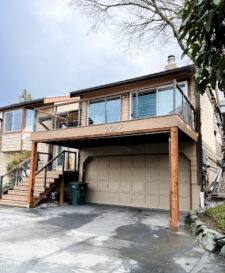
What Salt Air, Driving Rain, and Moss Actually Do to a Wall
Salt Air
Airborne salt accelerates corrosion on fasteners, flashing, and any exposed metal trim, and it speeds up the breakdown of paint films and cheaper coatings on siding surfaces. Over years, this shows up as chalking, fading, and premature fastener staining, well before the siding itself would otherwise need replacing.
Driving Rain
Wind-driven rain doesn't just fall on a wall — it gets pushed sideways and upward into laps, seams, and penetrations. A siding system with weak water-shedding details (poor lap geometry, undersized overlaps, or gaps at trim) will let moisture behind the cladding, where it can sit against sheathing and framing long after the storm has passed.
Moss and Algae
Shaded walls, tree cover, and the persistent damp common to this part of Washington give moss and algae the moisture and time they need to establish. Beyond the cosmetic issue, moss holds water against the siding surface, extending the time the wall stays wet after every rain event and putting sustained stress on paint, caulk joints, and any wood-based product underneath.
What Conway Homes Need From a Siding Installation
- A cladding material that doesn't swell, rot, or delaminate when it stays damp for extended stretches
- A factory-applied finish that resists salt-driven fading and chalking better than field-applied paint
- Correct lap and overlap dimensions engineered for wind-driven rain, not just standard exposure
- Flashing and water management details sized for a wet climate, not a dry one
- Fasteners and trim hardware that won't corrode prematurely in salt air
- A finish that can be power-washed to remove moss and algae without damaging the surface
Every one of these is a real, checkable requirement — not a sales pitch. They come directly from what actually breaks down on homes in this part of Skagit County.
Why We Only Install James Hardie Fiber Cement Here
We install James Hardie fiber cement siding exclusively, and Conway's environment is a clear example of why. Fiber cement is a cement, sand, and cellulose fiber composite — it doesn't absorb and swell with moisture the way wood-based products can, and it isn't a petroleum-based material that can soften or distort under sustained heat and UV exposure the way vinyl can. That matters directly here: a wall that stays damp for days after a storm needs a material that shrugs off moisture rather than one that slowly degrades from it.
Hardie's ColorPlus factory finish is baked on under controlled conditions, which gives it better fade and chalk resistance than field-applied paint — a real advantage in a salt-air environment where lesser coatings visibly break down faster. Hardie's HZ5 product line is engineered specifically for climates with heavy moisture exposure, which fits the Skagit County coastline better than a generic siding spec built for a drier region. And because fiber cement is non-combustible, it adds a layer of fire resistance that none of the wood or vinyl alternatives offer.
None of this means other products are junk — vinyl is inexpensive and low-maintenance in mild climates, cedar has real character, and engineered wood products have their place. But we've made a professional decision not to install LP SmartSide, vinyl, Cemplank, Allura, primed spruce, or cedar, because in a climate like Conway's, the trade-offs (moisture sensitivity, coating longevity, warranty structure, or long-term maintenance burden) work against the homeowner over the life of the siding. James Hardie is what we stand behind and put on homes.
Siding Material Comparison for a Salt-Air, High-Moss Climate
| Factor | James Hardie Fiber Cement | Vinyl | Wood-Based (cedar, primed spruce, engineered wood) |
|---|---|---|---|
| Moisture / swelling | Does not swell or rot | Doesn't absorb water, but can warp with heat | Absorbs moisture; can swell, cup, or rot over time |
| Salt air resistance | Factory finish resists chalking/fading | Can chalk and fade faster in coastal air | Coatings break down faster; needs more frequent repainting |
| Fire resistance | Non-combustible | Combustible | Combustible |
| Moss/algae cleaning | Withstands regular pressure washing | Can crack or discolor with aggressive cleaning | Cleaning can strip or damage finish, exposing wood |
| Typical warranty | Long-term transferable manufacturer warranty | Varies widely by product tier | Often limited to coating, not the substrate |
What a Correct Siding Installation Involves
The siding product is only part of the equation — how it's installed determines whether it actually performs the way it's rated to. A correct James Hardie installation in a climate like Conway's includes:
- Removal of failing existing siding and inspection of the sheathing underneath for hidden moisture damage before anything new goes up
- Repair or replacement of any compromised sheathing or framing found during tear-off
- Installation of a weather-resistive barrier, correctly lapped so water sheds downward and outward at every seam
- Properly flashed windows, doors, and penetrations, with attention to the details that stop wind-driven rain specifically
- Hardie panels or lap siding installed to manufacturer-specified nailing patterns, gaps, and clearances — not shortcuts that void the warranty
- Corrosion-resistant fasteners and trim hardware appropriate for a salt-air environment
- Caulking and sealant only where Hardie's specifications call for it, not as a substitute for correct flashing
Skipping or rushing any one of these steps is how a good product ends up with a bad reputation. The material is only as good as the installation behind it.
How Our Process Works
1. On-Site Assessment
We walk the exterior with you, look at current siding condition, moss/algae buildup, drainage patterns around the foundation, and any areas showing signs of past water intrusion.
2. Product and Line Selection
We recommend the Hardie product line and color that fits your home and this climate — HZ5 in coastal Skagit County settings, ColorPlus finish options, and trim details that match your home's style.
3. Tear-Off and Inspection
Existing siding comes off, sheathing gets inspected, and any damage found gets addressed before new material goes on — not covered up.
4. Weather Barrier and Flashing
We install and lap the weather-resistive barrier correctly, and flash every window, door, and penetration to handle wind-driven rain, not just vertical rainfall.
5. Installation to Spec
Panels and lap siding go up to Hardie's nailing, gapping, and clearance specifications, using corrosion-resistant fasteners suited to the salt-air environment.
6. Final Walkthrough
We walk the finished job with you, cover basic care and cleaning recommendations for this climate, and make sure everything meets the standard we hold our own work to.
Why Local Experience in Conway Matters
A crew that has already worked on homes in and around Conway understands the practical realities of the site — the low-lying terrain, the exposure to wind off the delta, and the kind of moss growth patterns that show up on shaded and north-facing walls in this specific pocket of Skagit County. That's different knowledge than a crew that mostly works drier, more sheltered neighborhoods and treats every job the same way.
It affects real decisions on the job: how aggressively to flash a given wall orientation, which areas need extra attention to moss and algae exposure, and how to sequence work around the region's rain patterns so the building stays protected during construction. None of that is guesswork when you've done it here before.
Maintaining Your Siding After Installation
James Hardie siding is low-maintenance, not no-maintenance. In a climate like Conway's, a periodic gentle wash (never high-pressure blasting directly into seams) keeps moss and algae from establishing, and an annual walk-around to check caulking at trim joints and penetrations catches small issues before they become expensive ones. Keeping vegetation and sprinklers from holding constant moisture against the siding also goes a long way, especially on shaded sides of the house.
Ready to Talk About Your Home?
If your current siding is showing chalking, moss buildup, soft spots, or visible wear from the salt air and rain that come off the Skagit delta, we're happy to take a look and give you an honest read on what's going on and what it would take to fix it right. Reach out for a free, no-pressure estimate — we'll walk your home with you and explain exactly what we'd recommend and why.