 Burlington
 Alger's Weather Is Harder on Siding Than Most Homeowners Realize
Alger sits in a corner of Skagit County where the weather works against exterior siding in three ways at once. Proximity to Samish Bay and the greater Puget Sound puts a steady dose of salt-laden air on every exposed surface. The Skagit Valley's driving rain — wind-pushed, not just falling straight down — finds its way into seams, laps, and fastener points that would stay dry in a calmer climate. And the heavy tree cover common to Alger's wooded, rural lots keeps siding shaded and damp for long stretches, which is exactly what moss and algae need to take hold and spread. Any one of these on its own is manageable. Together, over years, they wear out siding faster than most homeowners expect — and faster than most siding products are actually built to handle.
This page is specifically about siding replacement for homes in and around Alger — not a generic overview. If you're weighing whether your siding has reached the end of its useful life, or you already know it has and you're trying to figure out what a correct replacement job looks like here, this is written for that.
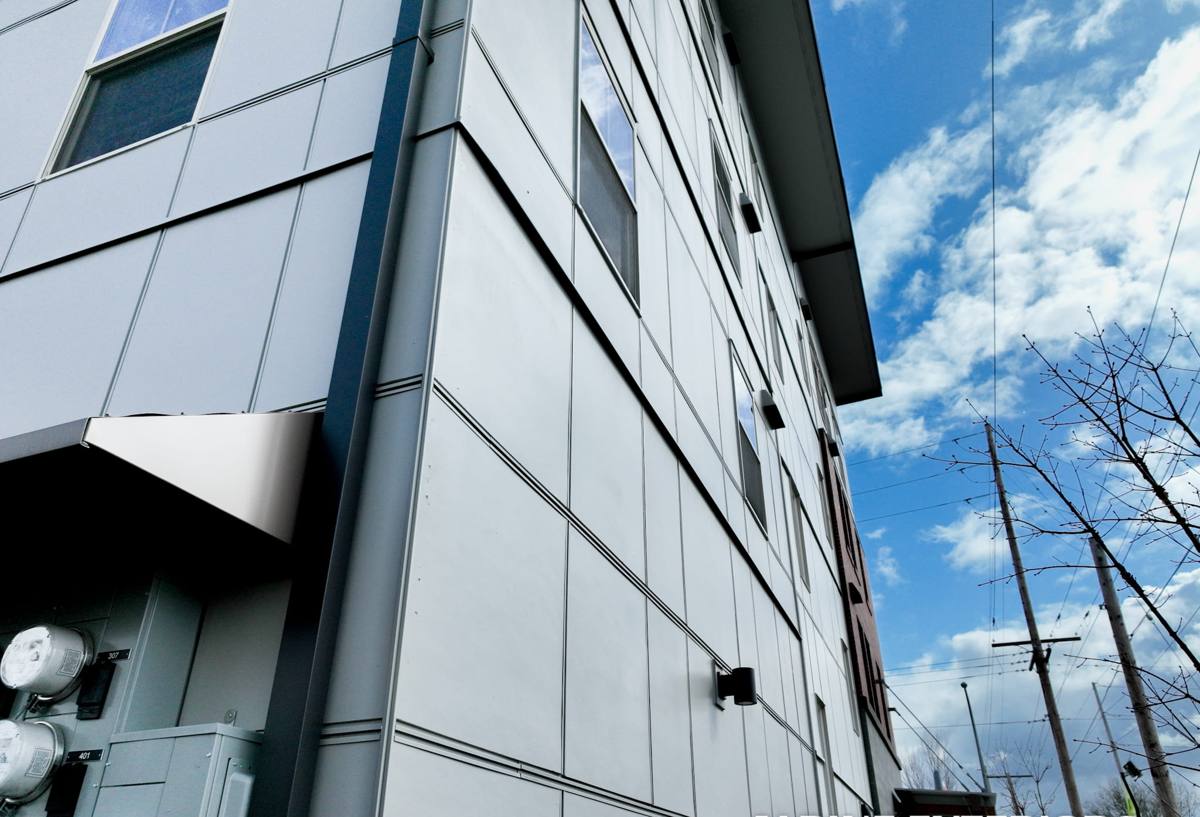
What Salt Air, Driving Rain, and Moss Season Actually Do to Siding
Salt Air
Airborne salt is corrosive to metal fasteners, flashing, and trim, and it accelerates the breakdown of paint film and caulk on wood and wood-composite siding. Over time it dulls factory finishes and gives algae and mildew an easier foothold on porous surfaces.
Driving Rain
Wind-driven rain doesn't just wet the surface of a wall — it gets forced sideways and upward, testing every lap, seam, and penetration. Siding and flashing that were installed to a "good enough for calm weather" standard tend to leak first at butt joints, around windows and doors, and at inside corners. Once water gets behind the siding, the sheathing and framing underneath are what actually fail, often long before the siding itself looks bad from the street.
Moss Season
Skagit County's wet season runs long, and shaded, tree-covered lots like many in Alger stay damp well after the rain stops. Moss and algae don't just look bad — they hold moisture directly against the siding surface for extended periods, which is hard on any material and especially hard on ones that absorb water.
Signs Your Alger Home's Siding Is Due for Replacement
Not every siding problem means a full replacement — some issues are legitimately repairable. But certain signs mean the material or the original installation has reached its limit and patching will only buy a little time.
- Soft, spongy, or crumbling spots when you press on the siding, especially near the bottom courses or below windows
- Paint that won't hold — bubbling, peeling, or needing repainting every few years no matter what product is used
- Persistent moss or algae staining that comes back within a season or two of cleaning
- Visible warping, buckling, or gaps opening up at seams and corners
- Boards that have swollen at cut ends or are visibly separating from the wall
- Interior signs — musty smell, staining, or soft drywall on exterior walls — that point to moisture getting through
- Siding that's simply reached the end of its expected service life and is being patched more often than it's holding up
If more than one or two of these apply, it's worth having the wall assessed rather than continuing to spot-repair.
Why We Install Only James Hardie Fiber Cement
We don't install vinyl, LP SmartSide, or other wood-composite products, and in a climate like Alger's, that's a deliberate call rather than a brand preference. Fiber cement is non-combustible and dimensionally stable — it doesn't swell, rot, or delaminate the way wood-based products can when they take on repeated moisture exposure. James Hardie's HZ5 product line in particular is engineered for the kind of cold, wet Pacific Northwest climate Skagit County sits in, with a moisture and freeze-thaw performance profile suited to exactly the conditions Alger sees.
The factory-applied ColorPlus finish matters here too. It's baked on under controlled conditions rather than field-applied, which means better adhesion and a finish that resists fading, chalking, and the paint failure that salt air accelerates on site-painted materials. That translates to fewer repaint cycles over the life of the siding — a real cost consideration in a climate that's hard on any exterior finish. Hardie also backs its material with a strong transferable warranty, which carries weight when you consider how long siding is expected to perform in this kind of weather.
None of this means other products are junk — vinyl and engineered wood siding both have a place and plenty of homes carry them without major issues. But given what we see repairing and replacing siding in this region, we've standardized on the one material we're confident holds up to Skagit County's specific combination of salt, wind-driven rain, and prolonged damp shade, and we'd rather install one product well than several products with mixed confidence.
What a Correct Siding Replacement Job Actually Involves
Siding replacement is not just removing old boards and nailing up new ones. The parts of the job you can't see after it's finished are the parts that determine whether it lasts.
Tear-Off and Sheathing Assessment
Full removal of the old siding lets us actually see the wall — sheathing, framing, and any hidden moisture damage from years of water working behind the old material. This is often where problems that never showed from the outside get found and addressed before they're covered up again.
Weather-Resistive Barrier and Flashing
A correctly lapped house wrap, properly integrated window and door flashing, and rainscreen or drainage detailing where called for are what actually stop driving rain from reaching the sheathing. This is the layer that matters most in a wind-driven-rain climate, and it's also the layer that's easiest to shortcut if a crew is moving fast.
Fastening and Clearances
Fiber cement has specific fastener and clearance requirements — proper nail spacing and depth, correct gaps at grade, decks, roof lines, and other transitions — that James Hardie specifies for a reason. Getting these wrong doesn't just void warranty coverage, it creates the entry points where water gets back in.
Trim, Caulking, and Finish Details
Corners, butt joints, and penetrations (vents, hose bibs, light fixtures) are the highest-risk spots for leaks. Correct trim work and quality sealant at these points is what keeps driving rain from finding a way in over the next twenty-plus years, not just the first two.
Our Process for Alger Projects
- On-site assessment — we walk the exterior, check for hidden moisture and damage, and evaluate sun/shade exposure and drainage around the home
- Scope and product plan — we determine the right Hardie plank profile, exposure, and color for the home, and identify any sheathing or framing repair needed
- Written estimate — a clear, itemized quote before any work begins, no surprise change orders for things that should have been caught upfront
- Tear-off and inspection — old siding comes off, the wall gets a real look, and any damaged sheathing is repaired or replaced
- Weather barrier and flashing installation — the layer that does the actual work of keeping water out
- Hardie siding installation — installed to manufacturer fastening, clearance, and finishing specifications
- Final walkthrough — we review the finished work with you before calling the job done
What Affects the Cost of a Siding Replacement
Every home is different, and we won't quote a number without seeing the property, but these are the factors that most commonly move a project's cost up or down.
| Factor | Why It Matters |
|---|---|
| Home size and wall area | More square footage means more material and labor, straightforwardly |
| Tear-off vs. new construction | Removing and disposing of old siding, and any hidden repairs found underneath, add time and cost |
| Sheathing or framing repair | Moisture damage found during tear-off has to be fixed before new siding goes on |
| Trim and architectural detail | Corners, gables, multiple rooflines, and dormers all add labor beyond flat wall runs |
| Siding profile and exposure | Lap width and style choices affect material quantity and installation time |
| Site access | Wooded, sloped, or tight-access lots common around Alger can affect staging and scaffolding needs |
Why It Matters That We Already Work in This Area
A siding job done to a general standard and a siding job done for Alger's specific conditions can look identical on install day and perform very differently five years later. A crew that regularly works this part of Skagit County already accounts for the wind-driven rain angles, the shaded and slow-drying lots, and the salt exposure coming off the bay when they're detailing flashing and fastening — it's not a special add-on, it's just how the job gets done correctly here. That familiarity is worth something you can't easily get from a crew that treats every region the same way.
If your siding is showing wear, or you're just trying to understand what a proper replacement would involve for your home, we're happy to take a look and walk you through it — no pressure, no obligation. Use the form below to request a free estimate.