 Burlington
 Why Oak Harbor Windows Wear Out Faster Than the Manual Says
Every window sold in the Pacific Northwest comes with a warranty and a service life estimate written by someone who has never stood on a ladder in a Puget Sound windstorm. Homes around Oak Harbor sit close enough to open water that salt-laden air is a constant, not an occasional event. Combine that with driving rain that comes in sideways during winter systems, and a moss season that can run from early fall through late spring, and you have a climate that attacks window assemblies from every direction at once — the frame, the sealant, the glazing, and the wall behind it.
Salt air is corrosive to metal hardware, fasteners, and some aluminum components long before most homeowners notice a problem. Driving rain doesn't just wet the glass — it tests every seam, corner, and flashing detail on the window's exterior, and it's usually the first thing to find a weak spot. Moss and algae hold moisture against wood trim and sills far longer than a dry climate ever would, which softens wood, breaks down caulk, and accelerates rot in ways that are easy to miss until the damage is already behind the siding.
None of this means windows in this area are doomed — it means they need to be selected and installed with this specific climate in mind, not treated like a generic swap-and-go job.
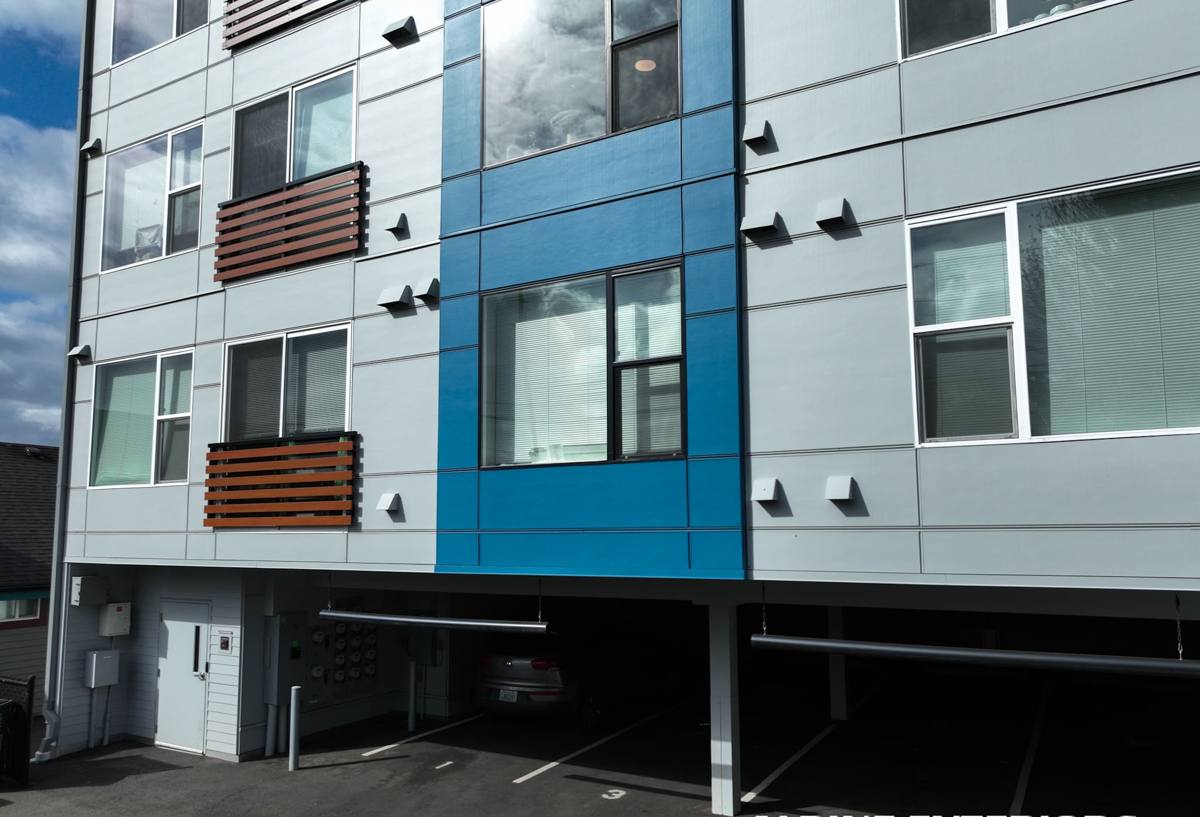
Signs a Window Is Actually Ready for Replacement
Not every drafty or foggy window needs to come out. Some can be repaired, re-glazed, or re-caulked. Here's what actually tells us a full replacement is the right call rather than a patch:
- Fogging or a visible haze between the panes — the seal has failed and the gas fill (if any) is gone
- Soft or spongy wood at the sill, jamb, or exterior trim when pressed with a screwdriver
- Visible daylight or a noticeable draft around the frame even with the window latched
- Paint that keeps bubbling or peeling in the same spot no matter how often it's repainted
- Windows that are difficult to open, close, or lock — often a sign the frame has shifted or swollen
- Water staining on interior drywall or trim below or beside the window
- Visible moss, algae, or persistent green staining on the exterior sill or casing
If you're seeing two or more of these on the same window, replacement is almost always cheaper over time than continuing to repair a failing unit.
What a Correct Window Replacement Actually Involves
The window itself is maybe half the job. The other half — the part that determines whether the window lasts 20 years or fails in five — is what happens around the opening before the new unit ever goes in.
Removing the old window without guessing
Once the old window is out, we inspect the rough opening before doing anything else. This is where hidden problems show up: soft framing, old flashing that was never installed correctly, or moisture staining that means water has been getting behind the wall for years. Skipping this step is the single most common shortcut that leads to repeat problems in coastal climates.
Flashing and moisture management
In an area that gets driving rain, flashing detail is not optional trim work — it's the actual defense against water intrusion. That means a properly lapped weather-resistive barrier, sill pan flashing that directs any water that does get past the window back out rather than into the wall cavity, and head flashing installed so water sheds over the top of the window, not behind it.
Sealing that's built for salt air and UV, not just looks
We use sealants and backer rod appropriate for exterior exposure in a marine climate, not a generic caulk that hardens and cracks within a couple of seasons. Where hardware or fasteners are exposed to the weather, we pay attention to corrosion resistance — salt air is unforgiving on the wrong metal.
Setting and shimming the window square and plumb
A window that's out of square binds, leaks air at the corners, and stresses the seals prematurely. This is a basic step that gets rushed on jobs where speed matters more than the result.
Choosing Window Materials for This Climate
There's no single "best" window material — there's a best fit for a given home, budget, and exposure. Here's how the common options stack up for a coastal Skagit Valley property:
| Frame Material | Moisture & Salt Air Resistance | Maintenance | Typical Cost Position |
|---|---|---|---|
| Vinyl | Very good — won't rot or corrode | Low; occasional cleaning | Most affordable |
| Fiberglass | Excellent — stable in temperature swings, doesn't pit or corrode | Low | Mid to upper |
| Aluminum | Fair — prone to pitting and corrosion in salt air over time | Moderate; watch hardware | Mid |
| Wood / Wood-clad | Weakest in this climate unless clad and well-maintained | High — repainting, sealing, sill inspection | Higher |
Wood-frame windows can still look excellent, but in a marine environment with a long moss season, unclad wood requires a maintenance commitment most homeowners underestimate. We're upfront about that trade-off rather than selling a product that will demand more upkeep than the homeowner expects — it's a matter of setting the right expectations, not a knock on the material itself.
Glass and glazing worth asking about
Beyond frame material, a few glazing choices matter more here than in a dry climate:
- Double or triple pane with a quality gas fill — helps with both energy performance and condensation control on cold, wet days
- Low-E coatings — reduce heat loss in winter and heat gain in the rare hot stretch, without changing how the glass looks
- Warm-edge spacer systems — resist condensation buildup at the edge of the glass better than older metal spacers, which matters in a humid marine climate
Our Window Replacement Process
- On-site assessment — we look at every window in question, the wall condition around it, and any moisture history before recommending anything
- Straightforward proposal — material options, what's included, and a clear cost range with no surprise add-ons buried in fine print
- Careful removal — old units come out without unnecessary damage to surrounding siding or trim
- Opening inspection and repair — any soft framing or old flashing issues are addressed before the new window goes in, not covered over
- Correct installation — proper flashing sequence, sealing, and shimming as described above
- Exterior finish work — trim, caulking, and paint or stain matched to the surrounding siding
- Final walkthrough — every window opens, closes, and locks the way it should before we call it done
Mistakes We See on Windows That Weren't Installed for This Climate
A lot of the repair calls we get in Oak Harbor and similar areas trace back to a handful of recurring shortcuts: sill pan flashing that was skipped or installed backward, caulk used as the only line of defense instead of proper flashing, windows shimmed out of square, and wood trim left unsealed on the bottom edge where moss and standing moisture do the most damage. None of these mistakes show up on day one — they show up two to five years later as soft trim, interior staining, or a window that suddenly won't latch. Getting the install right the first time costs less than fixing it twice.
Keeping New Windows Performing Long-Term
A correctly installed window still benefits from basic seasonal attention in this climate:
- Rinse salt residue off exterior frames and glass a few times a year, especially after storms
- Keep gutters and downspouts clear so runoff isn't sheeting directly over window heads
- Check exterior caulk lines annually for cracking or separation and address small gaps before they become leaks
- Clean moss or algae off sills and trim promptly rather than letting it sit through a wet season
- Test locks and operation each season — hardware that's stiff or hard to move may be signaling early corrosion
Why It Matters to Hire a Crew That Already Works This Area
Window replacement done right isn't complicated in theory, but the details that matter — flashing sequence, sealant choice, hardware corrosion resistance, how much wood maintenance a homeowner is realistically signing up for — are the details a crew learns by working in this exact climate repeatedly, not by reading a manufacturer's install guide once. A crew that regularly works Oak Harbor and the surrounding Skagit Valley communities has already seen what salt air, driving rain, and a long moss season do to windows installed the wrong way, and builds every job to avoid repeating those failures.
If your windows are drafty, fogged, hard to operate, or just due for an honest look, we're glad to come take a look. Fill out the form below for a free, no-pressure estimate — we'll tell you plainly what needs replacing, what can wait, and what it will cost.